Death Note Still Hits Different — Here’s Why
If you’ve never watched Death Note, you’re sitting on one of the most gripping 37-episode runs in anime history. And if you watched it years ago and are wondering whether this Death Note review will tell you something new — stick around, because this show rewards revisits in ways that most anime simply don’t. The premise sounds almost absurd when you say it out loud: a high school genius finds a supernatural notebook that kills anyone whose name is written in it. But what Death Note actually delivers is a razor-sharp psychological thriller, a morality play about power and corruption, and one of the greatest cat-and-mouse narratives ever put to screen — animated or otherwise.
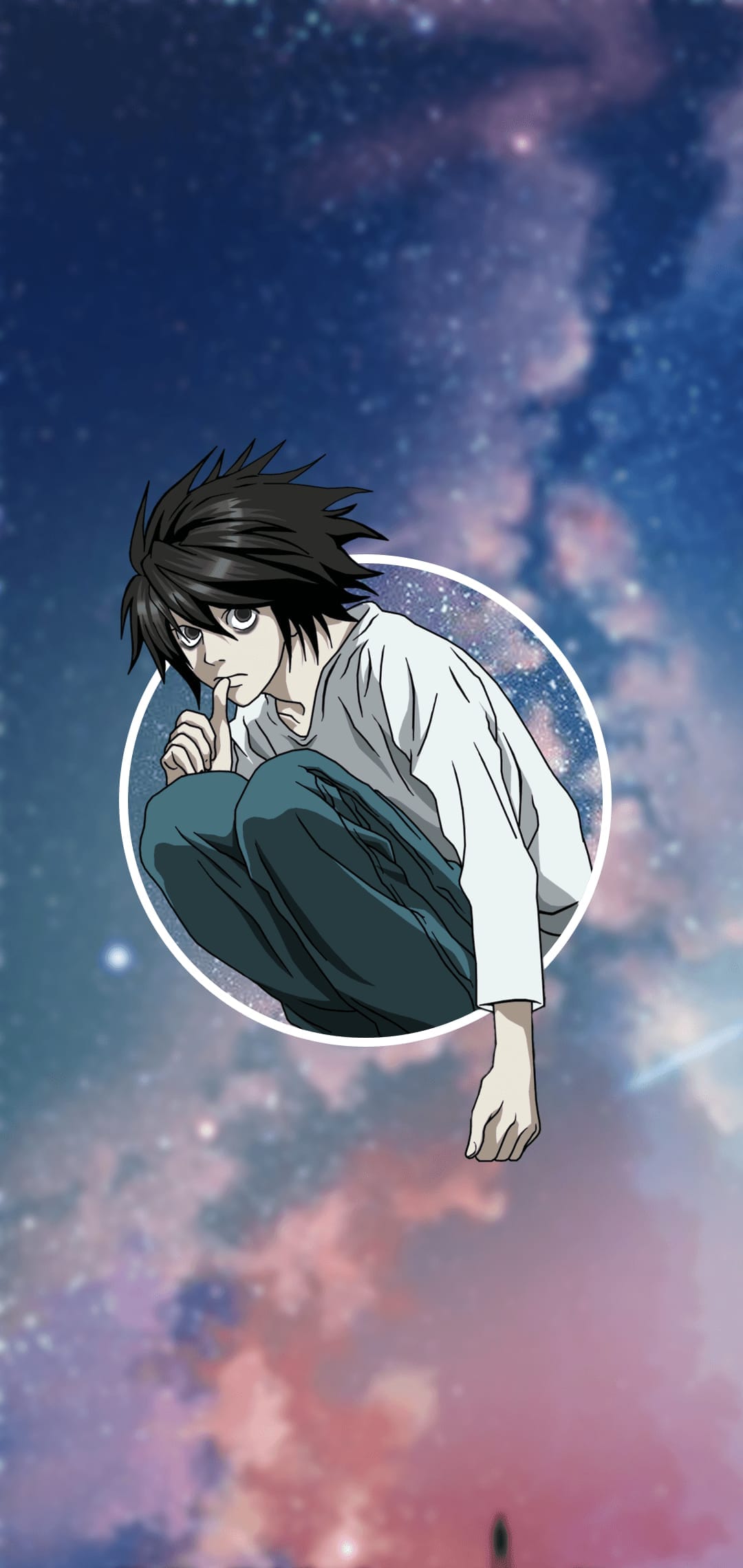
The series aired from October 2006 to June 2007, adapted from Tsugumi Ohba and Takeshi Obata’s manga by animation studio Madhouse. Almost two decades later, it hasn’t aged out of relevance — if anything, it’s gotten more relevant. In a world of surveillance states, online vigilante justice, and constant debates about who deserves to play judge and executioner, Death Note feels uncomfortably prescient. The questions it raises aren’t hypothetical anymore; they’re playing out on social media feeds and in political discourse every single day.
This is the full breakdown: what the show gets absolutely right, what’s genuinely controversial and why, what makes the L vs. Light dynamic so extraordinary, and why this remains essential viewing for anyone serious about anime. Whether you’re coming in fresh or reconsidering a classic, this review covers everything you need to know before you hit play — or before you hit play again.
Fair warning: there will be discussion of major plot points. If you’re entirely spoiler-free and want to stay that way, the short version is this — watch it immediately, start with episode one, and don’t stop until you reach the end. Everything else can wait. For those who want the full picture, read on.
The Premise: Simple Setup, Infinite Depth
Light Yagami is the kind of student who makes everyone else feel inadequate — top of his class, effortlessly brilliant, good-looking, respected by teachers and peers alike. He’s also profoundly bored. The world feels corrupt and broken to him, and he has the intellectual firepower to see exactly how rotten it is without any outlet to do something about it. His father is a police detective. Light has grown up adjacent to law enforcement, watching criminals escape consequences, watching the system fail victims, watching injustice compound year after year. He’s not wrong about any of it. That’s the first trap the show sets for you.
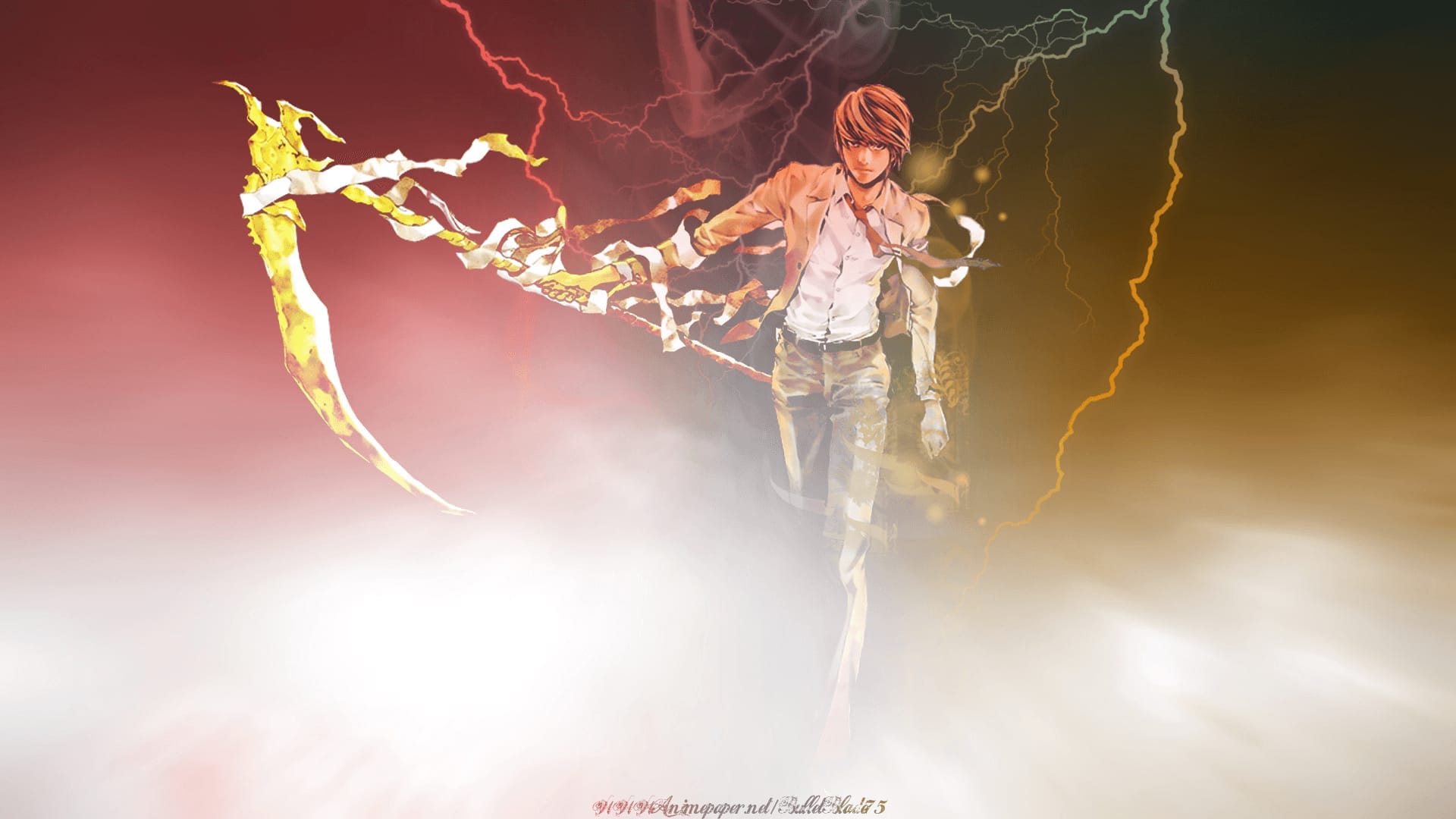
Then a shinigami named Ryuk drops his Death Note into the human world out of sheer curiosity — he’s bored too, and he wants to see what a human will do with it. Light picks it up. The Death Note works exactly as advertised: write a person’s name while picturing their face, and they die within 40 seconds of a heart attack. Default cause of death unless you specify otherwise, and you can specify otherwise in fairly elaborate detail as long as the victim is physically capable of carrying out the specified actions in the specified timeframe. Light tests it on a criminal holding hostages at a school. It works. The hostages are freed. The criminal dies.
And within a remarkably short time — a few days, really — this teenager decides he’s going to use the Death Note to purge the world of criminals and remake society in his own image. He calls himself Kira. The name spreads virally as criminals across the world start dying of heart attacks, and public opinion splits almost immediately: some people revere Kira as a divine force of justice, others see him as a serial killer with a god complex. Both groups are right, which is exactly the point.
What the show does brilliantly from episode one is frame this as a tragedy in slow motion. You’re watching a genuinely gifted person corrode in real time. The Death Note doesn’t corrupt Light — it reveals him. The arrogance, the god complex, the utter contempt for anyone he deems lesser: it was always there, waiting for a power source. That’s a much darker and more sophisticated take than “power corrupts,” and it’s one of the primary reasons this show has stayed in the cultural conversation long after dozens of other anime have faded into memory.
The world-building around the Death Note rules is also exceptional. Ohba and Obata clearly mapped out every implication of the notebook’s mechanics before writing a single chapter, and the show uses those rules as puzzle pieces in increasingly elaborate schemes. By mid-series, you’ll find yourself genuinely impressed by how airtight the plotting is — and how cleverly both sides exploit every loophole they can find. The rules themselves become a character, almost. Every new revelation about what the notebook can and can’t do sends ripples through the entire strategic landscape of the show.
L vs. Light: The Greatest Rivalry in Psychological Anime
You can talk about anime rivalries all day — Naruto and Sasuke, Goku and Vegeta, Spike and Vicious — but the dynamic between Light Yagami and L Lawliet operates on an entirely different plane. It’s not about fighting strength or competing philosophies about friendship or destiny. It’s a pure intelligence duel between two people who are, in almost every measurable way, equals. That’s genuinely rare in any medium, and Death Note executes it with a precision that few stories in any format have matched.
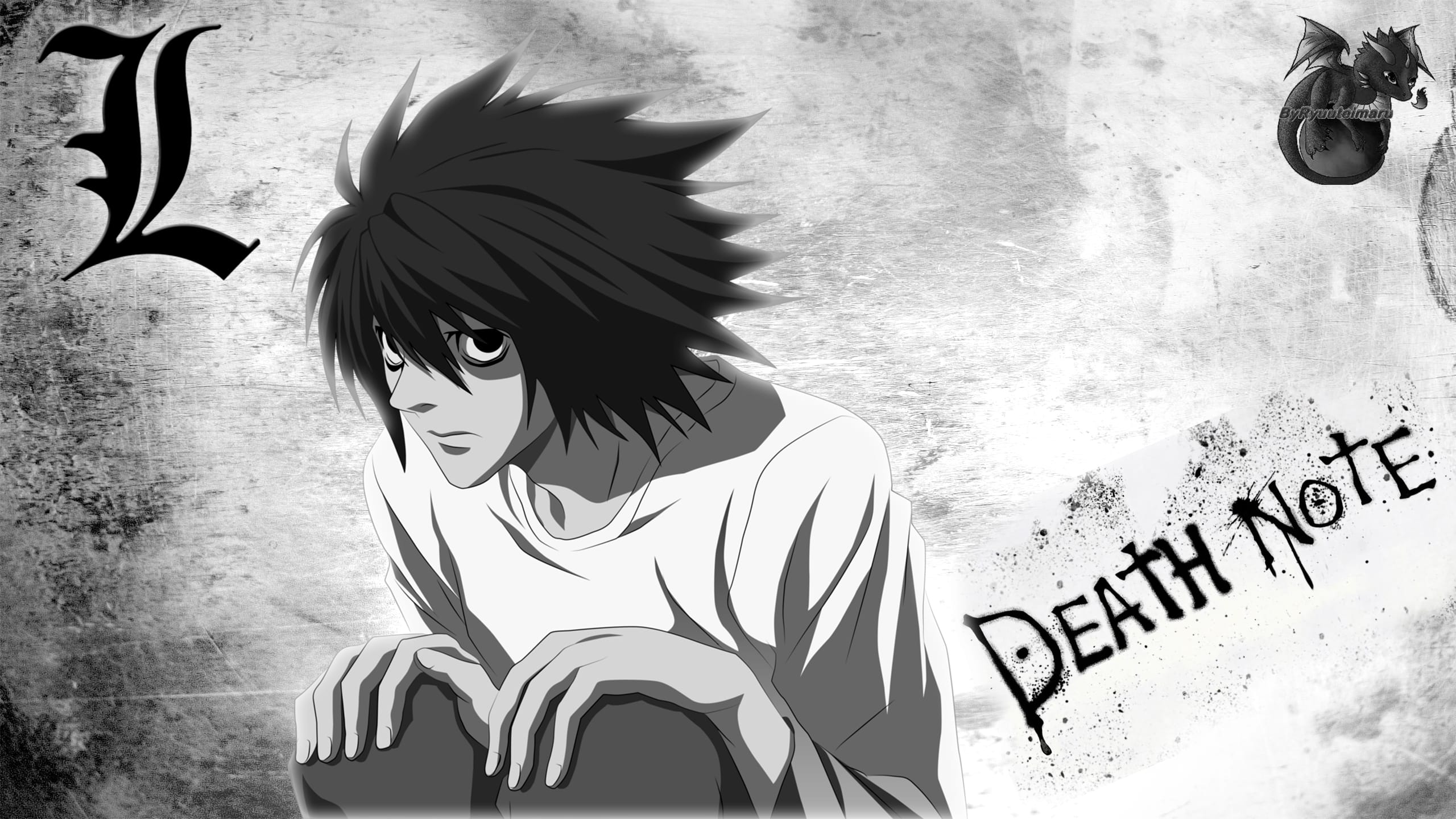
L is one of anime’s most genuinely original character designs — physically awkward, forever barefoot, subsisting almost entirely on sweets, sleeping in strange positions, holding objects with two fingers to preserve his detective’s analytical edge. But none of that is quirk for quirk’s sake. Everything about L’s presentation signals that he exists completely outside normal social frameworks. He doesn’t perform humanity the way most people do, and that makes him almost impossible to read and manipulate. He’s also one of the only characters in the entire show who can keep pace with Light intellectually, and the scenes where they’re in direct contact are some of the best-written exchanges in the medium.
What makes the rivalry so compelling is the moral inversion at its core. Light is handsome, charismatic, warm to his family, and presented visually as a hero figure — but he’s the villain, unambiguously and completely. L is strange, socially detached, morally flexible in his own ways, and operates in legal gray zones without apology — but he’s the closest thing the show has to a moral anchor. The show doesn’t let you get comfortable with that framing, either. It keeps probing: is catching Kira actually about justice, or is it just L’s ego refusing to accept a loss? Is Light actually trying to build a better world, or is he just drunk on being the smartest person in the room with a weapon that makes him untouchable?
The show never fully resolves those questions, which is part of why it holds up under discussion. You can make a genuine case that L is right about everything except his methods. You can make a genuine case that Light identified a real problem and chose a monstrous solution. The series earns the ambiguity because it doesn’t stack the deck — it gives both characters real intelligence, real blind spots, and real consequences for their choices.
The specific mechanics of how they circle each other are worth appreciating on their own terms. L can’t directly identify Kira without a confession or observable evidence, because the method of killing leaves no forensic trace. Light can’t kill L without his real name, which L has taken extraordinary precautions to hide. So they’re both operating in a space where certainty is impossible and every move has to account for multiple interpretations. When they finally meet face to face — and they meet very early, which should be impossible given the stakes — the scenes crackle with a tension that’s almost physical. You’re watching two people smile and make small talk while simultaneously planning each other’s destruction. It’s theater of the highest order.
The first 25 episodes, built almost entirely around this dynamic, are some of the most purely entertaining television — not just anime — you can watch. Every scene between Light and L is a chess match where both players are hiding their hand while trying to force the other into a mistake. Every conversation has at least two layers. Every seemingly innocent action is a probe or a feint or both. If you’ve heard that Death Note is worth watching, the L arc is the reason.
The Controversial Second Half — Let’s Be Honest About It
Here’s where any honest Death Note review has to face the room directly: the second half of the series is a significant step down from the first. After the midpoint of the show, the narrative pivots. New characters step in as Light’s primary opposition, and while the plotting remains clever and the scheming continues at a high level, something essential is absent. The emotional stakes feel lower. The cat-and-mouse tension that defined the L arc doesn’t fully reconstitute itself around the new antagonists, and the show pays a real cost for that.
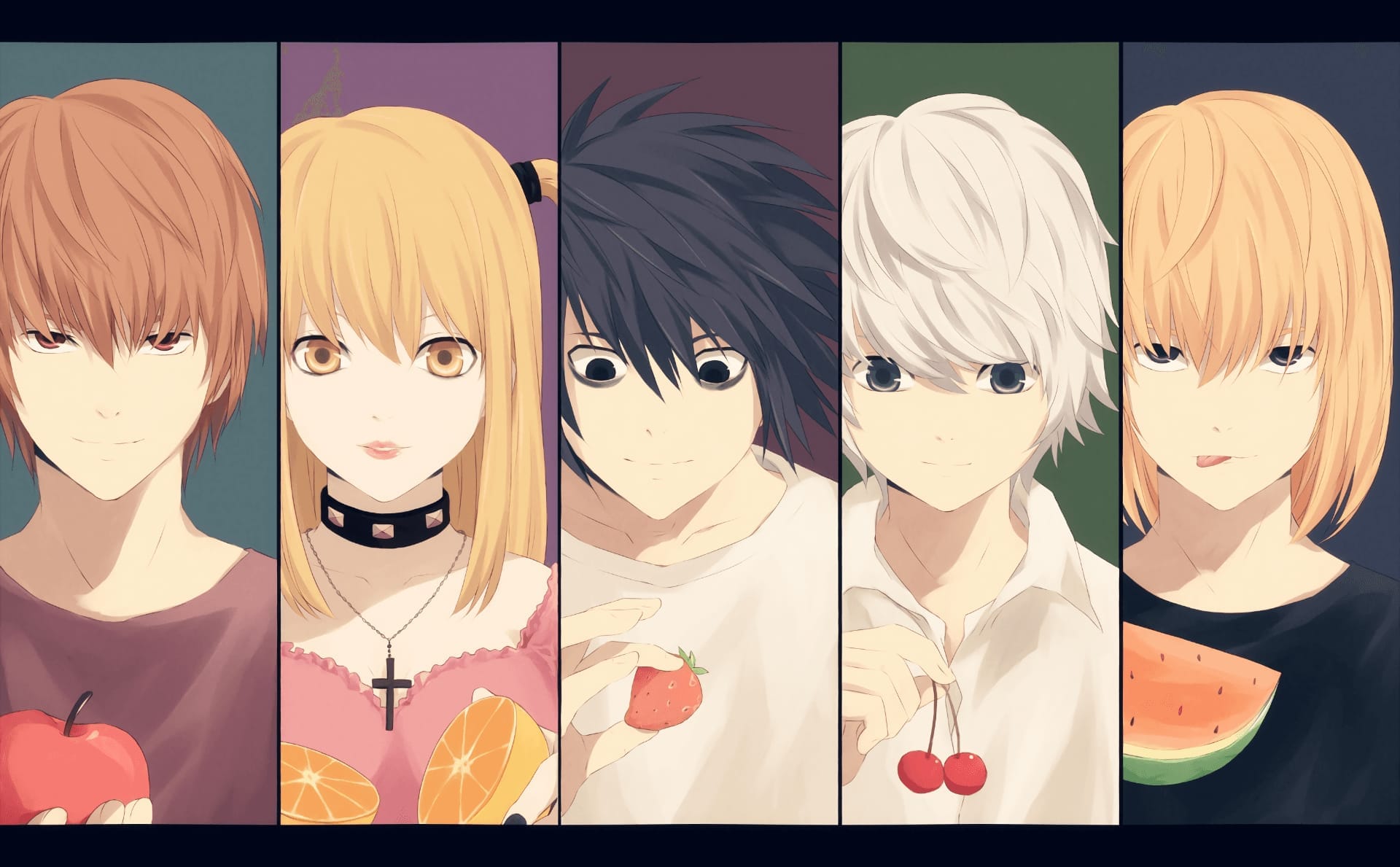
Mello and Near, the two characters who replace L as the primary investigators, are both interesting on paper. Mello is impulsive, emotional, willing to work outside any law or ethical framework to get results — he’s all aggression and ego. Near is almost pathologically cold and analytical, physically childlike, perpetually playing with toys and models while he constructs his theories. Together they’re designed to represent two halves of L: Near has the intellect, Mello has the drive. The problem is that splitting L’s essential qualities between two separate characters dilutes exactly what made him special — that combination of analytical brilliance, genuine eccentricity, and lived presence in constant direct contact with Light.
The show loses its intimacy in the second half. The distance between Light and his pursuers grows, both literally and narratively. Instead of two geniuses reading each other across a conference table, you have institutional forces maneuvering against each other through intermediaries and informants. It becomes more of a procedural and less of a psychological cage match. The stakes are technically higher — the show escalates toward a genuinely climactic confrontation — but the individual scenes don’t carry the same weight as the early episodes.
There are also some plot mechanics in the second half that require more suspension of disbelief than the first arc demands. The show’s internal logic, which is remarkably tight through the L arc, gets stretched in a few places. None of it is dealbreaking, but longtime viewers notice, and first-time viewers often feel the shift without being able to articulate exactly why the show feels different. The answer is mostly: because L is gone, and no one fills that specific space.
That said — and this is genuinely important — the second half is not bad. It’s just not as extraordinary as what came before. The plotting is still stronger than most thriller anime manages at its peak. Light’s continued descent is compelling and consistent. The finale delivers real emotional impact, a conclusion that feels earned given everything that preceded it, and an ending that refuses to be comfortable or reassuring. Many shows would give anything for a second half this solid. Death Note just set a bar in its first act that’s almost impossibly high to clear.
The honest recommendation: watch the whole series without skipping anything. The drop in quality between the two halves is real but significantly overstated in fan discourse, often by people who watched the show as teenagers when the L arc felt like a personal loss. Going in with calibrated expectations — good thriller anime, not transcendent television — you’ll likely find the second half much more enjoyable than the reputation suggests. And the ending, which is genuinely polarizing, is exactly the conclusion this story needed. It doesn’t redeem anyone. It doesn’t let Light’s logic off the hook. It follows the internal logic of the story to its necessary end.
Animation, Soundtrack, and Atmosphere: The Complete Package
Madhouse produced the animation for Death Note, and that pedigree shows in every frame. The studio was at the height of its powers in 2006, and this show got the full treatment. Death Note has a visual identity that’s genuinely difficult to replicate: heavy shadows, dramatic camera angles, a color palette built around blacks, deep reds, and sickly yellows. Light’s internal monologues are staged like theatrical performances — extreme close-ups on his eyes, dramatic low angles, visual metaphors that lean into the grandiosity of his self-image.
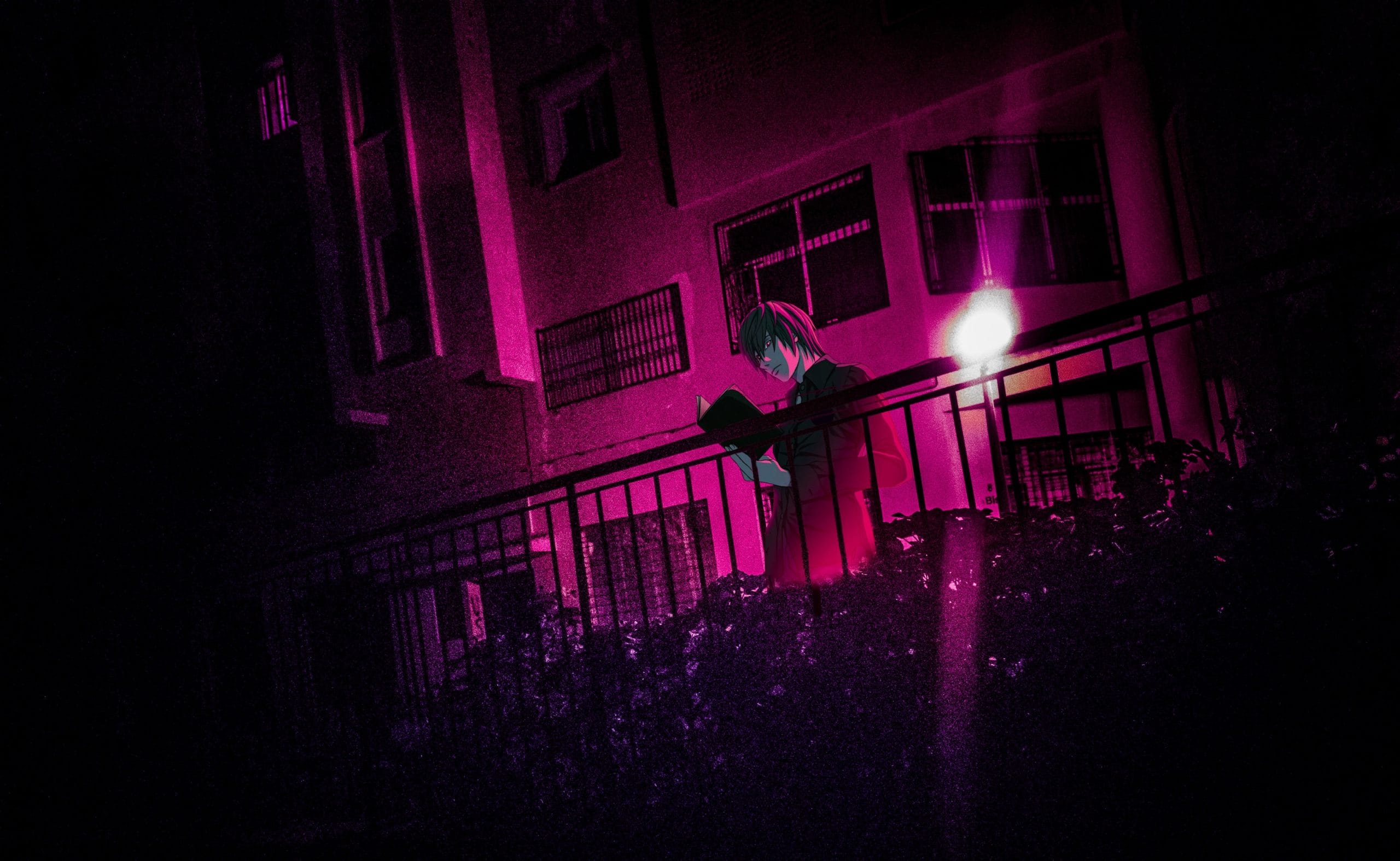
Ryuk is rendered with a scratchy, angular energy that makes him feel genuinely alien — tall enough to loom, proportioned wrong in subtle ways, moving with a boneless looseness that human characters don’t have. His design is one of the great character designs in the medium: recognizably shaped like a person but fundamentally not one, grinning at everything because everything is entertainment to him. The show knows it’s dealing in melodrama and commits to it entirely — every dramatic reveal gets the visual treatment it deserves, and the direction never undersells a moment that’s earned its weight.
The soundtrack, composed by Yoshihisa Hirano and Hideki Taniuchi, is one of the best in anime thriller history. The score mixes choral arrangements, industrial percussion, Latin text, and orchestral swells in combinations that feel genuinely unnerving. Tracks like “Low of Solipsism” and “Kira’s Theme” have become part of internet meme culture — which could have cheapened them — but actually demonstrates how well the music captures the operatic self-importance of the show’s central character. You hear “Low of Solipsism” and you immediately understand exactly what kind of villain Light Yagami is.
The opening themes are both excellent. “The World” by Nightmare, the first opening, is propulsive and slightly off-kilter, with a sense of momentum that’s almost threatening — exactly right for the early episodes where everything is accelerating toward something terrible. “What’s Up, People?!” by Maximum the Hormone, the second opening, is dissonant and abrasive in ways that feel entirely appropriate for the second arc’s darker and messier tone. The ending themes by Nightmare, “Alumina” and “Zetsubou Billy,” round out a soundtrack that’s unusually cohesive and purposeful.
Voice performances in both Japanese and English are exceptional, which puts Death Note in genuinely rare company. Mamoru Miyano as Light in the Japanese dub delivers a performance that goes from polished, slightly bored charm to increasingly unhinged grandiosity with complete conviction. The laugh. The famous laugh in episode 25 is a highlight of his entire career. Brad Swaile’s English performance matches the energy well — there are moments where the English dub is actually stronger, and the overall quality is high enough that dubbed viewers get the full experience rather than a diluted one.
Atmospherically, Death Note understands something that a lot of psychological anime miss: tension comes from information asymmetry, not from action. The most gripping scenes are conversations. Light explaining his philosophy to a captive audience. L revealing exactly how much he knows — and exactly what he’s still guessing at. Ryuk watching both of them and cackling because he knows this can only end one way. Madhouse’s direction keeps those scenes visually alive without ever tipping into action-movie excess. The restraint is what makes the tension work.
Why Death Note Still Holds Up in 2026
Twenty years is a long time in any medium. Anime has changed dramatically since Death Note aired — production values have risen across the board, storytelling ambitions have expanded, and the medium’s global audience has grown enormously. So why does this particular show still get recommended to every new anime fan as an essential first watch? Because the questions it raises haven’t gone away. They’ve gotten louder, more urgent, and more complicated.
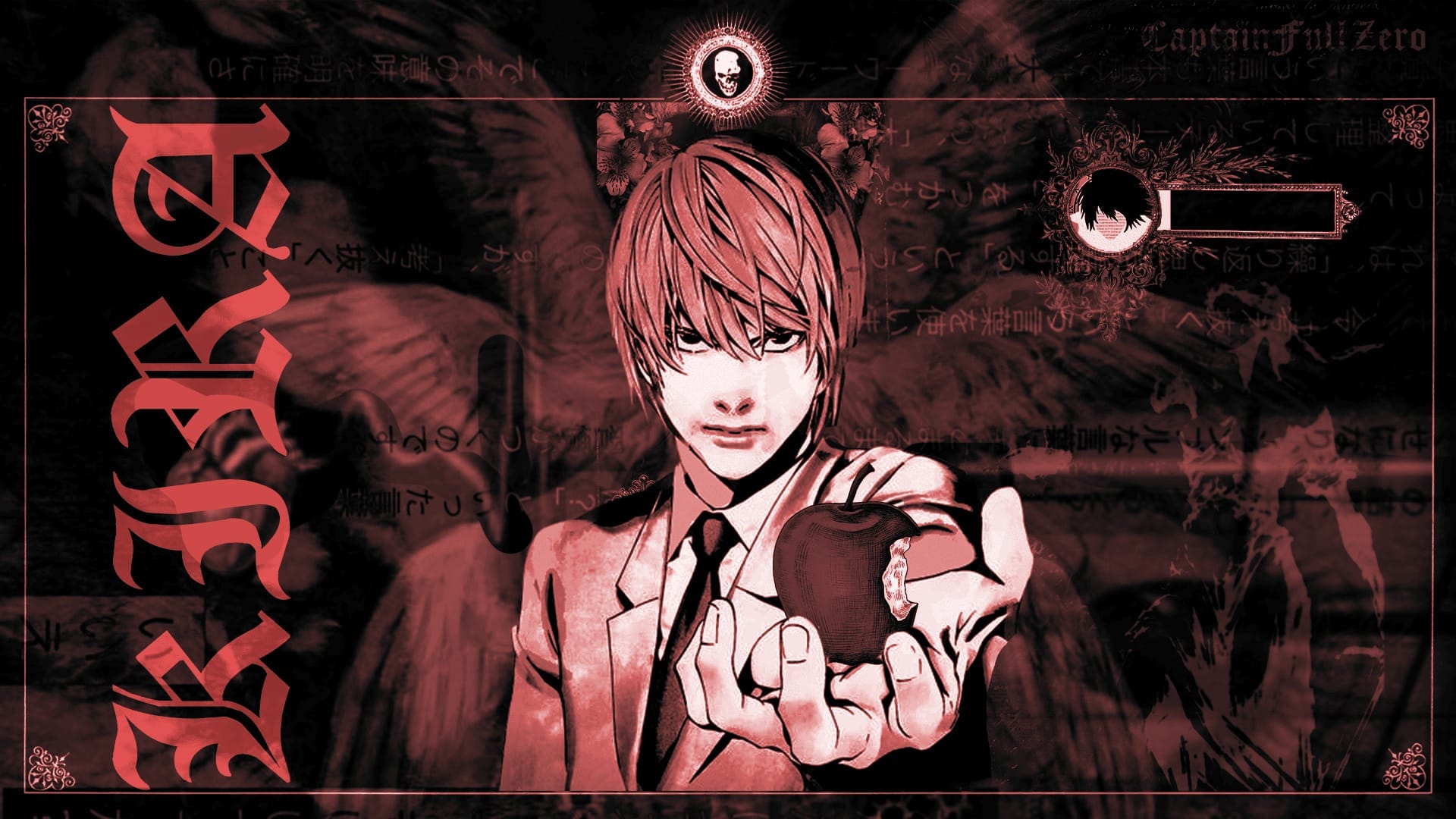
The Kira phenomenon within the show maps onto real-world dynamics with uncomfortable precision. The appeal of a singular cleansing force in a world that feels ungovernable. Online communities that celebrate extrajudicial punishment for people they’ve decided are guilty. Charismatic figures with extreme views attracting passionate followers who believe the end justifies the method. The way that genuine grievances — real injustice, real system failures, real corruption — become fuel for something that ultimately makes everything worse. Death Note dramatized all of this years before social media turned it into daily news. Watching it now, you feel the series’ prescience in ways that add new layers to scenes you might have taken at face value years ago.
The show also holds up because Light Yagami remains one of anime’s most genuinely complex central characters. He’s not an antihero in the loose way that term gets applied — he’s a villain who believes completely and sincerely in his own heroism, and the show never once lets you forget the gap between those two things. His intelligence makes him compelling. His complete moral blindness — the inability to see his own corruption even as it becomes overwhelming — makes him tragic. The combination keeps you watching even as you root against him, which is a genuinely difficult tonal balance to maintain for 37 episodes.
New anime fans discovering the medium in 2026 often start with Death Note, and it consistently delivers for them the same way it delivered in 2006. The core elements don’t depend on era-specific cultural references or prior anime knowledge. A brilliant person gets access to unlimited lethal power and decides to play god. Every culture in every era understands that story, and Death Note tells it with exceptional skill. The entry point is low. The payoff is high. It’s exactly what you want from a gateway show.
The L Lawliet and Light dynamic also benefits significantly from retrospect. Knowing where both characters end up, rewatches reveal layers of foreshadowing and dramatic irony that first-time viewers almost always miss. The early scenes between L and Light hit completely differently when you know the full shape of the story. Small gestures and throwaway lines become loaded with meaning. The show trusts its audience enough to plant things that won’t fully land until a second or third viewing — which is a mark of genuine craft in the writing, and one of the reasons the fandom remains active and analytical two decades after the original run.
There’s also something worth saying about how the show handles the moral debate at its center. A lesser series would tip its hand — would make it obvious that Kira is wrong, would give L a clean moral victory, would let the audience feel comfortable. Death Note refuses. L uses surveillance and psychological manipulation without hesitation. The legitimate justice system that’s supposed to catch criminals demonstrably fails. Some of the people Kira kills are genuinely terrible people who probably would have kept hurting others. The show acknowledges all of this without validating Light’s conclusions, and that refusal to be simple is exactly why it generates real discussion rather than just nostalgia.
The Verdict: Is Death Note Worth Watching in 2026?
Yes. Without qualification. This Death Note review comes with an unambiguous recommendation for anyone who hasn’t experienced it, whether you’re brand new to anime or a longtime fan who has somehow skipped this one. The first 25 episodes — the L arc — are as close to perfect thriller television as psychological anime has produced. Not just for their era. Full stop. The writing, direction, voice performances, score, and visual design all operate at the highest level simultaneously, and that kind of alignment is rare enough in any medium that it demands acknowledgment.
The second half is a step down but still delivers at a level well above average. The finale — specifically the final scene — is one of the most discussed and debated endings in anime, and it earns that conversation. It’s not a satisfying ending in the conventional sense. It’s not supposed to be. It’s the ending that the story’s internal logic demanded, and following through on that rather than reaching for comfort is exactly the right call.
Start it on a Friday night when you have nowhere to be Saturday morning. The pacing in the first arc is genuinely relentless in the best possible way: each episode ends with a development that makes stopping feel almost physically impossible. The show understands narrative momentum at a structural level and uses it without mercy. By the time you hit the midpoint, you’ll understand completely why this holds its place in the anime canon two decades on.
The shinigami world, the Death Note rules, the moral philosophy, the impossibly high-stakes chess match between two geniuses — it all coheres into something that earns every bit of praise it has ever received. If you want to understand what anime thriller can accomplish at its ceiling, Death Note is the reference point. Everything else in the genre gets measured against it, whether explicitly or not.
Final Rating: 9/10. The second half keeps it from a perfect score, but nothing about that gap diminishes what the show achieves overall. It’s essential viewing. Watch it.
You Might Also Enjoy
If Death Note is your entry point into psychological and thriller anime, you’re in for a genuinely great time — there’s a lot more excellent material in this corner of the medium. Here are AnimeTiger’s top picks to keep the momentum going after you finish:
- Fullmetal Alchemist: Brotherhood — The Complete Series Review — Often cited alongside Death Note as the other truly essential gateway anime, and the comparison is completely fair. Brotherhood operates at an extraordinary level of craft across its entire run.
- Monster: Is It the Greatest Anime Thriller Ever Made? — If the cat-and-mouse tension of Death Note is what gripped you, Naoki Urasawa’s Monster is your next mandatory watch. Slower burn, even higher stakes, and a villain that makes Light Yagami look straightforward.
- Code Geass Review: Another Genius Anti-Hero Worth Your Time — Strategic genius, a morally compromised protagonist making increasingly terrible decisions for ostensibly good reasons, and a body count. Sound familiar? Code Geass scratches a very specific Death Note itch.
- The 15 Best Psychological Anime Series of All Time — The definitive AnimeTiger ranking for fans of the mind-bending, morally complex side of the medium. Death Note is on the list. So are some shows you haven’t heard of yet.
- Best Anime for Beginners: Where to Start in 2026 — Death Note earns its spot on this list, but there’s a full watchlist here designed to take you from complete newcomer to genuine fan across every major genre.