If you’ve spent any real time in anime, you already know the name. If you’re new here, consider this your orientation. The Cowboy Bebop review you’re about to read isn’t going to tell you it’s good — you’ve heard that. It’s going to tell you why it’s good, why it still holds up in 2026, and why nothing released in the decades since has quite managed to replicate what Shinichiro Watanabe and studio Sunrise pulled off in 1998. Twenty-six episodes. One movie. An ending that hits like a closed fist. Cowboy Bebop isn’t just an anime — it’s a statement about what the medium can be when no one’s playing it safe. Spike Spiegel, jazz anime in its purest form, and a space opera that refuses to be pinned down. Strap in.
The Premise: Space, Bounty Hunters, and Blues You Can’t Shake
Set in 2071, humanity has scattered across the solar system following an accident that rendered Earth largely uninhabitable. Civilization picked up and kept moving — colonizing Mars, Venus, the moons of Jupiter — and with it came crime, poverty, and all the other old friends that follow people wherever they go. Enter the bounty hunting profession, romanticized here as “cowboys.” Our crew operates out of the Bebop, a beat-up fishing trawler turned mobile home for the perpetually broke.
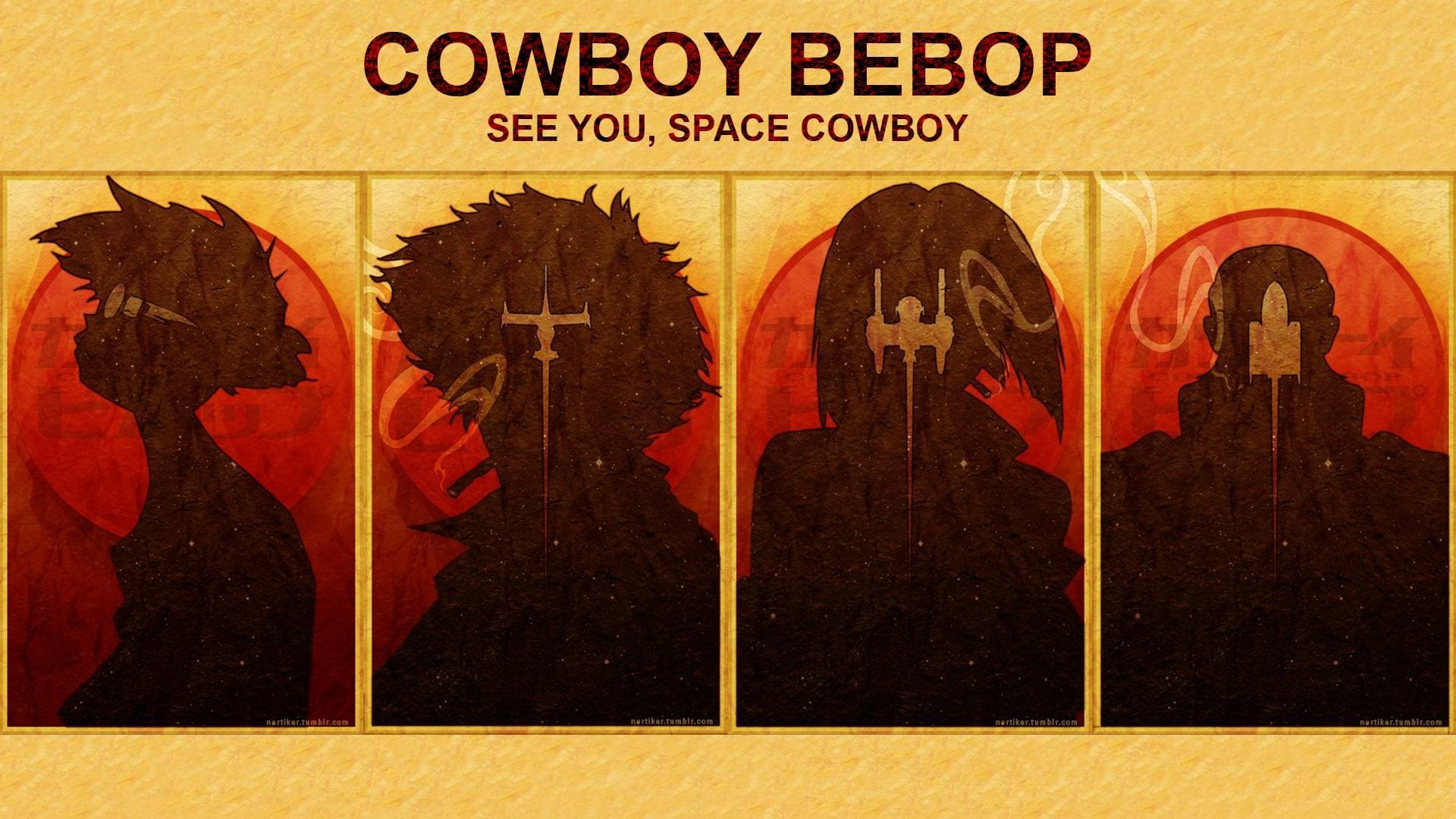
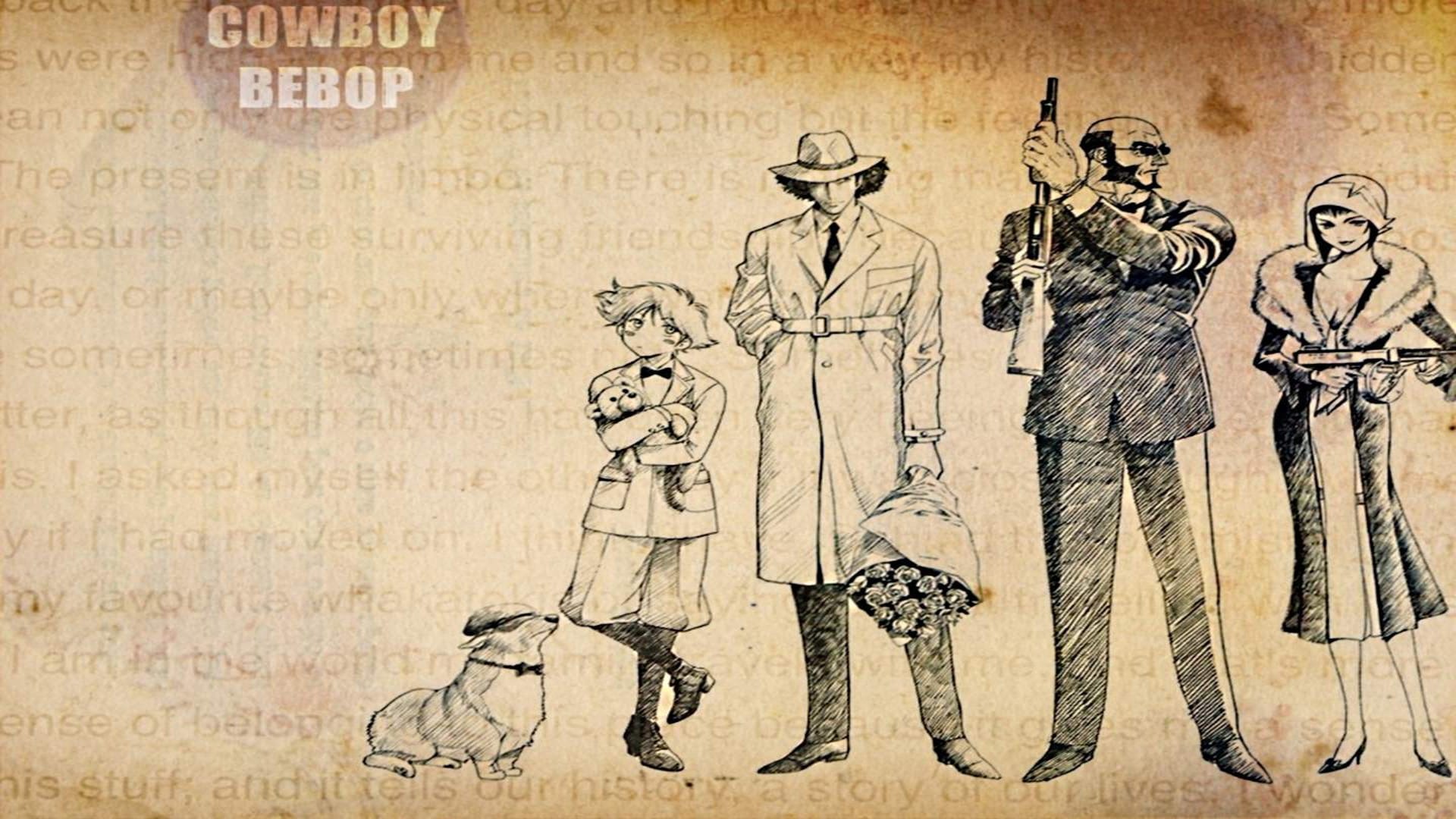
Spike Spiegel is the lanky, cigarette-smoking ex-syndicate hitman who fights like water and philosophizes like a man already at peace with dying. Jet Black is his partner — ex-cop, one metal arm, all pragmatism. Faye Valentine is a femme fatale with a past she can’t fully remember and debts she can’t fully pay. Edward Wong Hau Pepelu Tivrusky IV — “Ed” — is a feral child genius hacker who seems to exist on a different plane of reality entirely. And then there’s Ein, the Pembroke Welsh Corgi who is, canonically, smarter than most of the humans onscreen.
On paper, it sounds like a crew comedy set in space. In execution, it’s something far stranger and more melancholy. The Bebop crew rarely catches the bounties they’re after. They’re bad at their jobs, perpetually out of food, and running from their own histories with varying degrees of self-awareness. The premise is a delivery mechanism for something harder to name — a mood, a feeling of perpetual transit, of people who are technically moving forward but mostly just drifting.
What makes this premise remarkable is how confidently it refuses genre. This is a space anime that doesn’t care about space opera politics or intergalactic war. It’s a noir that isn’t really about crime. It’s a character study that barely explains its characters. Watanabe called his influences jazz, blues, and the French New Wave — and you feel all of it in the bones of the show before you can articulate exactly why. Cowboy Bebop builds a world detailed enough to feel lived-in and then populates it with people who are emotionally homeless inside it. That’s the real premise.
The Episodic Genius: Each Session Is Its Own Movie
The show calls its episodes “sessions” — a jazz term, and deliberate. Each one functions almost as a standalone story. You could hand someone “Waltz for Venus,” “Mushroom Samba,” or “Toys in the Attic” with zero prior context and they’d have a complete experience. That’s rare. Most serialized television counts on accumulated context to generate emotional weight. Cowboy Bebop generates weight differently — through craft within the episode, through specificity of character, through the way a single 24-minute session can make you feel the whole weight of a stranger’s life.
“Sympathy for the Devil” — episode six — gives you a child who isn’t a child, a harmonica, and a backstory revealed in fragments. By the end you feel loss for someone you met twenty minutes ago. “Speak Like a Child” — one of the quietest episodes in the series — is about a VHS tape and the version of a person that existed before they became who they are now. It’s devastating. It contains almost no action. It’s perfect.
The genius of this episodic structure is that it gives Watanabe permission to be wildly tonal. “Mushroom Samba” is a full-on comedy episode — Blaxploitation riffs, hallucinogenic mushrooms, physical comedy — that would feel jarring in any tightly serialized show. Here, it lands as a palate cleanser between heavier sessions, the way a jazz set might pivot from a ballad into something uptempo. The show earns its tonal swings because it trusts each episode to do its own work.
There are 26 sessions and almost none of them are filler in the derogatory sense. Even the lighter episodes are doing something — establishing character texture, dropping a thematic note that resonates later, or simply proving that the world of the Bebop has room for tragedy and absurdity in the same week. The serialized threads — Spike’s past, Faye’s identity, Jet’s old case — thread through like a low bassline under the melodic improvisations. You can feel them before you hear them clearly.
This is one of the central things that separates Cowboy Bebop from the pack of 90s anime classics. It doesn’t rely on power scaling, tournament arcs, or worldbuilding exposition drops. It relies on writers who understood that a story about nothing in particular — a bounty gone wrong, a brief friendship with a stranger — can mean everything if you write it right.
Spike Spiegel: The Coolest Character in Anime (And the Saddest)
Let’s talk about Spike Spiegel. In the pantheon of anime protagonists, he occupies a strange and specific position. He’s not driven by a dream or a vow of vengeance. He’s not training to be the strongest or protecting someone precious to him. He’s haunted — by a woman named Julia, by a former partner named Vicious, by a life in the Red Dragon crime syndicate that he walked away from and never really escaped. He’s a man going through the motions of being alive while some part of him already feels like it died years ago.

His fighting style is the first tell. Spike practices Jeet Kune Do — Bruce Lee’s philosophy-as-martial-art, the idea of using no way as way, formlessness as form. It makes him uniquely dangerous and uniquely readable as a character. He doesn’t fight with aggression; he flows. He absorbs and redirects. He seems genuinely unbothered by being hit. In the show’s visual language, this reads as cool; in its thematic language, it reads as someone who learned long ago to stop flinching at pain.
His famous quote — “I’m not going there to die. I’m going to find out if I’m really alive” — is the key to everything. Spike has been sleepwalking through the bounty-hunter life, keeping himself in motion so he doesn’t have to sit still with what he feels. The Bebop crew are his found family, though he’d never admit it. Faye, Jet, Ed, Ein — they’re real, present, alive. His past is a ghost. And ghosts, as any noir will tell you, have a way of coming back.
What’s remarkable about Spike as a character is that he’s written with tremendous restraint. You learn his backstory through fragments — brief flashbacks in black and white, a photo, a name spoken with too much weight. The show trusts you to piece it together. It trusts Spike’s body language and Koichi Yamadera’s voice performance (or Steve Blum’s in the dub, equally iconic) to carry what the script doesn’t spell out. The result is a character who feels three-dimensional without ever being over-explained.
He’s funny, too — something that sometimes gets lost in analyses of Bebop. Spike bickers with Faye. He’s deadpan about the crew’s poverty. He once spent an entire episode unconscious from bad food and somehow made it charming. The humor is never separate from the sadness; it’s part of the same posture, the same learned ease in the face of a world that keeps disappointing him. The comedy and tragedy share the same register, the way they do in the best jazz — blue notes in the middle of something that sounds, on first listen, like a simple tune.
Yoko Kanno and The Seatbelts: The Soundtrack That Ate the Show
You cannot talk about Cowboy Bebop without talking about the music. Not as a footnote, not as a “great soundtrack by the way” aside — the music is structural. Yoko Kanno and her ensemble The Seatbelts composed a score that actively defines the show’s identity, perhaps more than any other single element. This jazz anime earned that label because Kanno made it real.
“Tank!” — the opening theme — is one of the most recognizable pieces of music in anime history. Big band jazz, screaming brass, a rhythm section that feels like it’s about to come apart and never does. It runs for 97 seconds before the title card drops and it makes you feel, immediately and completely, that you are about to watch something different from everything else. It’s a promise the show keeps.
But the range of the soundtrack is where Kanno’s genius really shows. “The Real Folk Blues” — the closing theme, sung by Mai Yamane — is a blues ballad in the most classic sense, raw and yearning. “Space Lion” is an ambient meditation that scores one of the most devastating character deaths in the series. “Waltz for Zizi” is delicate piano that makes you feel the particular sadness of a child who grew up too fast. “ELM” is alt-rock. “Mushroom Hunting” is funk. “Gotta Knock a Little Harder” — from the movie — is gospel-influenced R&B performed with full conviction.
None of this should work together. In a lesser production, it would feel chaotic, genre-confused, trying too hard to be cosmopolitan. In Cowboy Bebop it feels inevitable — the only possible soundtrack for a show about people who don’t belong anywhere. The music is as eclectic and rootless as the crew of the Bebop themselves. It’s scored to their loneliness and their occasional bursts of joy. Kanno reportedly composed some of the music before seeing the animation, and Watanabe edited scenes to fit the music. The result is an integration so complete that the show and its score are genuinely inseparable.
For newcomers: after you watch the series, put on the OST while you do something else. You’ll find that the music transports you back with unusual specificity — the exact quality of light in a particular scene, the weight of a particular moment. That’s how deep the conditioning goes. Yoko Kanno didn’t just write music for Cowboy Bebop. She wrote its soul.
The Ending: “Bang.” — What It Means and Why It Still Hits
Let’s not dance around it. The ending of Cowboy Bebop is one of the most discussed finales in anime history, and for good reason. The two-part finale — “The Real Folk Blues” — brings Spike’s past crashing into the present. Vicious, now in control of the Red Dragon Syndicate, has Julia. And Spike, after years of drifting, finally stops drifting.
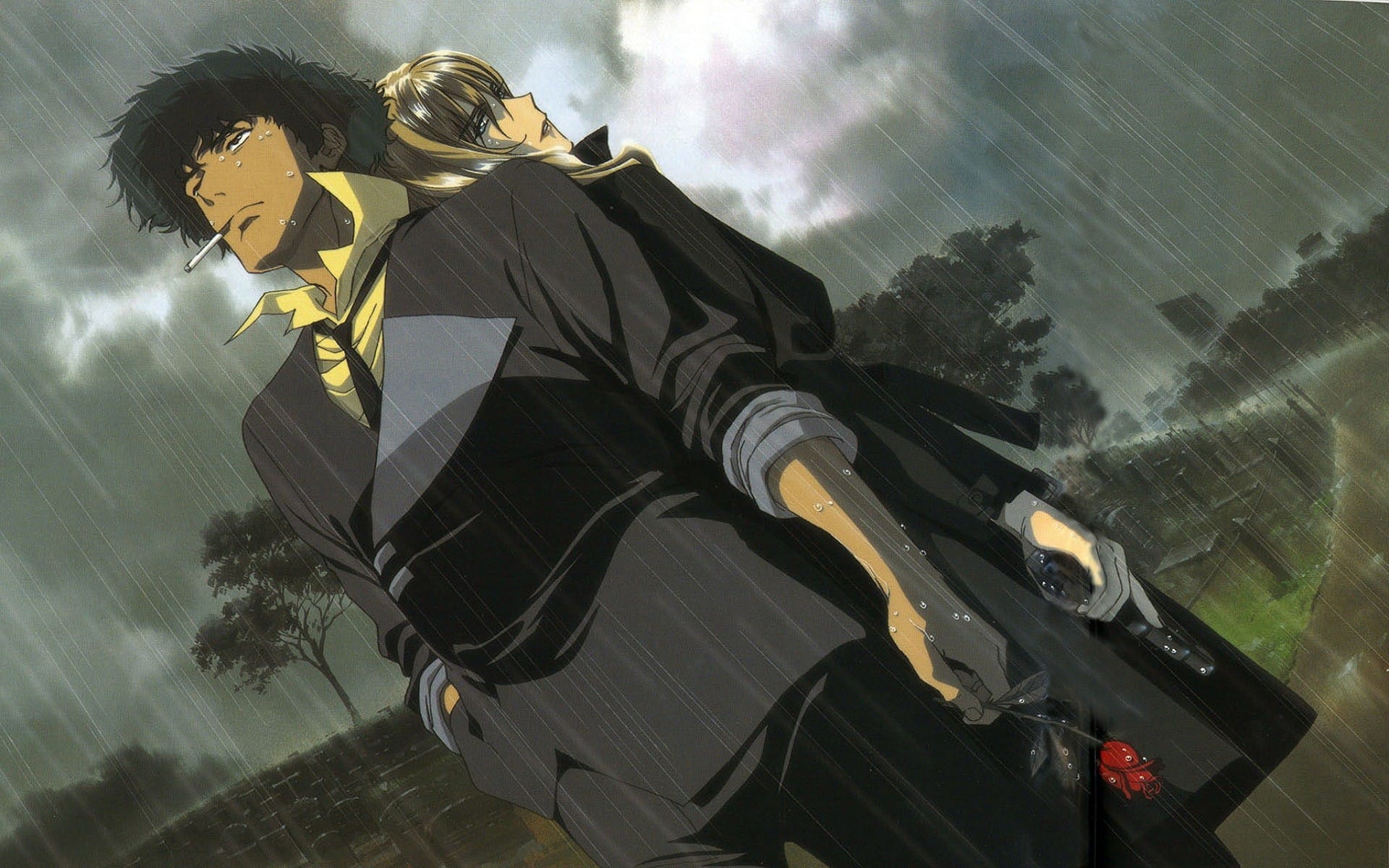
The sequence that follows is the show at its most operatic — a full assault on the syndicate’s stronghold, Spike fighting through waves of enemies with the same loose-limbed efficiency he always has, but with a finality in it now. Something has been decided. When he finds Julia, and then loses her in seconds, the show doesn’t linger or explain. It moves, the way loss actually moves through you — sudden, then slow, then sudden again.
His final conversation with Jet. The way Faye tries to stop him and can’t. The way Ed and Ein have already left, the crew dissolving around its center before the center walks into the fire. These are not accidents of plotting. They’re the show’s argument made concrete: the Bebop crew was always temporary. Found families are real, but the ghosts come for you eventually.
The final duel with Vicious. The aftermath. Spike ascending the stairs, meeting the remaining syndicate soldiers, that half-smile. He points his finger like a gun — the same gesture from his past, from the moments in his backstory we’ve glimpsed — and says: “Bang.” What happens next is left to implication. The screen cuts to stars. The final frame is a star going out.
The ending is controversial because it refuses comfort. It doesn’t give you a resurrection, a loophole, an ambiguous survival to debate online (well — people debate it anyway, but the text is not kind to optimistic readings). What it gives you is completion. Spike’s arc, which was always about a man who had stopped living fully, ends at the point where he finally, completely commits to something. Whether that’s life or death is almost beside the point. He woke up. The star goes out.
The closing theme rolls. “The Real Folk Blues.” Mai Yamane sings about living for the moment. It is, in context, devastating. You sit with it for a while.
Why Cowboy Bebop Transcends Anime — And Why That Framing Still Matters
There’s a version of the “transcends anime” argument that’s condescending — the idea that a thing is good despite being anime, as if the medium itself is a limitation to overcome. That’s not what this is. Cowboy Bebop transcends the category not because it escapes anime but because it demonstrates, definitively, what anime can do when it operates without self-imposed constraints.
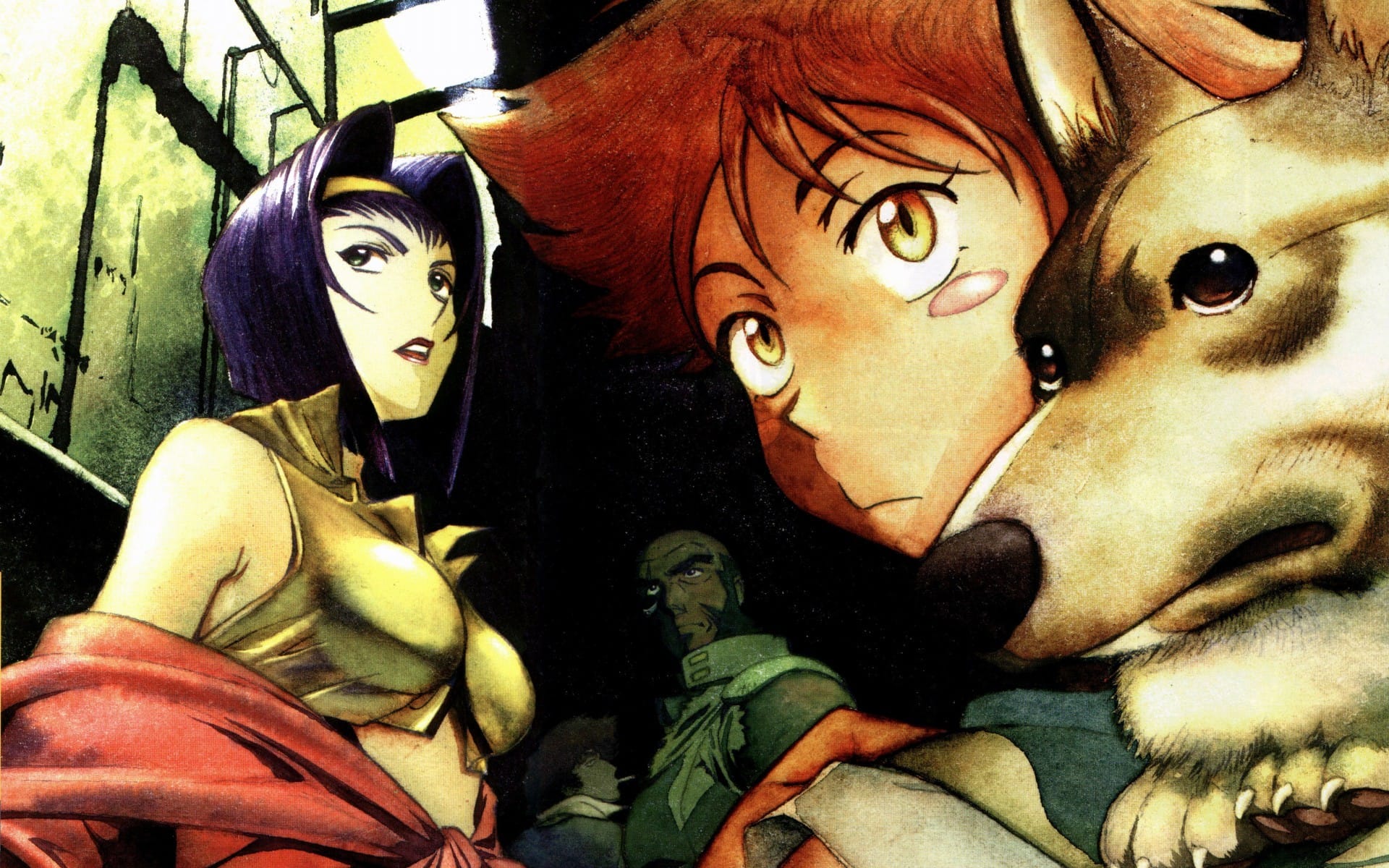
Watanabe built a show fluent in multiple cinematic languages simultaneously. The action choreography owes debts to John Woo and Bruce Lee films. The noir atmosphere borrows from Blade Runner and French crime cinema. The character dynamics have roots in Hollywood westerns. The humor occasionally tips into physical comedy that would fit in a Looney Tunes short. And all of it is filtered through a distinctly Japanese sensibility — the aesthetic of mono no aware, the beauty of impermanence, the elegance of understatement.
This cultural synthesis is meaningful beyond its influences. Cowboy Bebop was one of the first anime to genuinely break through to Western audiences who had no prior relationship with the medium — not through sanitized localization, but in its original form. It aired on Adult Swim in 2001 and introduced a generation of American viewers to anime as a serious artistic form. The argument isn’t that it’s the best gateway anime (though it might be); it’s that it proved the gateway didn’t need to be narrow.
What the show articulates, at its deepest level, is a philosophy of living in the present that it never states outright. The crew of the Bebop can’t go back — to their pasts, to the people they were, to the choices they didn’t make. They can only drift forward, session by session, finding moments of genuine connection in between the failures and the near-misses. It’s a profoundly adult set of concerns for a medium often dismissed as juvenile, and it renders them with a sophistication that holds up against anything in prestige television or art cinema of the same era.
The 2021 live-action adaptation on Netflix arrived, failed to capture any of this, and quietly disappeared. That failure is instructive. Cowboy Bebop’s qualities aren’t a matter of aesthetic surface — the retrofuturist sets, the cool costumes — but of a unified artistic vision, one where music, animation, direction, and writing operate in genuine harmony. That’s not reproducible by committee. It barely happened the first time.
Verdict: The Coolest Thing in the Room, Every Time
So here we are, nearly thirty years on, still writing the Cowboy Bebop review. Still recommending it to first-timers. Still going back to it ourselves between whatever’s new, whatever’s hot, whatever seasonal series has the internet’s attention this month. The question isn’t whether it holds up. The question is why everything else has so much trouble catching up.
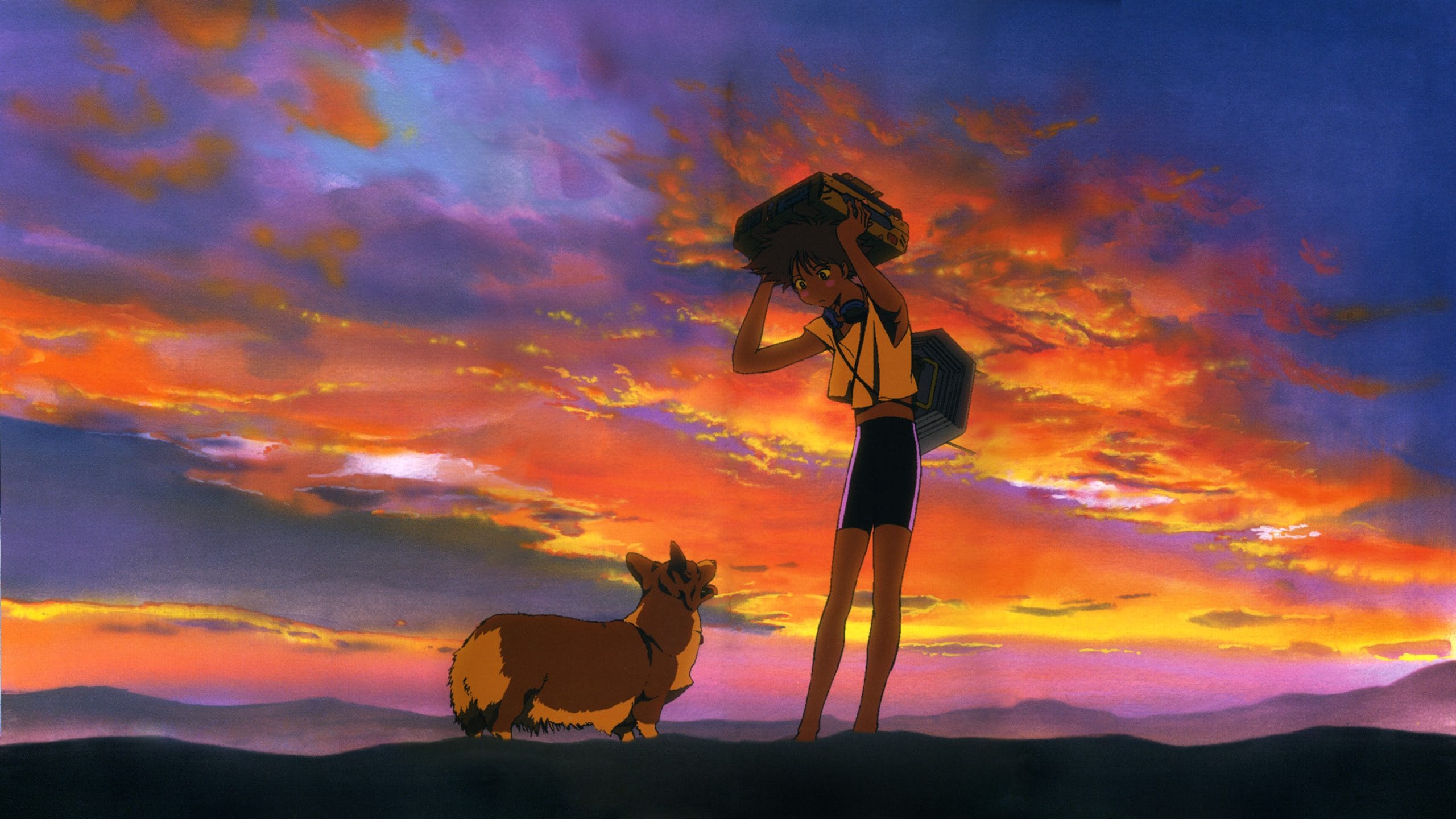
The answer is deceptively simple: Cowboy Bebop was made with absolute conviction. Watanabe knew what he was making. Kanno knew what she was composing. The animators at Sunrise — working with a budget that was not lavish by any measure — knew what they were rendering. The result is a show where every element points in the same direction, where nothing feels obligatory or produced by committee or calculated for demographic appeal. It feels made, in the old sense — crafted by people who cared, deeply, about making something that mattered.
There’s a reason the show’s final instruction feels like an epitaph for an era: You’re gonna carry that weight. It’s addressed to the characters, but it lands on the audience. You carry it because you were there. Because twenty-six sessions — or maybe forty hours if you’ve watched it a few times, or a hundred if you’ve really lived with it — made you feel something true about impermanence, about the cost of running from yourself, about the way the best things in your life are often happening while you’re busy looking backward.
If you’ve never seen it: watch it. Twenty-six episodes, approximately ten hours total. Do it properly — don’t skip the quiet sessions, don’t fast-forward the dialogue scenes, don’t watch it in the background while you’re on your phone. It deserves your attention. It’ll give you something back.
If you’ve seen it and it’s been a while: go back. You’re a different person now. The show will be slightly different too. That’s how the good ones work.
See you, Space Cowboy.
Series: Cowboy Bebop
Studio: Sunrise
Director: Shinichiro Watanabe
Episodes: 26 + 1 film (Knockin’ on Heaven’s Door)
Year: 1998–2001
Score: 10 / 10
Genre: Space noir, jazz anime, action, character drama
Best For: Anyone ready for anime to make them feel things they didn’t expect
You Might Also Enjoy
- Samurai Champloo Review — Watanabe Does It Again, With Hip-Hop
- Trigun Review — Another 90s Anime Classic That Never Gets Old
- Ghost in the Shell (1995) Review — The Philosophical Backbone of Cyberpunk Anime
- Neon Genesis Evangelion Review — The Other Anime That Changed Everything
- Best Space Anime of All Time — A Ranked List for the Serious Fan