Classroom of the Elite Season 4 Is Coming — And the Second Year Changes Everything
Mark your calendars. Classroom of the Elite Season 4 drops on April 3, 2026, and if you’ve been keeping up with the light novel, you already know the second year at Advanced Nurturing High School is where things stop being a psychological chess match and start becoming an all-out war. For everyone else? Buckle up. What you thought you knew about this show is about to get blown wide open.

COTE fans have been calling Year 2 the peak of the entire series for years. The class dynamics are sharper, the exam stakes are higher, and Kiyotaka Ayanokouji — everyone’s favorite emotionless genius — finally starts operating at a level that makes Season 1’s island exam look like a warm-up round. This isn’t just another cour of the same formula. The second year rewrites the rules entirely.
Whether you binged the first three seasons in a weekend or you’ve been following since 2017, this guide covers everything: what’s coming, who’s involved, how to catch it, and why the anime community has been absolutely losing its mind waiting for this arc. Let’s get into it.
Everything That Happened Before Season 4 — A Quick Recap
If you’re jumping back in after a break, here’s the essential context. Advanced Nurturing High School is Japan’s most prestigious institution — a government-run school with a 100% post-graduation success rate. But there’s a catch: students are secretly ranked into classes from A to D based on their perceived potential, and they earn or lose class points that determine their class standing. Only Class A graduates with full government support. Class D? You’re basically the school’s punching bag.

Season 1 introduced us to Class D and to Ayanokouji, the quiet, seemingly average student hiding a terrifying intellect. The season’s slow burn paid off with the reveal that Ayanokouji had been deliberately scoring exactly 50 on every test — and that he was far, far more capable than anyone suspected. The island exam brought Class D together, and Horikita Suzune began her evolution from cold loner to reluctant leader.
Season 2 escalated everything. The class points battles grew more cutthroat, alliances were tested, and Ayanokouji continued pulling strings from the shadows. The power dynamics between Class D and the other classes — especially the elite Class A — came into focus. We got deeper looks at the rival class leaders who would become major players in the second year arc.
Season 3 hit different. The sports festival arc raised the emotional stakes considerably, and the season ended with a seismic shift: Ayanokouji was exposed. His true abilities became known to key figures, making the careful anonymity he’d built crumble. Heading into the second year, he can no longer hide in the middle of the pack. That changes his entire strategy — and it makes Season 4 a completely different beast.
What Season 4 Is Actually About — The Second Year Breakdown
The second year at Advanced Nurturing High School begins with a structural shake-up: new first-year students arrive on campus. This sounds routine, but it’s anything but. The arrival of the new cohort triggers a fresh set of special exams specifically designed around the two-year dynamic — and the rules are brutal in ways the first-year exams weren’t.

The first major special exam of the second year pairs upperclassmen with new first-year students. Here’s the twist that has light novel readers hyped: only second-years face expulsion consequences. The first-years carry no risk. This inverts the power dynamic completely. Ayanokouji and his classmates aren’t just competing against their peers anymore — they’re responsible for people they’ve never met, who have their own agendas, their own hidden skills, and in at least one case, a deeply unsettling connection to Ayanokouji’s own past.
Among the new first-years is a student that the fandom has been theorizing about endlessly: a potential White Room product. If you don’t know what the White Room is yet, Season 4 is going to hit you like a freight train. If you do — you understand exactly why Ayanokouji’s carefully controlled world is about to fracture.

The second year arc also sees the class rankings in genuine flux. Class D has climbed, but reaching Class A means dismantling the students who’ve held that position with iron grip. Sakayanagi Arisu, the chess-prodigy leader of Class A, becomes a central figure. She’s brilliant, she’s calculated, and she’s been watching Ayanokouji with interest that goes beyond mere academic competition.
The White Room: COTE’s Darkest Mystery Gets Answers
If there’s one element that defines Classroom of the Elite Season 4’s narrative weight, it’s the White Room. We’ve had fragments across the first three seasons — glimpses of a government facility where children were subjected to extreme intellectual conditioning, stripped of emotion and socialization in the name of creating the “perfect human.” Ayanokouji is its most successful product, and he’s been running from it since the series began.
Season 4 brings the White Room out of the shadows. The arrival of a first-year student who shows abilities consistent with White Room conditioning forces Ayanokouji to confront what he is, where he came from, and whether he can maintain his “normal student” act when someone who speaks his language shows up. The psychological depth here is some of the strongest writing in the light novel series, and Studio Lerche has the material to do it justice.
This isn’t just backstory filler. The White Room plot thread directly impacts every major exam of the second year, because Ayanokouji’s father — the facility’s architect — hasn’t given up on reclaiming his most prized creation. The threat is no longer abstract. It’s structural, personal, and ticking like a countdown clock underneath every episode.
Ayanokouji’s Evolution: No More Hiding
Here’s what separates Season 4 from everything before it. In Seasons 1 through 3, Ayanokouji’s primary strategy was concealment. He manipulated from the shadows, let others take credit, and maintained a carefully curated image of mediocrity. That’s over.
With his cover blown among key players, Ayanokouji enters the second year operating more openly — and that means the full terrifying scope of his abilities becomes visible. He still doesn’t telegraph his moves, but when he acts directly, the results are devastating. The second year arc contains some of the most jaw-dropping strategic plays in the entire COTE universe, and watching them unfold in animation is going to break the fandom’s collective brain.
The Characters You Need to Know Heading Into Season 4
Season 4 has a large cast doing serious work. Here’s where each of the key players stands heading into the second year, and what to watch for.

Ayanokouji Kiyotaka
Class 2-D. The center of everything. His goal hasn’t changed — reach Class A without drawing unnecessary attention — but his methods are forced to evolve. He’s no longer operating with complete informational advantage. Some people know what he can do, and he has to account for that in every calculation. The Ayanokouji of Season 4 is sharper, more aggressive when necessary, and actively managing multiple threats simultaneously.
Horikita Suzune
Class 2-D. Horikita’s arc through Seasons 1–3 was about learning that she can’t win alone. Season 4 pays off that growth in full. She’s not just a supporting player in Ayanokouji’s schemes anymore — she’s become a legitimate class leader with her own strategic instincts, and watching her operate independently while also navigating her complicated dynamic with Ayanokouji is one of the season’s biggest draws.
Karuizawa Kei
Class 2-D. Karuizawa’s relationship with Ayanokouji is one of the most fascinating dynamics in the series — equal parts partnership and emotional minefield. She knows more about him than almost anyone. Season 4 puts that relationship under real pressure, and her own strength as a character gets tested in ways the show hasn’t attempted before. She’s not a damsel or a side character. Pay attention to her.
Ichinose Honami
Class 2-B. One of the most genuinely good people in a school full of manipulators, Ichinose leads Class B with earnestness and empathy. Season 4 doesn’t let her off easy. The second year tests her philosophy hard, and the question of whether kindness is a viable strategy in Advanced Nurturing High School becomes pointed and painful when it’s applied to someone you actually like.
Sakayanagi Arisu
Class 2-A. If you want to talk about the best anime villains — and Sakayanagi absolutely belongs in that conversation — Season 4 is her moment. She’s been sitting at the top of the class hierarchy with impeccable calm, watching everyone beneath her scramble. When she finally turns her full attention toward Ayanokouji, it’s one of the most electric rivalries the show has produced. Two chess players who both know the other is playing at a different level.
The New First-Years
This is where Season 4 introduces genuinely fresh energy. The new cohort arrives with their own class dynamics, their own hidden agendas, and at least one student who immediately sets off every alarm bell in Ayanokouji’s head. The first-year characters bring a contrast that sharpens everything about the second-year cast — they’re raw where the older students are calculated, and their unpredictability is its own kind of threat.
The potential White Room student among the first-years is one of the most anticipated character introductions in recent memory for COTE fans. Light novel readers have been waiting years to see this animated, and the buildup the show has done through three seasons means the payoff should hit hard for anime-only viewers who’ve been collecting every White Room breadcrumb.
Studio Lerche, Animation, and Where to Watch
Studio Lerche returns for Season 4, maintaining the continuity that matters most: the visual language of the series. Lerche has been responsible for the clean, deliberately restrained animation style that suits COTE perfectly — this isn’t a show that needs flashy battle sequences, it needs precise character expression and atmosphere, and Lerche delivers both.

The studio has evolved its approach across the seasons, and the improvement in how it renders Ayanokouji’s internal monologue sequences has been notable. The blank affect he presents to the world versus the cold fire behind his eyes — that contrast is everything in this story, and Lerche has gotten progressively better at depicting it. Season 4 should be their strongest visual work on the series yet.
For streaming, Crunchyroll is expected to carry Classroom of the Elite Season 4 for international audiences, consistent with previous seasons. Simulcast details will be confirmed closer to the April 3, 2026 premiere date. If you’re in a region where Crunchyroll has coverage gaps, check out what’s available on Netflix for catch-up viewing on the earlier seasons while you wait.
For newcomers, the full series is worth watching from the beginning before Season 4 lands. Season 1 does a lot of world-building legwork that pays dividends in the second year arc — if you drop in cold at Season 4, you’ll miss about 40% of why every scene matters. COTE is also a fantastic entry point for people new to anime; we’ve got a full piece on the best anime for non-anime fans that lists it as a top recommendation for exactly that reason.
Why Year 2 Is the Peak — What the Light Novel Readers Have Been Saying
Ask any dedicated COTE fan which arc converted them from interested viewer to obsessed community member, and the answer is almost universally the second year. The light novel adaptation has been building to this point across every volume, and there are specific structural reasons why Year 2 hits differently.
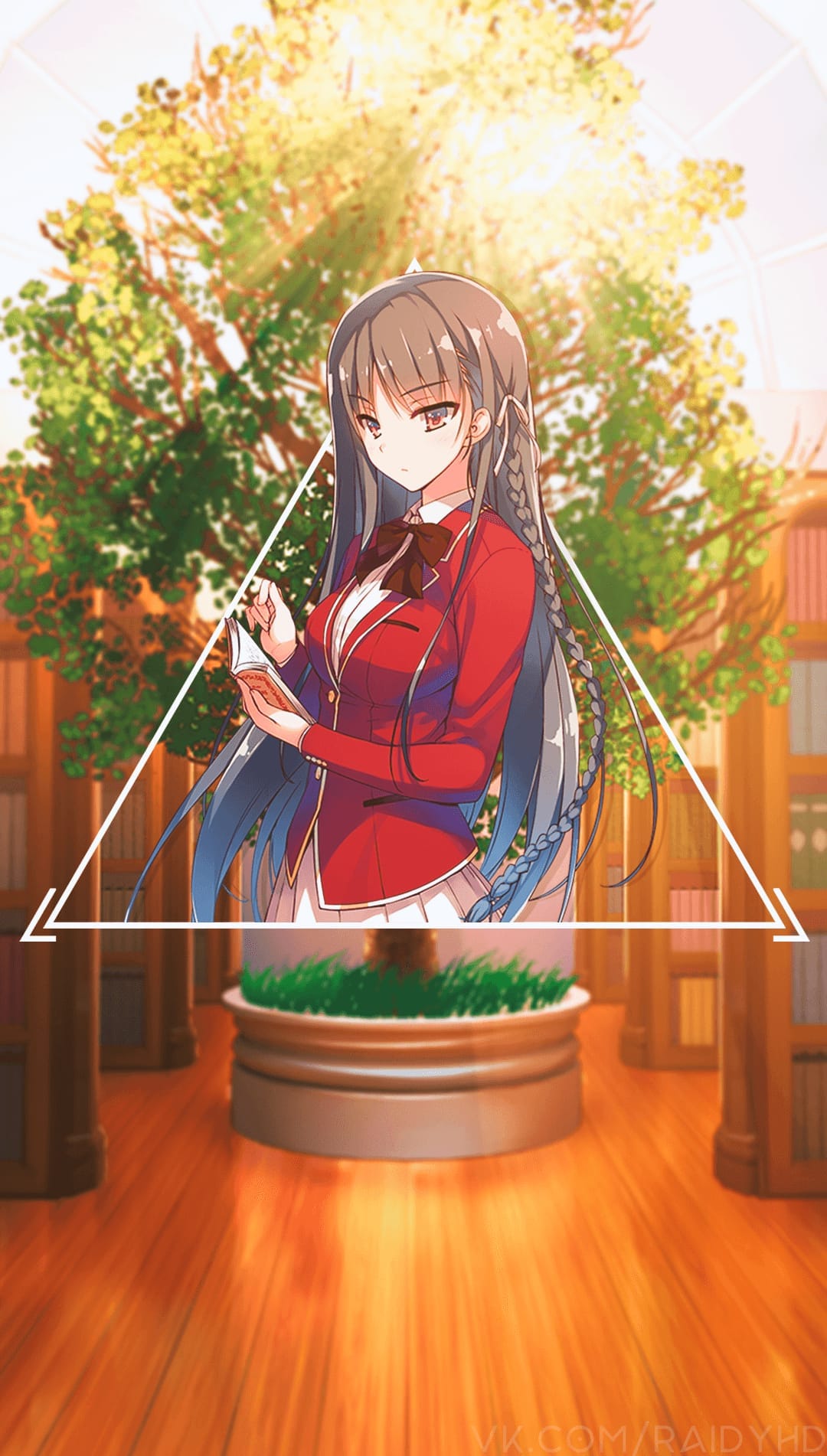
First: the stakes are finally existential. In Year 1, the worst outcome for any individual was expulsion — painful, but contained. Year 2 introduces threats that extend beyond the school. The White Room isn’t a metaphor. The government facility is real, it’s active, and it wants Ayanokouji back. The stakes go from “who gets expelled” to “who gets to exist freely.” That elevation is felt in every exam and every interaction.
Second: the characters have earned their complexity. Three seasons of development mean that when Horikita makes a difficult call, or Karuizawa faces a confrontation, or Sakayanagi smiles with her eyes while her expression stays neutral — you feel the weight of every previous moment attached to it. Year 2 is a payoff machine for people who’ve been paying attention.
Third: Ayanokouji stops pulling punches. Light novel readers talk about specific moments in Year 2 with the kind of reverence usually reserved for legendary sports moments or perfect album tracks. There are chapters — soon to be episodes — that the community has described as “COTE at its absolute ceiling.” The chess match between Ayanokouji and the forces aligned against him becomes so intricate, so layered, that multiple re-reads (or re-watches) are basically mandatory to catch everything.
Season 4 of Classroom of the Elite isn’t just the next chapter. For the community that’s been reading ahead, it’s the destination they’ve been waiting to share with anime-only fans. It’s one of the most anticipated anime of Spring 2026 for good reason — and after years of patience, the payoff is real.
How to Get Ready for Classroom of the Elite Season 4
April 3, 2026 is coming fast. If you want to be ready — genuinely ready, not just “I remember the broad strokes” ready — here’s the full prep list.
Re-watch Season 3’s final episodes. Specifically the back half, where Ayanokouji’s exposure arc plays out. The specific characters who become aware of his abilities, and the nature of what they know, directly shapes Season 4’s opening dynamics. The setup is all there; you just need it fresh.
Read up on the White Room. Without going full spoiler-mode, understanding that the White Room is a government conditioning program that produced Ayanokouji — and that it still exists and still operates — gives you the frame to understand why certain first-year students trigger the reaction they do in Season 4’s early episodes.
If you want to go deeper, the Classroom of the Elite Wiki is a well-maintained resource for character backgrounds and exam mechanics. Just set your spoiler filters appropriately — the wiki covers the light novel, and Year 2 has some reveals you’ll want to experience in animation form first.
And if you’re bringing friends into the series for the first time before Season 4, the full Spring 2026 lineup context is worth knowing — COTE is part of a stacked season. Check our Spring 2026 anime season complete guide for everything dropping alongside it, because your watch schedule is about to get very full.
Seven years after the first season aired, Classroom of the Elite is having its defining moment. Season 4 isn’t a continuation — it’s the culmination of everything the series has been building. The second year at Advanced Nurturing High School starts April 3rd. Be there.
The Special Exam System in Year 2 — Why the Rules Hit Harder
One thing the previews and episode breakdowns have already confirmed: Year 2’s special exam structure is fundamentally different from the first year’s. The first-year exams were largely contained within the second-year class dynamics — Class D versus Class C versus Class B versus Class A, with expulsion as the maximum consequence. Everyone was playing the same board with the same pieces.
The second year introduces cross-year exam formats that break that symmetry deliberately. When first-years are paired with second-years and only the upperclassmen carry expulsion risk, it forces a calculation that never existed before: how much do you trust someone you’ve never met, who has no skin in the same game, and who might be operating under entirely different instructions? The asymmetric risk structure is the exam designers’ masterstroke, and it reveals character fast.
Ayanokouji’s ability to read people — to identify within minutes who is useful, who is dangerous, and who is a liability — becomes mission-critical in this environment. He can’t afford a slow build with the first-years. He needs accurate reads under pressure, and the show communicates that urgency in a way that makes early Season 4 episodes feel electric even before the major reveals land.
Beyond the pairing exams, the second year introduces written challenges and judgment calls that test moral reasoning, not just strategy. Some exams have no clean “right answer” — they’re designed to force students into choices that reveal their values under pressure. This is where characters like Ichinose, whose entire operating philosophy is built on trust and fairness, face their hardest tests. And it’s where watching Ayanokouji navigate the same situations — arriving at “correct” answers through calculation rather than conscience — becomes genuinely unsettling in the best way.
What Makes COTE Stand Apart From Other Psychological Anime
Psychological anime has a crowded field. Death Note, Code Geass, Talentless Nana, The Promised Neverland — there’s no shortage of shows built around genius-level mind games. So what separates Classroom of the Elite from the pack, and why does it earn a dedicated following that follows it across nearly a decade of adaptations?
The answer is mundanity as the battleground. COTE doesn’t give its genius characters supernatural powers, impossible technology, or life-or-death stakes in the conventional sense. The battles are fought in classrooms, on sports fields, during written exams, and through social manipulation in school cafeterias. The “power” on display is human intelligence applied to human systems, and that grounded frame makes it hit closer to reality than almost any other entry in the genre.
Ayanokouji isn’t battling a villain with a Death Note. He’s navigating institutional rules, managing group psychology, and exploiting the gap between what people present publicly and what they actually want. That’s a chess match most viewers have some intuitive connection to — school, work, social hierarchies — and watching a master operate in a familiar arena is more visceral than watching power levels collide.
Season 4 takes that grounded intensity and turns up the volume by making the institutional stakes personal. The school isn’t just a setting anymore. It’s a contested space between Ayanokouji’s desire for freedom and outside forces that see him as property. The psychological tension in Year 2 comes from that collision between the mundane (class exams, point totals, student rankings) and the profound (identity, autonomy, what it means to be human when you’ve been engineered). That’s a combination very few anime — or stories in any medium — manage to pull off.
If you’re looking for context on where COTE fits in the broader anime scene, our piece on the best anime antagonists covers why Sakayanagi and even Ayanokouji himself occupy morally complex spaces that elevate the genre. Year 2 makes that complexity impossible to ignore.