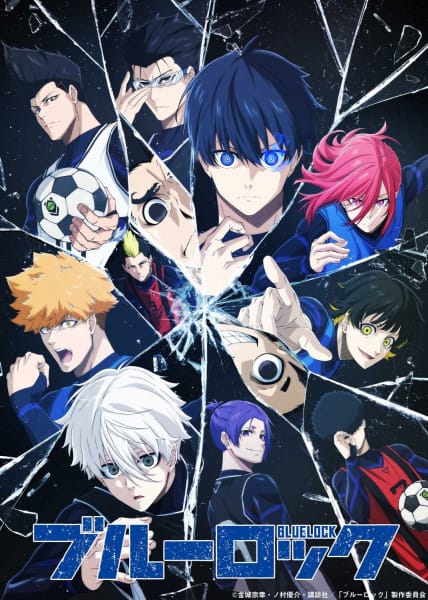
Why Blue Lock Season 2 Is the Anime Everyone Won’t Shut Up About Right Now
If your timeline isn’t flooded with Blue Lock Season 2 clips, you’re following the wrong accounts. Seriously — every week another moment drops that breaks the internet, whether it’s Isagi constructing an impossible goal, Rin going absolutely feral, or an animation cut so clean it looks like a different show from Season 1. Blue Lock Season 2 picked up right where it left off and then immediately sprinted past every expectation fans had walking in. This is the hottest anime of Winter 2026, and it’s not particularly close.
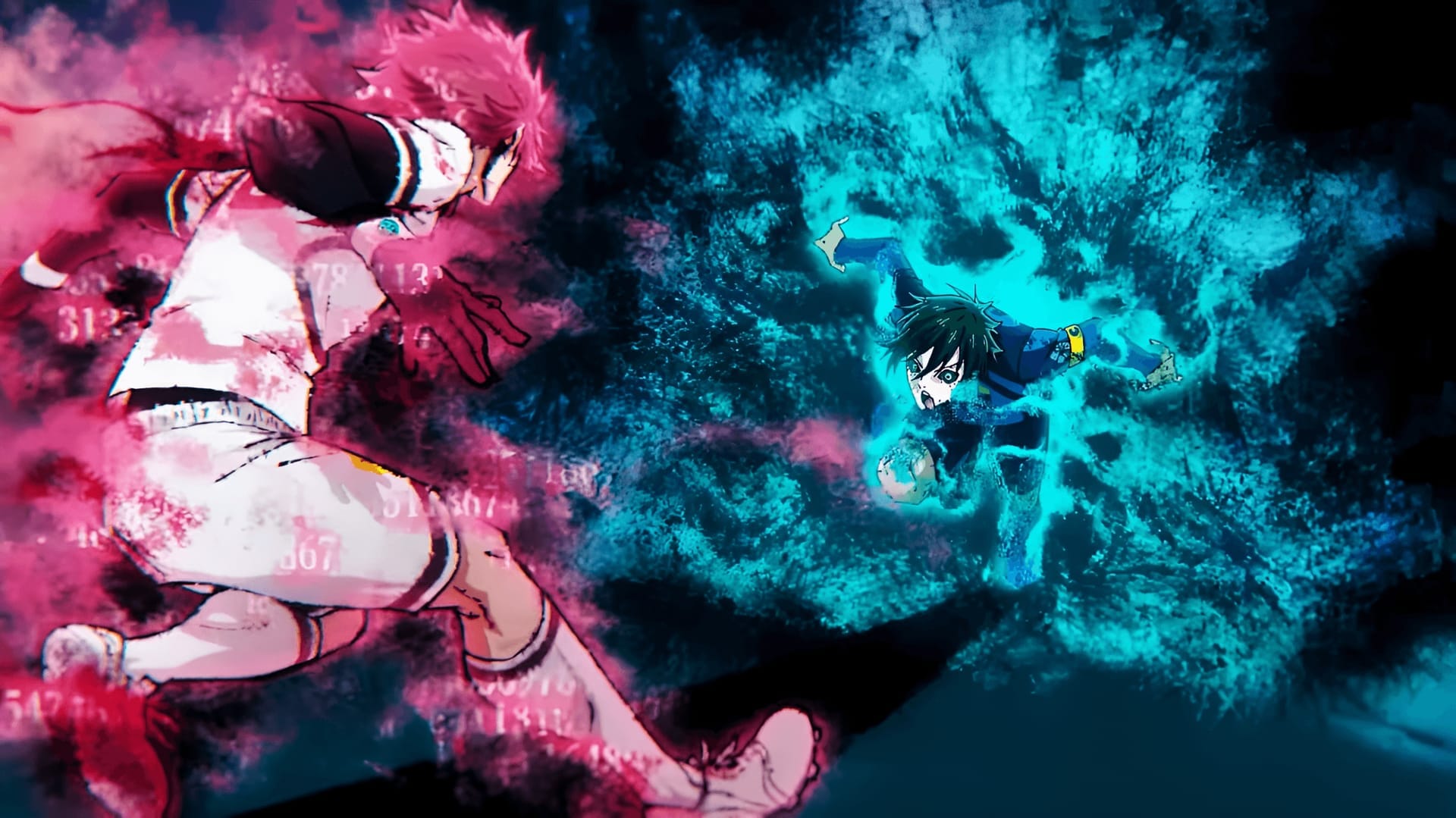
What makes Blue Lock Season 2 such a monster hit isn’t just that it’s a good sports anime — it’s that the entire competitive structure has shifted into something that feels genuinely new. The Neo Egoist League format means these aren’t high school kids fumbling toward their dreams anymore. These are contracted professionals playing for real money, real pride, and Japan’s shot at the World Cup. The pressure has multiplied by a factor of ten, and the show is absolutely eating it up.
Whether you’re a day-one fan who read the manga and still screamed at the screen anyway, or you’re a newer convert who got absolutely bodied by Season 1 and came crawling back for more, this article breaks down everything happening in Blue Lock Season 2 — the arc structure, the character arcs, the animation glow-up, and exactly where everyone stands in the power hierarchy right now. Buckle in. This is going to be a long one, because this season deserves it.
What Is the Neo Egoist League? The New Format Explained
Okay, so let’s make sure everyone’s on the same page, because the format shift in Blue Lock Season 2 is genuinely significant and not just a cosmetic change. After the Blue Lock project’s first phase, the players who proved themselves didn’t just graduate into normal football careers. They got absorbed into the Neo Egoist League — a special inter-club competition organized in the shadows of Japan’s professional football structure, specifically designed to pressure-test whether the program actually produced a world-class striker.
Here’s how it works: the Blue Lock graduates have been distributed across multiple professional clubs, each one competing in this special league format running parallel to their normal club duties. The best striker who emerges from this crucible gets the nod as Japan’s designated weapon for the World Cup qualifying campaign. It sounds bureaucratic on paper, but in execution it means every single match carries consequences that the U-20 arc only teased. These are real contracts. Real wages on the line. Real reputations being built or destroyed in real time.
What the Neo Egoist League does brilliantly — and what Blue Lock Season 2 communicates so well — is that it strips away the artificial safety net of “it’s just a development program.” In Season 1, the worst that happened to losing players was being cut from Blue Lock. Brutal, sure, but ultimately recoverable. In Blue Lock Season 2, a bad run of matches means contract questions, sponsor pressure, and the very real possibility of watching your World Cup dream evaporate while some guy on another team steals your slot. The ego isn’t just an attitude anymore — it’s a survival mechanism.
The World Cup shadow looming over everything gives Blue Lock Season 2 a geopolitical tension that elevates it beyond typical sports anime. Japan isn’t just trying to make the World Cup — Japan is trying to prove it can produce a striker who belongs on the same field as the best forwards on the planet. And that’s the whole point. That was always the whole point. The Neo Egoist League is the final exam, and the grade is given on the world stage.
If you haven’t checked out our Blue Lock Season 1 review to get the full context, do that first — because understanding exactly how far these players have come makes the stakes of Season 2 hit so much harder.
Isagi’s Evolution: From Reactive Genius to Active Architect
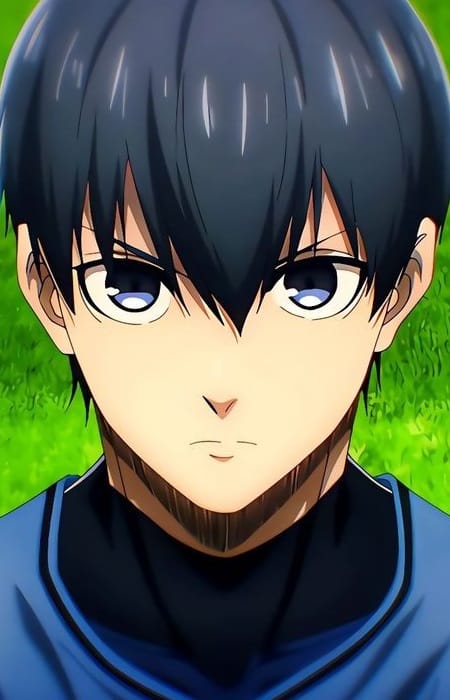
The most satisfying throughline in Blue Lock Season 2 is watching Yoichi Isagi complete his transformation. And “complete” might be the wrong word, because the show is smart enough to keep him growing — but the nature of his growth has fundamentally shifted. In Season 1, Isagi’s meta-vision was essentially reactive. He could read the field, spot openings other players missed, and exploit them with frightening precision. That was already elite-level football intelligence. But in Blue Lock Season 2, he’s doing something categorically different.
He’s not reacting to moments anymore. He’s constructing them. There’s a crucial distinction between a player who reads a situation and a player who engineers one, and Isagi has crossed that line. He’s now deliberately setting up chains of events multiple touches in advance, positioning himself and manipulating his opponents’ movements so that by the time the ball arrives where he needs it, everyone else is exactly where he wanted them to be. It’s chess, except the pieces don’t know they’re being moved.
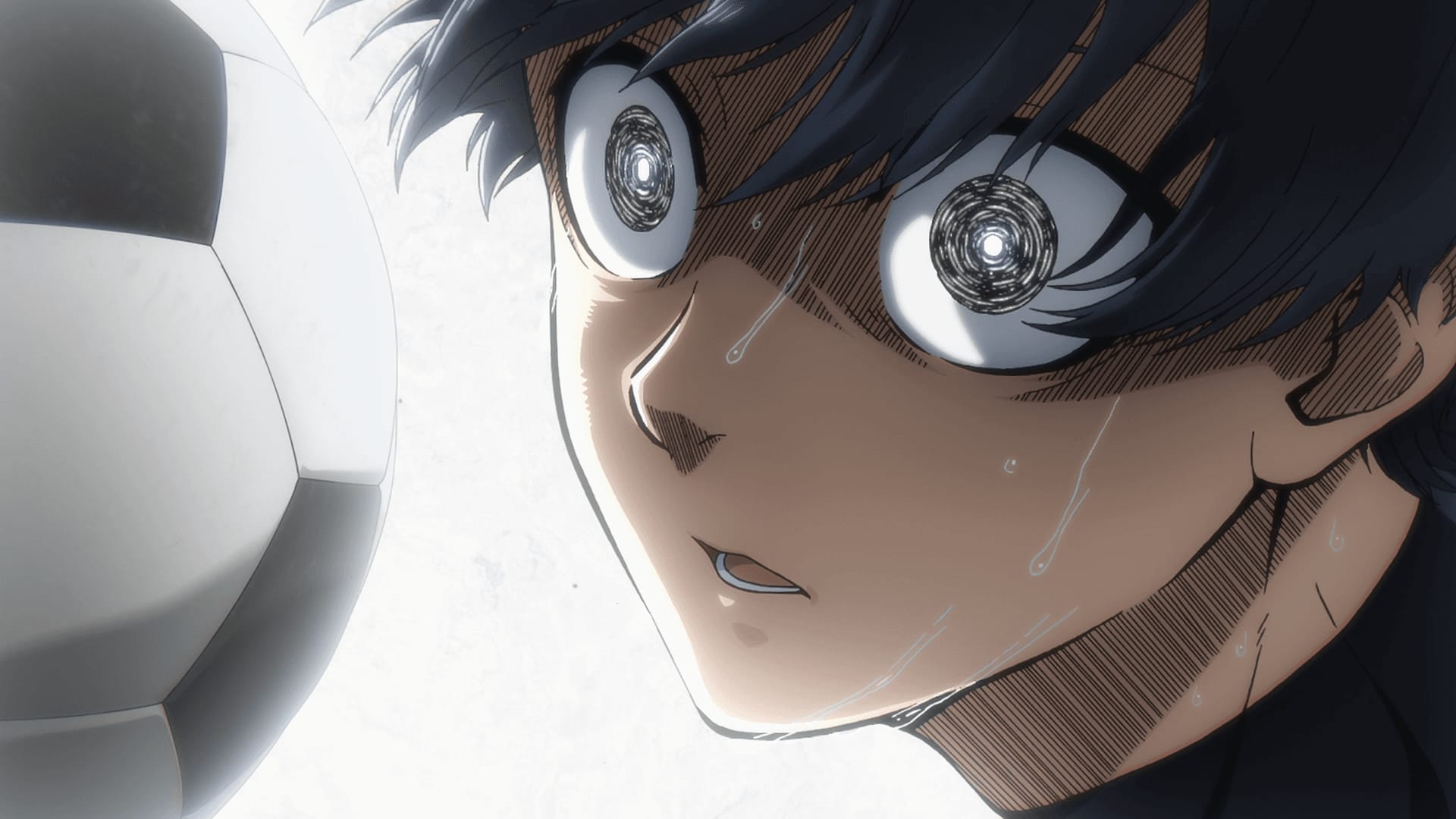
The key moments showcasing this in Blue Lock Season 2 are genuinely thrilling to watch. His ability to identify the one player on the opposing side who will make the “correct” defensive decision — and then exploit that correctness as a weapon against them — is something that felt like theory in Season 1 and has become beautiful practice in Season 2. When Isagi sets a trap three passes before it springs, and you see the camera cut to his face already wearing the ghost of a smile, it’s one of the most consistently satisfying recurring beats in the whole season.
What Blue Lock Season 2 also does well is honor the cost of this growth. Isagi hasn’t become invincible. He’s been physically dominated, out-experienced, and occasionally just flat-out beaten by players whose raw gifts exceed his own. But every loss feeds the machine. His meta-vision expands with each defeat. The show treats his losses with the same dramatic weight as his victories, which is exactly the kind of storytelling that turns good sports anime into great ones. If you want to see where we predicted his trajectory going, check out our striker predictions article — some of those calls are looking very spicy right now.
The Itoshi Brothers: The Sibling Rivalry That’s Breaking Everyone’s Heart
Look, I’ve been watching anime for a long time, and I have a pretty high threshold for “best rivalry in the show.” But Rin versus Sae Itoshi in Blue Lock Season 2 has genuinely jumped into the conversation for best anime rivalries of all time — and not just best sports anime rivalries. The emotional architecture here is exceptional.
Let’s set the stage. Sae Itoshi is Japan’s best player. Cold, calculating, technically flawless, and operating with the emotional temperature of a chess engine. He doesn’t hate his younger brother. That would be too warm. Sae has simply decided that Rin is not at his level, and he processes this as a fact rather than a wound. That casual dismissal — that certainty — is what makes him such a compelling antagonist, because he’s not wrong about where they started, and he might not be wrong about where they are right now. Might.
Rin Itoshi is everything his brother is not. Raw, furious, operating on a hunger that borders on pathological. His entire football journey has been about one thing: proving Sae wrong. Not surpassing Sae for the sake of glory or the World Cup or Japan — surpassing Sae because Sae looked at him and saw limitation. Blue Lock Season 2 peels back the history between these two in ways that make both of them more sympathetic and more complicated, and the result is that when they finally face each other properly on the field, you genuinely don’t know how you want it to go.
Their confrontation mid-season in Blue Lock Season 2 is one of the best sequences the show has produced, period. The animation team clearly knew what they had here and did not hold back. But more than the technical craft — and the craft is stunning — it’s the quiet moments between the action that land. A look. A hesitation. A fragment of dialogue that tells you exactly how deep this wound goes without spelling it out. The Itoshi brothers are the emotional backbone of this entire arc, and Blue Lock Season 2 handles them with a level of care that earns every emotional beat it asks you to feel.
Nagi and Reo: When a Partnership Has to Evolve or Break
The Seishiro Nagi and Reo Mikage storyline in Blue Lock Season 2 is the sleeper arc of the season, and I genuinely think it’s been underrated in the discourse. Everyone’s (rightly) obsessed with the Itoshi brothers and Isagi’s power-up moments, but what’s happening to Nagi is quietly one of the most interesting character developments in the whole show.
Nagi has always been the frustrating genius — obscene natural talent applied with minimal effort, a player who’s brilliant almost by accident. His whole arc in Season 1 was about finding a reason to care, and his partnership with Reo gave him that. Reo’s ambition became the engine for Nagi’s potential. It was a beautiful, slightly codependent arrangement that worked precisely because neither of them questioned it. Blue Lock Season 2 forces both of them to question everything.
Under the pressure of the Neo Egoist League and the professional environment, cracks appear. Reo’s own ambition — his hunger to be more than the guy who enabled Nagi’s greatness — starts pushing against the dynamic in ways that neither of them anticipated. And Nagi, stripped of the structure that Reo provided, has to figure out whether he can be extraordinary on his own terms. His awakening as an independent force in Blue Lock Season 2 is something else. There are moments where Nagi does things that even Isagi can’t fully account for in his meta-vision, and the show frames them with this sense of terrifying, unharnessed potential finally choosing to commit.
The friendship doesn’t collapse, exactly. But it has to rebuild on different terms, and watching two people who genuinely care about each other navigate the ways professional competition reshapes relationships is more emotionally honest than sports anime usually bothers to be. Blue Lock Season 2 earns real investment in these two characters, and their storyline pays off in ways that are both satisfying and bittersweet in equal measure.
Animation Quality: EIGHT/8bit Went Absolutely Crazy This Season
I want to talk about what EIGHT/8bit studio has done with Blue Lock Season 2, because it deserves a dedicated conversation. Season 1 looked good. The match sequences had energy, the character animation was solid, and they captured the manga’s distinct visual energy reasonably well. But Blue Lock Season 2 is operating on a categorically different level, and you feel it from the first major match sequence.
The physicality of the movement in Blue Lock Season 2 is the biggest upgrade. Football animation is notoriously difficult to do well — there’s a reason so many sports anime just cut to highlight moments and avoid showing sustained play. 8bit is showing the play. Sustained runs, overlapping player movements, ball physics that feel consistent with the player’s stated skill level — the kind of details that the hardest-core football fans would nitpick, and largely can’t. The match sequences feel kinetic in a way that makes you feel the speed, which is what anime football coverage needs to do above everything else.
Specific standout episodes: the first full Neo Egoist League match in the early season run features a goal sequence that became an immediate fan clip — the way Isagi’s movement is animated against the defensive shape, with the camera cutting between his perspective and the field view, is genuinely cinematic. And the Itoshi brother confrontation later in the mid-season stretch is the animation peak of Blue Lock Season 2 so far. The expressiveness of Rin’s face in that sequence — the shift between controlled fury and raw hurt — is the kind of character animation that gets you invested in ways the writing alone can’t achieve.
Compare this to Season 1, and the difference is stark. Season 1 relied more heavily on visual shorthand — speed lines, stilled impact frames, limited motion during key moments. Blue Lock Season 2 has clearly had more budget, more prep time, or both, and the result is a show that looks as expensive as its premise demands. This is a story about the best footballers in Japan. They should look superhuman. And in Blue Lock Season 2, they do. For more context on why modern anime has hit this visual peak, check out our piece on why modern anime animation is so good — the industry-wide trend that’s making seasons like this possible.
Mid-Season Power Rankings: Where Everyone Stands as of February 2026
Alright, this is the section where I get to be subjective and everyone gets to argue with me in the comments. Love that for us. Here’s where the major players in Blue Lock Season 2 stand as of February 2026, ranked not just by raw ability but by how much impact they’re having on the Neo Egoist League arc right now.
| Tier | Player | Status in Blue Lock Season 2 |
|---|---|---|
| God Tier | Sae Itoshi | Japan’s best player. Still untouchable. The ceiling everyone else is measuring themselves against. |
| Elite Tier | Rin Itoshi | Closing the gap to Sae at a terrifying pace. Best version of Rin we’ve seen. Peak performance incoming. |
| Elite Tier | Yoichi Isagi | The architect. Meta-vision fully evolved. He’s not the most gifted player on any given field — he’s the most dangerous one. |
| High Tier | Seishiro Nagi | Independent awakening underway. When he commits fully, the ceiling is genuinely scary. |
| High Tier | Shido | The new antagonist. Malicious, gifted, and built to make you hate him while respecting his game. |
| Solid Tier | Barou | King mentality in full effect. Physical dominance. Still figuring out how to work with (and against) former teammates. |
| Solid Tier | Bachira | Dribbling monster. Less screen time in the Neo Egoist League arc so far, but every touch is electric when he’s on. |
The introduction of Shido as a genuine villain presence in Blue Lock Season 2 is worth highlighting separately. Previous antagonists in Blue Lock were rivals — players whose values clashed with Isagi’s or whose methods were extreme but comprehensible. Shido is something different: a player who weaponizes the egos of others, who treats teammates as instruments and opponents as entertainment. He’s infuriating to watch in exactly the right way, and Blue Lock Season 2 hasn’t been shy about positioning him as a threat that operates on a different frequency than anything Isagi has faced before.
Barou’s arc in Blue Lock Season 2 is also worth tracking closely. His “I am the King” mentality hasn’t softened — but the Neo Egoist League is forcing him to find ways to dominate that don’t rely on sheer physical supremacy alone. He’s growing, even if he’d never admit it. And Bachira, while slightly sidelined compared to his Season 1 prominence, remains one of the most watchable players on screen whenever he has the ball. The dribbling animation for Bachira in Blue Lock Season 2 is particularly excellent — fluid and unpredictable in ways that match his character perfectly.
The honest answer to “who wins the Neo Egoist League?” is that Blue Lock Season 2 is doing a brilliant job keeping it genuinely uncertain. Any of the top four players listed above has a credible path to being named Japan’s ultimate striker, and the show has done enough work on each of them that whichever direction it goes will feel earned rather than arbitrary. That’s hard to pull off, and it’s one of the main reasons the fandom is so hyper-engaged right now. We genuinely don’t know, and we’re loving not knowing.
Should You Watch Blue Lock Season 2? The Verdict
Short answer: yes. Obviously yes. If you’re reading a 3,000-word breakdown of Blue Lock Season 2 and you haven’t started watching yet, what are you doing with your life? Get on it immediately. But let me break down the “yes” depending on where you’re coming from, because the path in differs.
If you watched Season 1: There is no question here. Blue Lock Season 2 is everything the first season built toward, executed at a higher level across almost every metric. The character work is deeper, the animation is better, the stakes are higher, and the emotional investment you built in Season 1 pays off in ways that will genuinely catch you off guard. This is exactly the sequel a show like Blue Lock deserved, and it delivers. Clear your schedule on episode drop days. You’ve been warned.
If you’re a newcomer: Do not start with Blue Lock Season 2. I know that sounds annoying, but Season 1 is essential viewing — it establishes the entire philosophical framework of the show, builds the character relationships that Season 2 then weaponizes, and contains some genuinely great football anime in its own right. Check out our Blue Lock Season 1 review for the full rundown, and then blast through the first season on MyAnimeList before jumping into Season 2. You’ll thank yourself for doing it in order.
Where to watch: Blue Lock Season 2 is streaming on Crunchyroll with subtitled and dubbed options available. Amazon Prime Video has also picked up the series in certain regions, so check your local availability. New episodes drop weekly, and I genuinely recommend watching them as they air rather than waiting to binge — the community discussion around each episode is half the experience at this point.
The bottom line on Blue Lock Season 2: This is a show that arrived in Winter 2026 and immediately started competing for the top spot on every seasonal ranking. It’s not just the best sports anime currently airing — it’s one of the best anime currently airing, full stop. The combination of genuine character depth, escalating stakes, and animation that finally matches the ambition of the source material has produced something that feels genuinely special. We’re watching Blue Lock grow into the kind of franchise that people are still going to be talking about years from now, and Blue Lock Season 2 is the chapter that proves it wasn’t a fluke.
We’re living in a moment where anime keeps producing seasons that redefine what the medium can do — and Blue Lock Season 2 is a perfect example of that. For more on that bigger picture, check out our piece on living in the golden age of anime, because this season is Exhibit A for why that argument holds up. And if you want the full Winter 2026 context, our best anime of Winter 2026 guide situates Blue Lock Season 2 in a season that’s genuinely stacked from top to bottom.
The Neo Egoist League isn’t done. The Itoshi brothers haven’t had their final reckoning. Isagi’s meta-vision still has room to expand, and Shido hasn’t fully shown his hand yet. Blue Lock Season 2 is mid-arc and already operating at a level that would make most series’ finales jealous. Whatever comes next, we’re here for every second of it.
You Might Also Like
- Our Blue Lock Season 1 Review — The Complete Breakdown
- Our Striker Predictions Article — Who Becomes Japan’s Ultimate Forward?
- Best Anime of Winter 2026 — The Full Season Rankings
- Best Anime Rivalries of All Time — Where Does Rin vs Sae Rank?
- Why Modern Anime Animation Is So Good — The Studio Breakdown