The Villain Who Could Have Won From the Start — And Nearly Did
Let’s be honest. When we talk about the best anime villains of all time, Yhwach deserves a spot near the top of that list — not just because he’s intimidating or has a cool design, but because his power is genuinely, objectively broken in a way that almost no fictional villain can match. Yhwach’s Almighty isn’t just a strong ability. It’s an ability that bends the rules of what it even means to fight someone. We’re talking about a power that lets him see every possible future, choose which one becomes real, and overwrite any outcome that doesn’t suit him. If you haven’t seen Bleach: Thousand-Year Blood War yet, stop reading — because we’re going deep, and the spoilers here are massive.
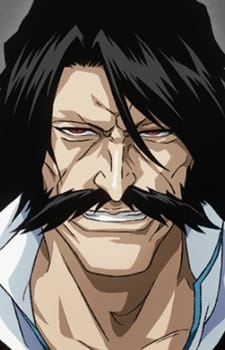
The Almighty is the reason the entire Soul Society, Squad Zero, the Royal Guard, Ichigo Kurosaki, and even Sosuke Aizen combined still barely managed to scratch this guy. It’s the reason the final arc of Bleach is considered one of the most ambitious storylines in shonen history. And it’s the reason anime fans are still arguing about whether Yhwach’s defeat was earned or handed out of narrative necessity. Here’s the thing — that debate only exists because Yhwach’s power was that overwhelming. Let’s break down exactly how the Almighty works, why it should have been unbeatable, and what it means for Yhwach’s legacy as one of the most overpowered antagonists in the medium.
What Is the Almighty? Breaking Down Yhwach’s Most Overpowered Ability
Every Sternritter — the elite soldiers of the Wandenreich — is granted a letter designation called a Schrift. These letters represent a unique ability pulled directly from Yhwach’s own soul and distributed to his chosen warriors. The letter “A” is reserved exclusively for Yhwach himself. That letter stands for The Almighty, and when you understand what it does, you’ll understand why no other Schrift even comes close.
At its base level, Yhwach’s Almighty grants him the ability to see into the future — but not in a vague, fortune-teller kind of way. We’re not talking about visions or premonitions. The Almighty lets Yhwach perceive all possible futures simultaneously, in real time, with complete clarity. Every branch of every outcome. Every decision you might make, every attack you might throw, every strategy you might employ — he’s already seen it. He knows what you’re going to do before you know you’re going to do it.
But here’s where this power crosses from “really powerful” into “cosmically broken”: it doesn’t just let Yhwach see the future. It lets him rewrite it. The full scope of the Almighty allows Yhwach to alter any future he has observed, effectively changing the laws of reality to suit his preferred outcome. An attack that would have hit him? He rewrites that future and it misses. A technique that should have killed him? He shifts reality so that technique no longer functions the way it should. Your guaranteed victory becomes his. That’s not combat intuition. That’s not precognition. That’s godhood.
There’s an additional layer that makes Yhwach’s Almighty even more terrifying: his ability called Austeilen (Distribute), which is related to his Soul Distribution ability — the original power he was born with. Even before he became the Emperor of the Wandenreich, Yhwach was born with the ability to share fragments of his soul with others, giving them power and abilities. When those people died, the power returned to Yhwach, making him stronger. This is the foundation of the entire Quincy power structure. Every Quincy alive owes their existence to Yhwach’s soul fragments flowing through them.
The Schrift System and the Sternritter: Yhwach’s Power Running Through Others
To truly appreciate Yhwach’s Almighty, you need to understand the system it sits at the top of. The Wandenreich’s Sternritter are terrifying precisely because their powers come directly from Yhwach — they are, in a very literal sense, pieces of him made flesh. When Bazz-B hurls his flames, when Quilge Opie absorbs his enemies, when As Nodt weaponizes fear itself, all of that power originates from Yhwach’s soul. He is the source code.
The Schrift system is one of the most creative power-scaling mechanics in shonen anime. Each letter represents a concept — “F” for Fear, “T” for The Thunderbolt, “V” for The Visionary — and Yhwach hand-selects which of his soldiers receives which fragment. This means Yhwach can also take those powers back, which is exactly what the Auswählen does. The Auswählen (literally “Selection”) is one of the most chilling moments in Bleach TYBW — Yhwach activates it twice in the story, and each time, it’s a reminder that his soldiers are expendable tools rather than valued allies.
The first Auswählen kills off the “impure” Quincy — the Gemischt (mixed-blood Quincy) like Uryu Ishida’s mother. The second Auswählen is even more brutal: during the battle at the Royal Realm, Yhwach pulls power from his own Sternritter — including Jugram Haschwalth and Pernida Parnkgjas — essentially sacrificing his elite guard to fuel himself for the final confrontation. His own hand-picked warriors are drained and left for dead. This is not a villain who values loyalty. This is a villain who views every living being, including his own army, as a resource to be consumed.
And all of this — the Schrift system, the Auswählen, the soul distribution — feeds back into Yhwach’s Almighty. Every drop of power he reclaims makes the Almighty sharper, the futures he can see more numerous, the futures he can rewrite more sweeping. By the time Yhwach arrives in the Royal Realm and tears through the Royal Guard, he is not operating at the same level he was during the first invasion of the Soul Society. He’s on a different plane entirely.
If you want to understand how other anime power systems compare to something like this, the Schrift system is a perfect case study. Most anime power systems operate on a rough hierarchy — better training and more raw power win fights. The Schrift system breaks that by introducing conceptual powers that don’t scale the traditional way. You can’t just train harder to beat someone whose power literally negates your existence.
How Yhwach Nearly Won: The Moments the Almighty Should Have Been Unbeatable
Let’s talk about the actual moments where Yhwach’s Almighty should have closed the door permanently — because there are several, and each one is more jaw-dropping than the last. This is where it gets wild.
The first major demonstration of Yhwach’s scope comes during his very first visit to the Soul Society. He walks into the First Division’s barracks, kills the Central 46, and then — almost as an afterthought — takes out Yamamoto Genryusai Shigekuni, the most powerful Soul Reaper to have ever lived. Yamamoto’s Bankai, Zanka no Tachi, is described in-universe as having the power to incinerate all of existence. Yhwach doesn’t just defeat it. He steals it. He uses Royd Lloyd’s impersonation ability to draw out Yamamoto’s Bankai, then absorbs the technique entirely, leaving Yamamoto powerless and executing him before anyone can intervene. The message is clear: your most powerful weapon is now mine.
Then comes the Royal Realm arc, which is where Yhwach’s Almighty goes into overdrive. Squad Zero — the Royal Guard, the five Soul Reapers so powerful they are considered equivalent to the entire Gotei 13 combined — falls to Yhwach and his Schutzstaffel in a way that feels almost casual. Ichibei Hyosube, the head of Squad Zero, puts up the most meaningful resistance: he uses his Shinuchi to erase Yhwach’s name, which literally strips him of his power and reduces him to a powerless entity. For a moment, it seems like Yhwach has actually been stopped. Then Yhwach speaks his own name back into existence, restoring himself, and kills Ichibei. That sequence is one of the most spectacular and gut-wrenching exchanges in the entire arc.
Here’s the thing about the Almighty that makes all of these moments possible: Yhwach doesn’t need to out-muscle you. He doesn’t need a counter to your specific technique. He just needs to look at the futures where your attack connects and delete those futures from existence. Ichigo’s Bankai was sealed by the Medallion during the first invasion — but Yhwach’s Almighty had already analyzed it. By the time Ichigo arrives in the Royal Realm, Yhwach has seen every possible version of Ichigo’s combat style, every possible application of his Quincy and Shinigami and Hollow powers combined. There is no surprise left to offer.
The Royal Realm battle also features one of the most devastating emotional gut punches in recent shonen memory: Yhwach killing both Ichigo’s mother Masaki retroactively by reaching back in time with his future-rewriting abilities, and later eliminating key characters mid-fight with the Auswählen. Yhwach’s power isn’t just a battle tool. It’s a weapon of despair. Yhwach uses it to crush the hope of his enemies as methodically as he crushes their bodies. For fans who’d been watching best anime fights of all time contenders play out across Bleach’s run, watching these Almighty moments land was a different kind of experience — not excitement, but genuine dread.
The sheer audacity of the final assault is what cements Yhwach as a generational villain. He walks into the Soul King’s Palace and kills the Soul King — his own father, the pillar that holds reality together — because he wants to remake existence from scratch. Not to conquer it. Not to rule it. To destroy the current broken order and build something new. Whether you agree with his worldview or not, the scale of that ambition paired with the Almighty’s ability to make it actually achievable is staggering.
Why Yhwach’s Defeat Makes Narrative Sense (Or Doesn’t) — An Honest Analysis
Okay, here’s where the fandom gets spicy. And honestly? Both sides have valid points.
Yhwach’s defeat relies on a very specific combination of factors that, individually, each feel earned — but stacked together, raise the question of whether the narrative had to work overtime to bring him down. Let’s lay out exactly what happens: Yhwach’s Almighty future vision is disrupted by Aizen’s Kyoka Suigetsu, which warps his perception of reality — meaning the futures Yhwach thinks he’s seeing may not be the real futures. He’s essentially looking at false data. Then, Ichigo lands a critical blow not because he outsmarted Yhwach’s foresight, but because of what Yhwach himself describes as “the one future he could not see” — the future in which Yhwach is defeated by pure, chaotic luck.
And then there’s Uryu. Uryu Ishida, who spent most of TYBW appearing to betray the Soul Reapers by joining Yhwach’s Sternritter, turns out to have been positioning himself for one specific moment: using a silver arrowhead forged from his mother’s Quincy cross — the only material capable of disrupting Yhwach’s Blut Vene Anhaben, the Almighty’s defensive rewrite mechanism — to land the finishing blow. It’s a satisfying payoff for Uryu’s arc. But it does require a lot of elements falling into place simultaneously.
This is one of the most shocking anime plot twists in recent memory, precisely because the mechanism for defeating Yhwach had been buried in the lore for so long. The silver arrowhead’s properties, Aizen’s role in corrupting Yhwach’s vision, the specific nature of “luck” as an unknowable future — all of it was technically foreshadowed. But the foreshadowing is dense enough that many readers and viewers missed it, which is why the ending divided the fandom so sharply.
Here’s the honest take: narratively, Yhwach had to be defeated through indirection and trickery rather than raw power, because that’s the only logical conclusion for a being with the Almighty. You cannot beat someone who sees and rewrites all futures through straightforward combat. Aizen’s illusions disrupting the future-vision is arguably the most elegant solution the story could have offered. Ichigo’s “luck” as an unmeasurable, unknowable variable is philosophically interesting — the idea that true chaos is the one thing an omniscient being cannot account for. The execution is debatable. The logic, if you squint at it from the right angle, holds together.
What makes the ending genuinely unsatisfying for some fans isn’t that it’s illogical — it’s that it happens very fast relative to the buildup. Years of escalation, and the final sequence moves at a breakneck pace. That’s a pacing issue more than a writing issue. The bones of the ending are solid. The flesh could have used more time.
Legacy: Yhwach and the “Most Overpowered Villain” Debate
The conversation about whether Yhwach is the most overpowered villain in anime is one worth having seriously. We’re living in what many fans consider a golden age of anime, and the era has produced some genuinely absurd power levels. So where does Yhwach and the Almighty stack up?
Rimuru Tempest (That Time I Got Reincarnated as a Slime) is the obvious comparison point for “villain turned protagonist turned god.” By the end of TenSura, Rimuru has achieved true demon lord status and effectively has access to abilities that can analyze and counter most threats. But Rimuru’s power, as staggering as it is, is largely reactive — it analyzes what it encounters and builds counters. The Almighty doesn’t wait for you to show your hand. It already knows your hand before you pick up the cards.
Anos Voldigoad (The Misfit of Demon King Academy) is a legitimate competitor. Anos exists at a level where the narrative essentially treats him as unbeatable by design — he kills, resurrects, kills again, and bends the rules of his world through sheer magical dominance. But Anos’s power, as comedically overpowered as it is, operates within a defined magical framework. Yhwach’s Almighty operates above frameworks entirely. It doesn’t care what system the world runs on. It will rewrite the system from within.
Zeno (Dragon Ball Super) is the wildcard. Zeno’s ability to erase entire universes from existence is the gold standard of “no contest” power in anime. If we’re talking raw destructive capability, Zeno wins any argument. But Zeno is also an innocent child-like figure who doesn’t fight in any meaningful sense — he just decides things stop existing and they do. Yhwach’s Almighty is more interesting precisely because it operates within the context of actual conflict. It’s not a trump card pulled at the end. It’s woven into every single moment of every battle.
Ainz Ooal Gown (Overlord) is another comparison fans reach for, though Ainz’s power is more about preparation and near-omniscient knowledge of his world’s game mechanics than true future-sight. Ainz wins because he’s almost always the most knowledgeable person in any room and has prepared for contingencies. Yhwach doesn’t need preparation. He just sees your move and erases the future in which it lands.
Here’s where the Almighty genuinely stands apart from all of them: most “overpowered” characters in anime are overpowered because they have more power than anyone else. Yhwach is overpowered because the nature of his power makes conventional overpoweredness irrelevant. You could give Ichigo ten more Bankais and it wouldn’t matter, because Yhwach would have seen them all and rewritten every future in which they land. This power doesn’t beat stronger opponents. It beats the concept of losing. That’s a different category of broken.
What makes Yhwach genuinely special is that he pulls all of this off while also being narratively compelling as a character. His ideology — that the current world order, built on Hollows and Soul Reapers and the Soul King, is a fundamentally cruel and broken system that sentences all beings to fear death forever — is not cartoonish villainy. It’s a coherent worldview. He watched humans he had given power to wither and die, their borrowed strength fading, their lives shortened by his passive soul-sharing ability. He decided the system was wrong and set about dismantling it. He’s wrong in his methods. He’s not entirely wrong in his diagnosis. That moral complexity is what pushes Yhwach past “cool strong bad guy” into genuine villain greatness.
The Bleach TYBW anime adaptation — streaming on Crunchyroll, Hulu, and Disney+ — and currently sitting at a 9.0+ score on MyAnimeList — has done incredible work bringing these sequences to life. Studio Pierrot pushed the animation quality dramatically for this arc, giving Yhwach’s scenes the visual weight they deserve. Paired with Bleach’s legendary soundtrack, these sequences hit differently in animated form than they do on the page. If you’ve been sleeping on TYBW, you are doing yourself a disservice.
Yhwach’s battle sequences in full animated form — the golden eyes, the shattered future-lines, the way reality bends visually when he rewrites it — are the kind of thing that reminds you why anime as a medium can do things no other medium can. These sequences feel genuinely cosmic in a way that is hard to articulate. You feel the weight of Yhwach’s power not just intellectually but visually and sonically. That’s craft.
You Might Also Enjoy
If this breakdown of Yhwach’s Almighty got you fired up about anime power systems and villain writing, there’s plenty more to explore. The conversations around what makes a villain truly great, what makes a power system genuinely creative, and what makes a fight scene unforgettable are ongoing — and Bleach TYBW has something meaningful to add to all of them.
- 🔥 Best Anime Villains of All Time — where does Yhwach rank against Madara, Griffith, and Aizen?
- ⚔️ Best Anime Fights of All Time — the Royal Realm battles absolutely belong on this list
- 🧠 How Other Anime Power Systems Compare — Nen vs Cursed Energy vs Reiatsu, ranked by depth
- 🎵 Bleach’s Legendary Soundtrack — why the TYBW OST might be the best in the series
- 😱 Most Shocking Anime Plot Twists — several of these belong to TYBW
- 🌟 Golden Age of Anime — why right now might be the best time to be an anime fan
Yhwach’s Almighty is the rare fictional power that actually changes how you think about the story around it. It forces Tite Kubo to write around omniscience rather than through raw escalation, and it forces every other character to be more creative, more desperate, and more interesting in response. Whether the ending of TYBW fully satisfied you or left you wanting more, the journey through Yhwach’s rise and the chaos his Almighty unleashes is some of the most ambitious storytelling shonen has ever attempted. That alone makes it worth every episode.
Bottom line: If you haven’t watched Bleach: Thousand-Year Blood War, start today. If you have watched it and you’re still processing the finale, know that you are not alone — and the debate about whether Yhwach should have won is one of the most interesting conversations happening in anime fandom right now. The Almighty isn’t just a power. It’s a narrative statement about what it means for a story to commit to a truly unbeatable villain, and then figure out how to tell a story worth telling anyway.