The 2010s were when anime stopped being a niche interest and became a cultural force. Streaming opened the floodgates, fandom exploded globally, and the shows themselves got sharper, stranger, and more ambitious than ever. Picking the best anime of the 2010s isn’t just a nostalgia exercise — it’s a reckoning with a decade that changed what the medium could do. These aren’t ranked by popularity alone. Story depth, animation craft, emotional impact, and what each series added to anime as an art form all factor in. If your personal list looks different, good — that means the 2010s were rich enough for arguments.
#20–#16: The Essential Watches That Earned Their Place
Every show in this bracket is worth your time, and a few of them were once considered frontrunners for the best anime of the 2010s before the decade finished stacking competition. They’re not at the bottom because they’re weak — they’re here because the company above them is extraordinary.
#20 — Anohana: The Flower We Saw That Day (2011)
Eleven episodes. One ghost. A mountain of unresolved grief. Anohana is the show that made it acceptable to cry in front of your friends, then embarrassing, then acceptable again. A group of childhood friends separated by guilt and tragedy is forced back together when the ghost of Meiko “Menma” Honma appears to her closest friend Jinta. What sounds melodramatic on paper plays with real restraint — until it doesn’t, and the finale absolutely destroys you. What Anohana contributed to anime was a template for grief-driven narrative that didn’t rely on action or supernatural spectacle. It proved that small, quiet character drama could anchor an entire series and leave a mark that lingers for years.
#19 — Tokyo Ghoul Season 1 (2014)
Before the sequels muddied the waters, Tokyo Ghoul Season 1 was a tight, tense horror-action series that hit differently. Kaneki Ken’s transformation from timid college student to half-ghoul — caught between the human world and a predatory supernatural one — tapped into something visceral about identity and belonging. The interrogation scene remains one of the most disturbing sequences in 2010s anime. Its contribution to the decade: it showed that body horror and psychological collapse could coexist with genuine emotional stakes, and it made the “reluctant monster” trope feel earned again after years of oversaturation.
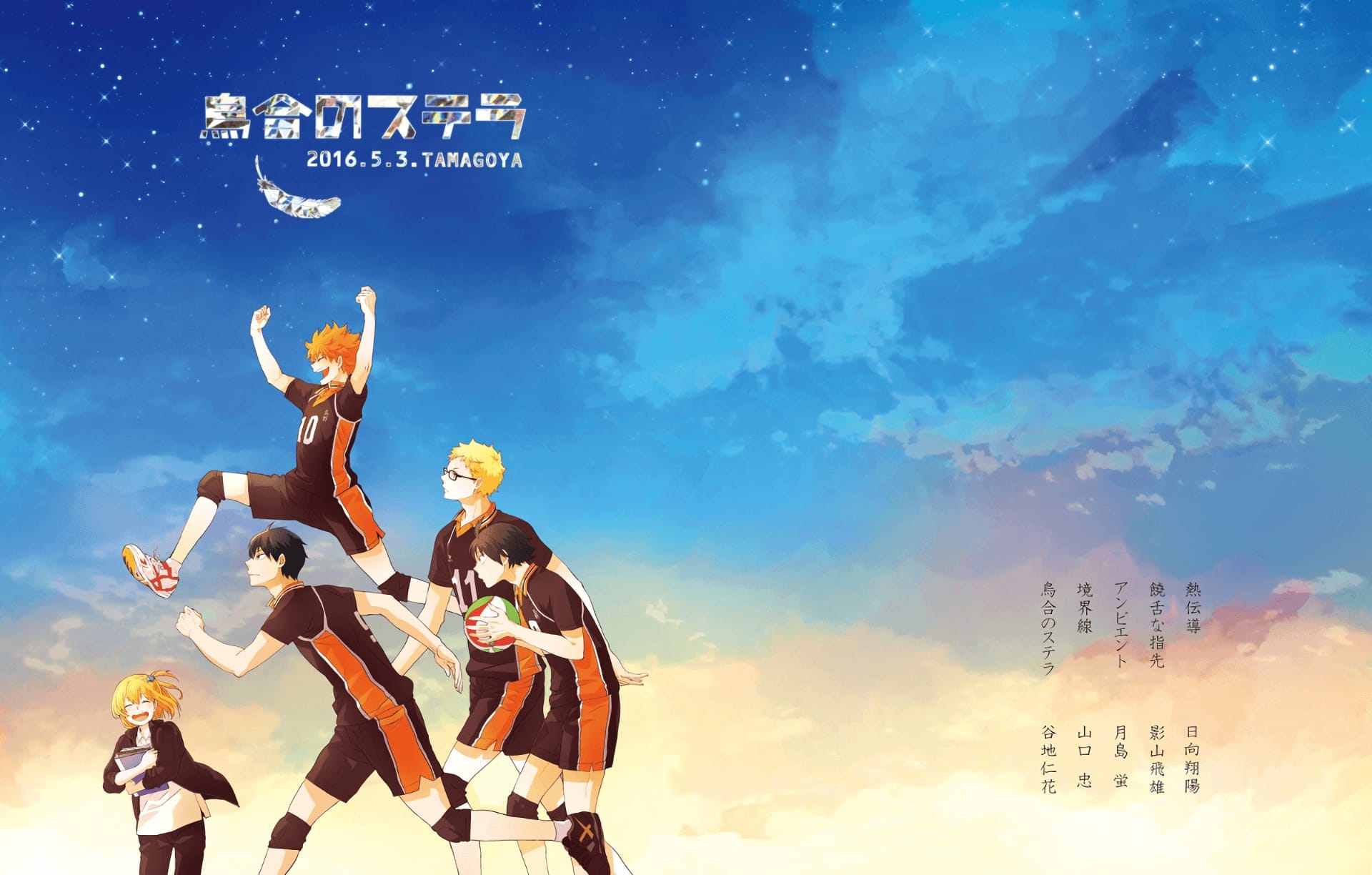
#18 — Haikyuu!! (2014–2020)
Sports anime that transcends the genre. Volleyball should not be this compelling. And yet Haikyuu!! managed to make every serve, every spike, every rotation feel like life or death. What separates it from the pack is the respect it shows its opponents — every rival team gets a backstory, a philosophy, a reason to root for them even as you’re screaming for Karasuno. Across four seasons and several films spanning the end of the 2010s into the early 2020s, Haikyuu!! built one of the most complete ensembles in shonen history. Its contribution: proving that sports anime could be emotionally mature, tactically intelligent, and visually dynamic all at once.
#17 — Kill la Kill (2013)
Loud, chaotic, unapologetically over-the-top, and somehow deeply earnest underneath all the noise. Studio Trigger’s debut series after the Gainax split was a statement of intent: we make anime that goes harder than anything else. Ryuko Matoi’s quest to find her father’s killer while wielding a scissor blade against a school run by a fashion-fascist tyrant is as absurd as it sounds and twice as fun. But Kill la Kill earns its place here because beneath the spectacle it’s a genuine story about family trauma, autonomy, and rebellion. It also helped launch Trigger as a creative force that would shape the rest of the decade. Its animation style — raw, kinetic, deliberately rough in places — was a deliberate counter-move to the polished CGI trend creeping into the industry.
#16 — Parasyte: The Maxim (2014)
An adaptation of a manga that was already beloved, Parasyte managed to feel urgent and modern despite the source material being decades old. Shinichi Izumi shares his body with an alien parasite named Migi after a failed takeover attempt, and together they navigate a world quietly being infiltrated by creatures that wear human skin. What the show does particularly well is trace Shinichi’s emotional detachment as Migi’s logic bleeds into his personality — a slow horror that’s more unsettling than any of the gore. Parasyte’s contribution: a meditation on what makes us human, delivered through body-horror action that never lets you get comfortable.
#15–#11: The Genre Definers
These five shows didn’t just succeed within their genres — they reshaped them. Watching any of these in real time felt like witnessing something shift. The best anime of the 2010s discourse always circles back to at least one or two of these titles, and for good reason.
#15 — One Punch Man (2015)
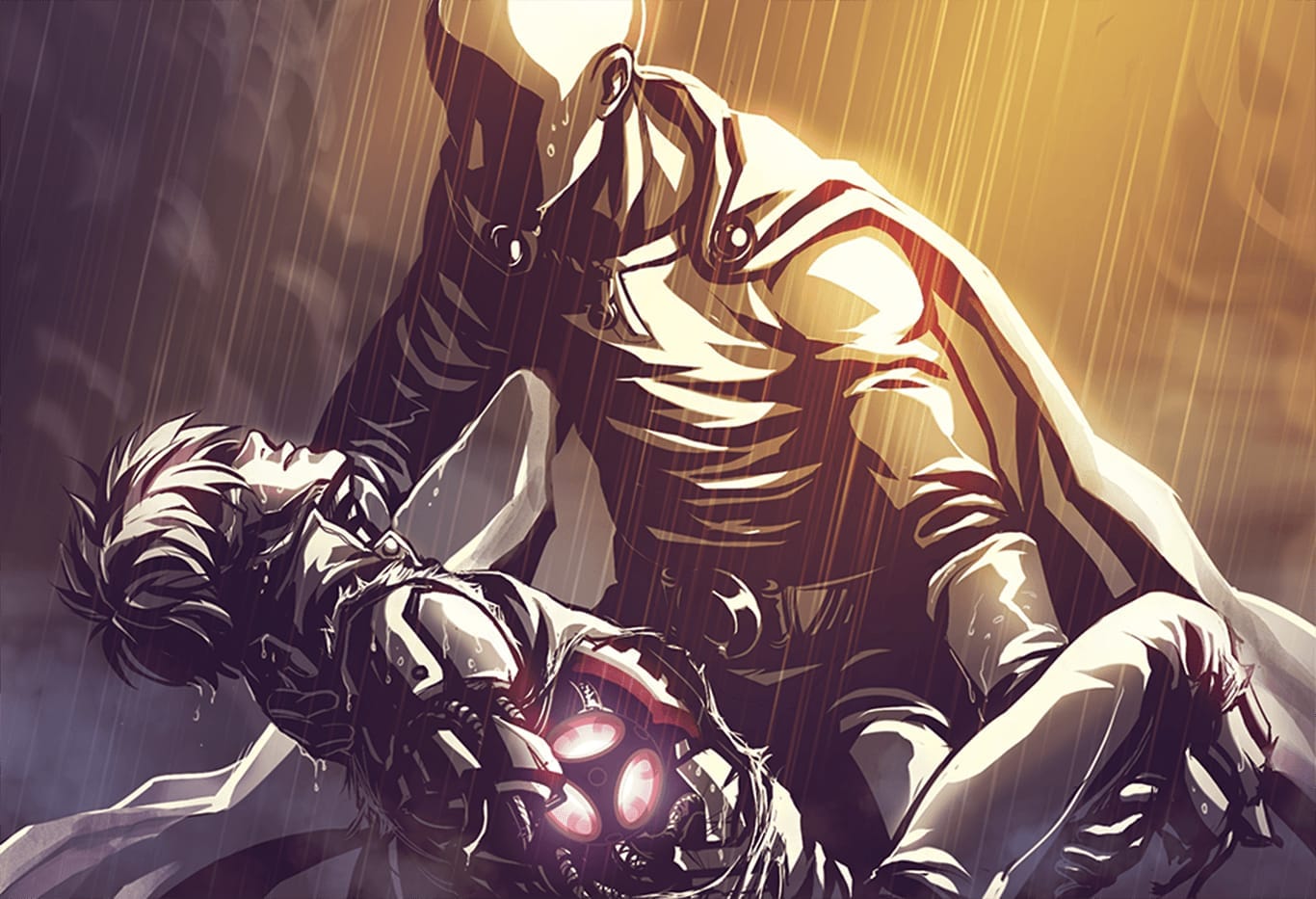
Madhouse’s adaptation of ONE’s webcomic hit like a freight train. Saitama — a hero who defeats every enemy with one punch and feels nothing about it — was a perfect satirical premise, and the first season executed it with animation so fluid it made every other action show look stiff by comparison. The Saitama vs. Boros fight remains a benchmark for how far TV animation can push itself. More than the laughs, One Punch Man worked because Saitama’s existential crisis — strength without purpose, victory without satisfaction — was genuine. The show earns its spot here for weaponizing the superhero genre against itself, years before Western media caught up to the same idea. Season 2’s drop in production quality is real, but Season 1 alone justifies this ranking.
#14 — My Hero Academia (2016–present)
The most mainstream shonen of the decade, and it earned that position. In a world where almost everyone has a superpower called a Quirk, Izuku Midoriya is born without one and still dreams of becoming the greatest hero. Simple premise, masterfully executed. MHA brought manga-to-anime storytelling craft back to a level the big three (Naruto, Bleach, One Piece) had let slide — tight arcs, escalating stakes, a roster of supporting characters deep enough to carry their own series. The Sports Festival arc and the License Exam arc are legitimate all-timers. Its contribution to the 2010s was reintroducing the joy of rooting for an underdog without irony or cynicism — a harder trick to pull off than it looks.
#13 — JoJo’s Bizarre Adventure: Diamond is Unbreakable (2016)
The fourth part of Hirohiko Araki’s legendary series is where JoJo fully became itself. Set in the quiet town of Morioh, Diamond is Unbreakable trades the globe-trotting adventure of previous parts for a slow-burn murder mystery with a serial killer as one of the greatest anime villains ever committed to screen. Yoshikage Kira is terrifying precisely because he’s so mundane — a quiet, fastidious man whose only desire is a peaceful life, which happens to require killing people. The Stand battles in Part 4 are inventive and strange in ways that feel closer to dark comedy than conventional action. JoJo’s contribution to the 2010s is impossible to overstate — it showed anime fandom how to love something weird and maximalist without apology, and Kira Yoshikage joined the conversation about the greatest antagonists in all of anime.
#12 — Fate/Zero (2011–2012)
ufotable’s production of Gen Urobuchi’s prequel light novel was the moment the Fate franchise went from “that one TYPE-MOON thing” to a mainstream pillar. Seven Masters summon seven legendary Heroic Spirits to fight for the Holy Grail, a device that can grant any wish. Fate/Zero works because it’s genuinely a war story — messy, pyrrhic, full of people with noble ideals and pragmatic methods who grind each other down. Kiritsugu Emiya’s arc is a sustained argument against utilitarian ethics told through action sequences that were, at the time, some of the best ever animated for television. The Saber vs. Lancer duel in episode two alone was enough to make ufotable the studio to watch for the rest of the decade.
#11 — Re:Zero − Starting Life in Another World (2016)
Took the isekai genre — already well-worn by 2016 — and bent it into a psychological horror show. Subaru Natsuki is transported to a fantasy world and discovers he has the power to return from death, resetting to a fixed point in time whenever he dies. The twist: only he remembers the previous timelines. What this allows Re:Zero to do is put its protagonist through repeated torture — emotional, physical, existential — in ways that accumulate rather than reset. The “Rem arc” is heartbreaking. The witch’s cult encounter is genuinely frightening. Re:Zero’s contribution was dragging the isekai genre into moral complexity and proving that “hero transported to another world” could be a premise for tragedy, not just power fantasy.
#10–#6: The Masterclasses
Once you’re in this tier, you’re talking about shows that achieved something close to perfect execution of their individual visions. These are the entries that anime fans point to when someone asks what the medium can actually do. Any conversation about the best anime of the 2010s that doesn’t include all five of these is incomplete.
#10 — Puella Magi Madoka Magica (2011)
The most subversive anime of the decade, and maybe ever. Shaft and Gen Urobuchi took the magical girl genre — a category built on transformation sequences and friendship speeches and pastel aesthetics — and revealed it as a Faustian trap. Five episodes in, the floor falls out. What follows is a tightly constructed tragedy about hope, sacrifice, and the cost of selflessness that works on multiple levels simultaneously: as a deconstruction of its genre, as a genuine emotional gut-punch, and as a philosophical argument about whether hope itself is worth protecting. Madoka’s contribution to anime: it made every magical girl show that came after it self-aware, and it proved that surface presentation could be weaponized as misdirection.
#9 — Violet Evergarden (2018)
Kyoto Animation made beautiful anime before this, but Violet Evergarden is their statement of intent as visual artists. A former child soldier learns to write letters for others after the war leaves her without arms and without understanding of human emotion. Each episode is an act of quiet devastation. The show’s structure — standalone emotional vignettes that build toward a larger character arc — should feel episodic and disconnected, but it doesn’t, because Violet herself threads through every story, slowly learning what the words “I love you” mean. KyoAni’s craft here is beyond television standards; the lighting, the fabric texture, the weight of Violet’s mechanical hands — it all communicates something. The story behind how this show exists, after the 2019 arson attack at KyoAni, makes it carry additional weight that is impossible to ignore.
#8 — Vinland Saga (2019)
Wit Studio’s adaptation of Makoto Yukimura’s Viking epic arrived late in the decade and immediately announced itself as a different kind of historical anime. Thorfinn starts as a boy consumed by revenge, watching his father — a legendary warrior who had sworn off violence — killed by a mercenary captain named Askeladd. What unfolds over 24 episodes is one of the most morally serious stories in anime: a meditation on what strength actually means, whether violence begets anything other than more violence, and what it costs a person to build an identity around hatred. The Askeladd scenes are some of the finest writing in anime that decade. Vinland Saga contributed a rare thing — a war narrative that is genuinely anti-war, without being preachy about it.
#7 — Demon Slayer: Kimetsu no Yaiba (2019)
The phenomenon of the decade’s final year. Tanjiro Kamado’s quest to avenge his family and cure his demon-turned sister Nezuko generated the kind of mainstream moment anime hadn’t seen since the early 2000s. The Mugen Train arc (released as a film in 2020, but rooted in the 2019 series) became one of the highest-grossing films in Japanese history. Ufotable’s animation for Demon Slayer is simply the best sustained visual work put into a weekly anime series in the 2010s — the breathing technique visualizations, the water effects, the fire sequences against a night sky. Beyond the spectacle, the show works because Tanjiro is genuinely good, and anime rarely lets its protagonists be straightforwardly decent without ironic undercutting. His goodness is the story’s engine.
#6 — Made in Abyss (2017)
The most brutal act of tonal bait-and-switch since Madoka. Made in Abyss opens with the aesthetic of a Ghibli film — luminous, lush backgrounds, a plucky young girl named Riko and her robot friend Reg descending into a massive pit full of relics and wonder. Then the pit begins to show its teeth. The deeper layers of the Abyss carry a curse that punishes ascent with increasingly horrific physical trauma, and the show doesn’t flinch from depicting what that means for children who have no business being down there. Made in Abyss is a work of extraordinary world-building — the Abyss feels like a real place with its own ecology and culture and horror. Its contribution to the decade was making the adventure genre feel genuinely dangerous again, with stakes that don’t reset at episode’s end.
#5–#3: The Mount Rushmore Candidates
Three shows. Each of them has a legitimate argument for the top spot in the best anime of the 2010s conversation. All three are essential. If you haven’t watched them, you haven’t properly experienced what this decade gave us.
#5 — Mob Psycho 100 (2016)
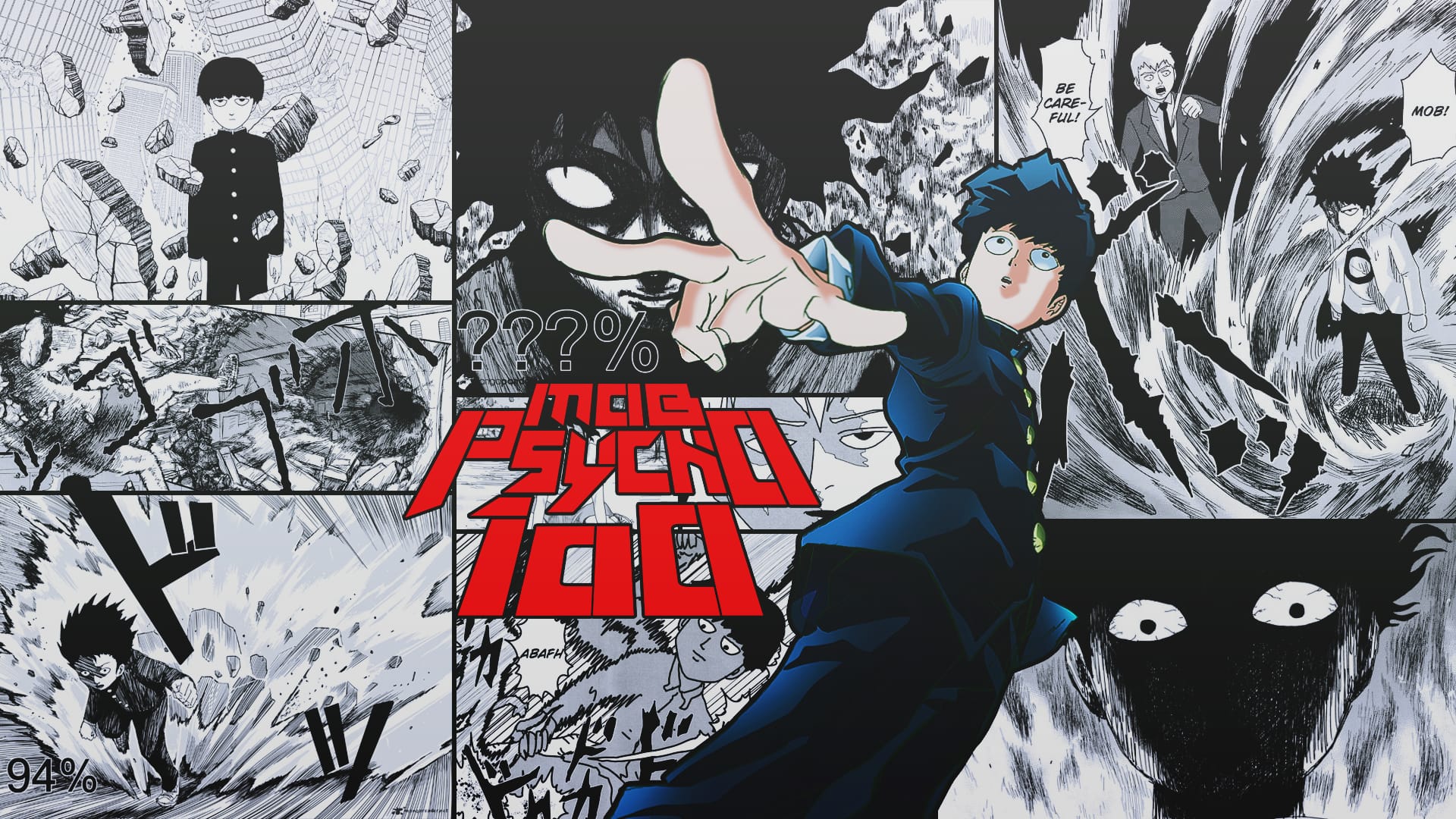
ONE’s other masterpiece, adapted by Bones with the visual ambition of a studio trying to prove something. Shigeo “Mob” Kageyama is the most powerful psychic alive and the least interested in using that power to impress anyone. That central irony — overwhelming ability wielded by a kid who just wants to be liked — is the engine of one of the warmest, strangest, most visually inventive anime ever made. Where One Punch Man used its premise for satire, Mob Psycho 100 uses it for genuine heart. The relationship between Mob and his con-man mentor Reigen is one of the best depictions of a complicated adult-child dynamic in the medium. The animation — fluid, expressionistic, chaotic in the best way — set a new standard for what limited budgets could still achieve with the right creative team. Mob Psycho contributed a rare thing: spectacle in service of emotional truth, not spectacle as a substitute for it.
#4 — Fullmetal Alchemist: Brotherhood (2009–2010)
Technically straddling the end of the 2000s and the start of the 2010s, Brotherhood’s final episodes and its lasting cultural weight belong to this decade. The complete adaptation of Hiromu Arakawa’s manga corrected everything the 2003 version improvised and delivered one of the most satisfying full-story arcs in anime history. Edward and Alphonse Elric’s quest to restore their bodies after a failed attempt to resurrect their mother balances political intrigue, philosophical weight, action spectacle, and genuine character depth across 64 episodes without a single wasted one. The world-building is meticulous. The villain — Father and the seven homunculi — operates on a scale that matches the ambition of the story. Brotherhood’s contribution is simple: it set the bar for what a long-form shonen adaptation could be when every element is executed with discipline and care.
#3 — Steins;Gate (2011)
The time-travel anime against which all others are measured. Self-proclaimed mad scientist Rintarou Okabe accidentally discovers time travel via a microwave that can send text messages to the past, and what begins as eccentric comedy slowly becomes one of the most emotionally devastating narratives in the medium. The shift in tone around episode 12 is one of the great structural moves in anime storytelling — the show earns the weight it puts on you because it spent 11 episodes making you care deeply about everyone involved. The science fiction mechanics are internally consistent and used to explore causality, grief, and the violence of erasing someone’s timeline. Steins;Gate’s contribution: it proved that anime could handle speculative fiction with literary seriousness, and it built one of the most compelling protagonists of the decade in Okabe Rintarou — a man performing a character to hide the person underneath.
#2 and #1: The Undeniable Top of the Decade
When people debate the best anime of the 2010s, two titles come back every time. Both have their champions. Both are correct. The ranking between them is a matter of inches, not miles. But a list has to land somewhere.
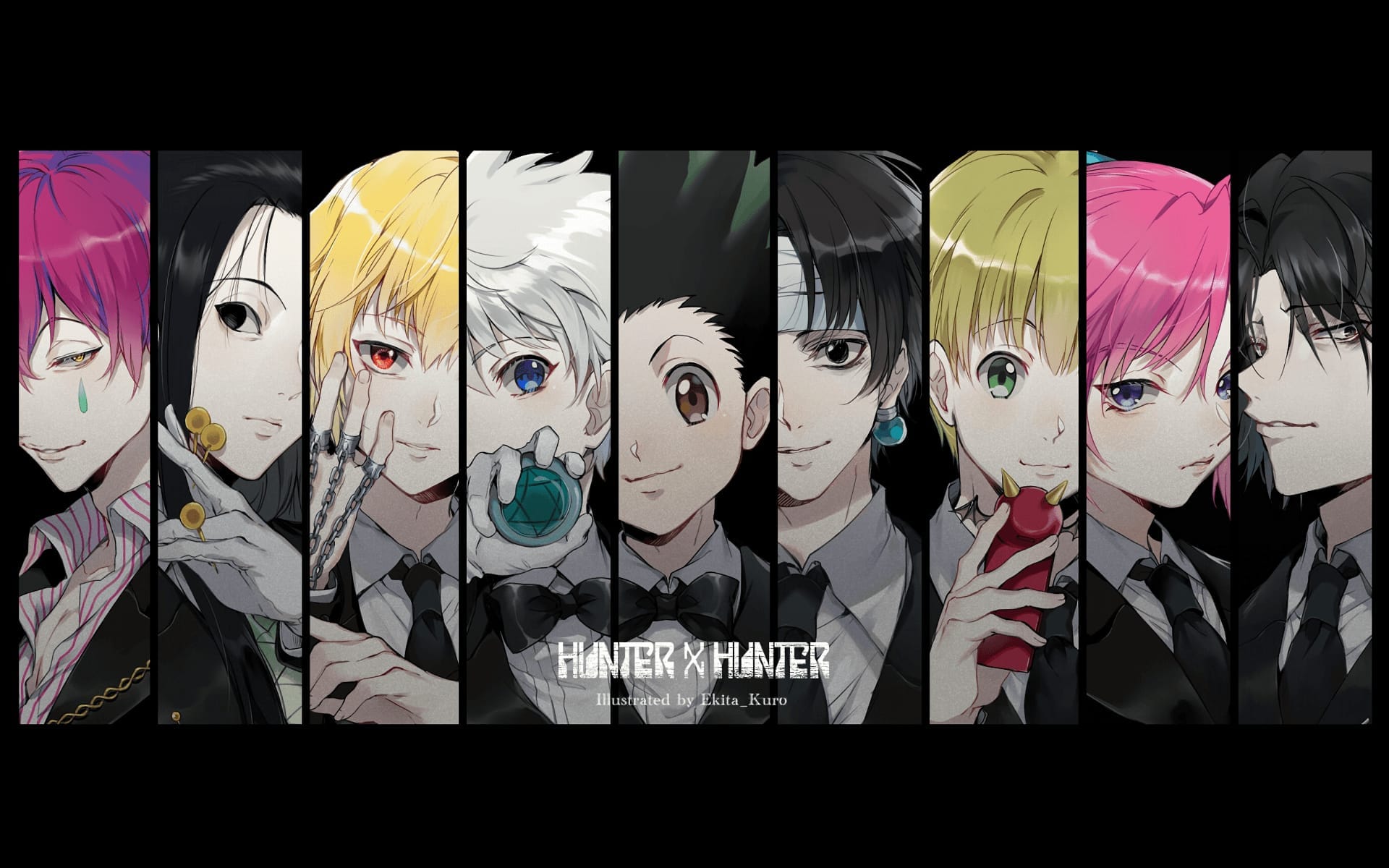
#2 — Hunter x Hunter (2011)
Madhouse’s remake of Yoshihiro Togashi’s manga ran from 2011 to 2014 and produced 148 episodes of some of the most layered storytelling shonen anime has ever delivered. Gon Freecss searches for his absent father who is one of the world’s greatest hunters — and what follows is a series that refuses to be predictable. The Chimera Ant arc alone — a 60+ episode arc that starts as a monster-fighting arc and becomes a meditation on genocide, empathy, evolution, and what it means to become something no longer human — is the most ambitious single narrative arc in the genre’s history. Meruem and Komugi’s scenes are among the most quietly powerful in all of anime. Hunter x Hunter’s contribution: it showed that shonen, the most accessible and youngest-skewing genre in anime, could carry philosophical weight without dumbing it down or wrapping it in comfortable resolutions.
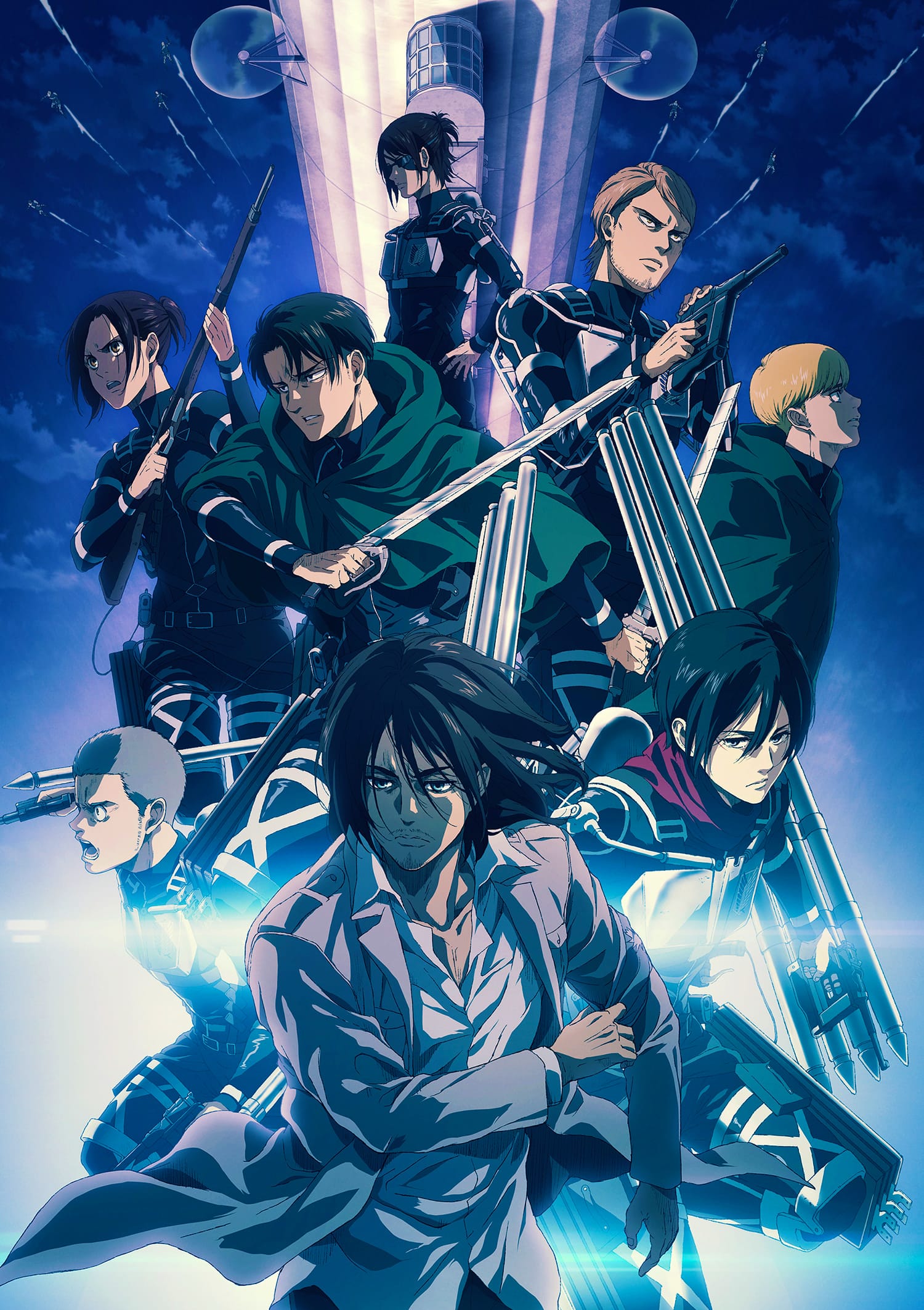
#1 — Attack on Titan (2013–2023)
The defining anime of the 2010s — and one of the defining works of popular fiction of the century so far. Attack on Titan began as a survival horror story: humanity’s last remnants live behind massive walls, hunted by mindless giants called Titans. Eren Yeager watches his mother get eaten in the first episode, and the rest of the series is the consequence of that moment. What Hajime Isayama built over the course of the manga — faithfully adapted across four seasons — is a story that kept recontextualizing everything that came before it. Every answer raised a larger question. The political allegory deepened from season to season. Characters who looked like heroes became something harder to categorize. The final arc is one of the most debated conclusions in anime history, which is itself evidence of how invested the global audience became. WIT Studio’s first three seasons set a visual and tonal standard for action anime; MAPPA’s Season 4 maintained it under enormous pressure and scrutiny. Attack on Titan’s contribution to anime — and to the 2010s specifically — is that it transformed a mass audience’s expectations of what the medium could demand of them. It asked viewers to hold moral complexity without resolving it neatly, and tens of millions of people around the world did exactly that. That’s not just good anime. That’s cultural weight.
What the 2010s Actually Gave Us
Looking back across all twenty of these titles, a few patterns emerge. The 2010s were the decade when anime got comfortable with moral ambiguity — protagonists who lose, villains who make sense, resolutions that don’t feel like rewards. Shows like Steins;Gate, Hunter x Hunter, Made in Abyss, and Attack on Titan shared a willingness to cost their characters something real. The 2000s had dark anime, but the 2010s normalized it across genres. Sports shows, magical girl shows, isekai, and superhero parody all found ways to carry genuine weight.
The decade also transformed anime’s global footprint. The best anime of the 2010s weren’t just beloved in Japan — they built international fanbases that consumed simulcasts the same week episodes aired, argued about them online in real time, and brought new viewers into the medium by the millions. Attack on Titan and Demon Slayer didn’t just break Japanese records; they crossed over into Western mainstream culture in ways no anime had since Dragon Ball Z and Pokémon in the late 1990s.
Production quality surged, with studios like ufotable, Madhouse, Wit Studio, Kyoto Animation, and Trigger consistently pushing what weekly animation could look like. The gap between theatrical and television quality narrowed. The ambition of the source material adapted — and in some cases, the original works created — matched that production investment.
The 2010s also gave us diversity of tone and genre across the best anime of the 2010s list in ways no single decade had managed before. From the sports fervor of Haikyuu to the cosmic body horror of Made in Abyss, from the quiet devastation of Violet Evergarden to the maximalist chaos of Kill la Kill — the decade’s best offerings covered the full emotional and aesthetic spectrum of what animation can do. That breadth is the decade’s real legacy.
If you’re new to anime and using this list as a starting point — start anywhere. There’s no wrong door. But if pressed: watch Steins;Gate or Hunter x Hunter first, and let the rest of the decade unfold from there.
You Might Also Enjoy
If you loved exploring the best anime of the 2010s, these guides will keep your watchlist full: