Five Years, Three Seasons, One Ending
When Beastars first dropped on Netflix in 2019, a lot of Western anime fans had no idea what to make of it. A CGI anime about anthropomorphic animals navigating a high school drama, with carnivore-versus-herbivore tension standing in for every kind of prejudice society has ever cooked up? It sounded like a niche curiosity at best. Then people actually watched it — and suddenly everyone had an opinion about a grey wolf named Legoshi who couldn’t stop being in love with a white rabbit. Now, in March 2026, Beastars Final Season Part 2 has arrived on Netflix, and the ride is finally, officially over. Seven years after Paru Itagaki’s manga began and nearly seven years since the anime adaptation first aired, this is the conclusion fans have been waiting for — and debating, and dreading, and desperately hoping would do the story justice. So does it? That’s the question we’re here to answer.
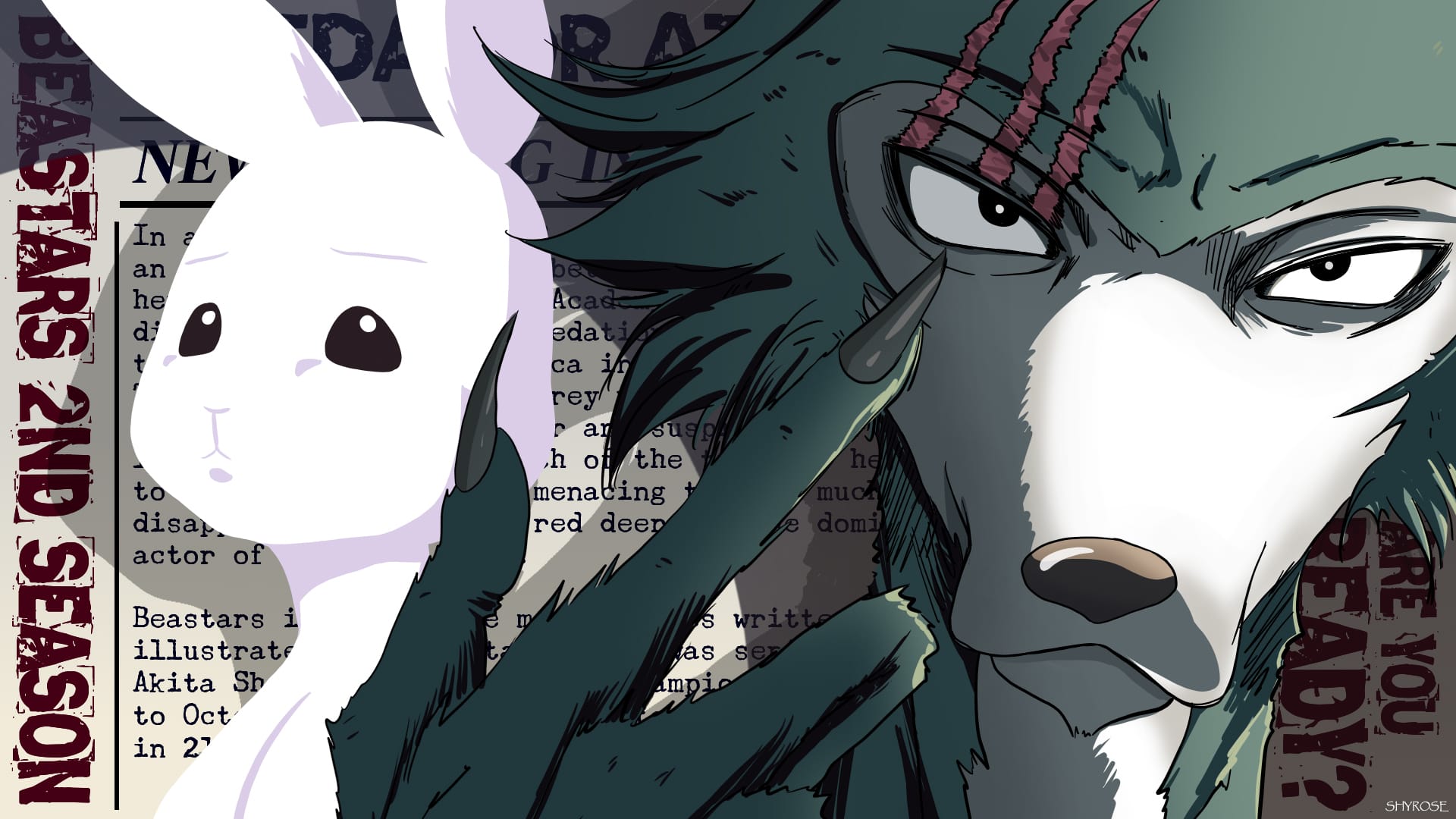
Let’s be real about what this show went through to get here. Beastars launched in the middle of an ongoing culture war about CGI anime that hasn’t really ended. Studio Orange’s cel-shaded 3D approach looked unlike anything else on the market — some fans called it gorgeous, others called it uncanny valley nightmare fuel. The discourse was loud. But the story cut through it. Season 1 introduced a world with real philosophical weight: what does civilization mean when your biology screams at you to eat the person sitting next to you in class? Season 2 pushed further, delivering one of the most shocking anime plot twists in recent memory when Legoshi ate Louis’ leg mid-battle to absorb his power and take down Riz. That moment crystallized everything the series had been building — sacrifice, instinct, love, and the violence that lives just under the surface of every polite society. After all of that, Beastars Final Season Part 2 had enormous expectations to meet. The good news? It mostly delivers.
What Happened in Final Season Part 1 (Quick Recap)
If you need to catch up before diving into Part 2, here’s the condensed version of where Beastars Final Season Part 1 left things when it dropped in December 2024. Legoshi, still carrying the weight of his devouring record from the Riz incident, has left Cherryton Academy behind. He’s moved into Beast Apartments, a gritty urban complex where carnivores and herbivores of all kinds live in close, sometimes uncomfortable proximity. The school chapter of his life is closed. Now he’s an adult navigating a world that views him as a registered devour offender — which means his dream of a real future with Haru is legally and socially complicated.
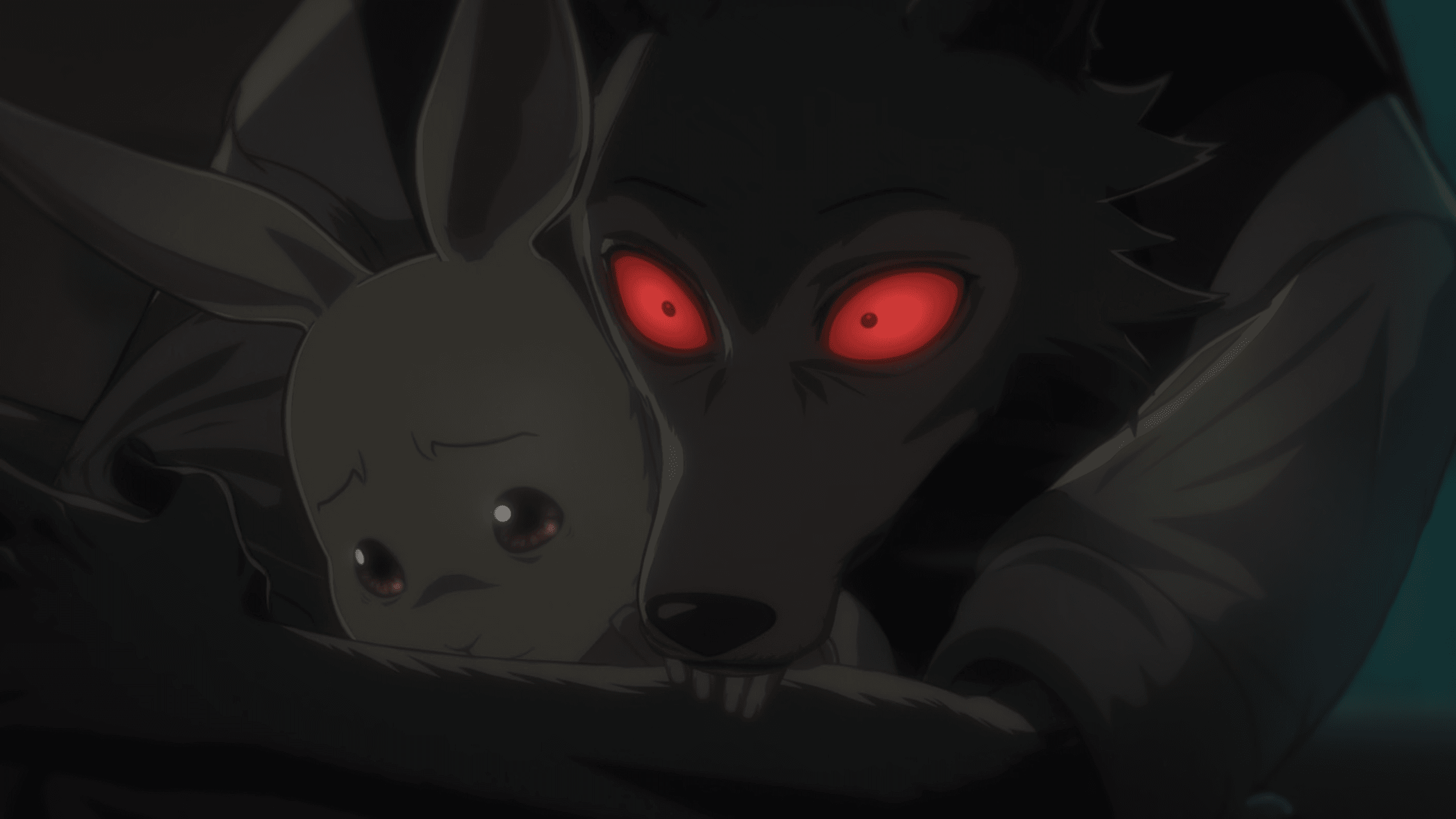
Part 1’s biggest narrative move was introducing Melon as the new primary villain. He’s a hybrid — half-leopard, half-gazelle — which makes him literally neither one thing nor the other in a society that demands you pick a side. His introduction was slow-burn and deliberate, the kind of villain reveal that rewards patience. While Legoshi was adjusting to life outside of school, Melon was carving a bloody path through the underground, accumulating power and followers while nursing a worldview that puts him in direct ideological opposition to everything Legoshi represents. Louis, meanwhile, graduated from Cherryton and declined the Young BEASTARS nomination, choosing to step away from the spotlight and deal with the mounting pressure of his aristocratic family obligations. The stage was set. Part 2 is where everything converges.
Melon — The Best Villain Beastars Never Told Us It Was Building
Here’s the thing about Melon that takes a few episodes to fully appreciate: he isn’t just a villain who happens to be a hybrid. His hybrid nature is the point. Everything the show has spent three seasons exploring — the arbitrary cruelty of dividing society into predator and prey, the way identity gets imposed on you before you have a chance to choose it, the violence that comes from being told you don’t belong anywhere — Melon embodies all of it. He’s not a dark mirror of Legoshi so much as he’s a dark mirror of the entire Beastars universe. What does society create when it refuses to make room for the people who don’t fit its categories? It creates Melon.
What makes him work as an antagonist — and he absolutely works, ranking easily among the best anime villains introduced in recent years — is that his grievances are legitimate even when his methods are horrifying. His resentment of both carnivore and herbivore society didn’t come from nowhere. He was rejected, othered, and defined by what he wasn’t before anyone bothered to ask what he was. The show doesn’t ask you to sympathize with the violence he commits, but it absolutely asks you to understand how someone gets from that kind of pain to that kind of rage. That’s harder to write than a straightforward monster, and Beastars Final Season Part 2 commits to the complexity.
His confrontations with Legoshi in Part 2 are electric in a way that goes beyond action sequences. Every time they’re in the same space, there’s an ideological argument happening underneath the physical one. Legoshi’s entire existence is a rebuttal to Melon’s worldview — he’s a carnivore who chose restraint, who built his identity around something other than his instincts. Melon finds that insufferable, and his contempt for Legoshi feels deeply personal in a way that elevates their conflict above typical anime hero-villain dynamics. This isn’t just “defeat the bad guy.” It’s Legoshi’s philosophy being tested by someone who has genuinely internalized the alternative and found it clarifying rather than destructive.
Legoshi’s Final Arc — Love, Instinct, and Redemption
The core engine driving Legoshi through Beastars Final Season Part 2 is deceptively simple: he wants to clear his devouring record so he can build a real life with Haru. No criminal record, no social stigma, no legal barriers between a wolf and a rabbit who love each other. It’s a romantic motivation, but the show understands that in this world, romance and politics are inseparable. The devouring record isn’t just a bureaucratic inconvenience — it’s a symbol of everything society fears about carnivores, and clearing it means Legoshi has to prove, in the most direct terms possible, that he’s something more than what his biology suggests.

The Yahya storyline adds a crucial institutional dimension to Legoshi’s arc. Yahya is the current Beastar — the title given to an individual who bridges the carnivore-herbivore divide and represents a model for coexistence — and his involvement in the Melon situation brings the show’s politics into sharp relief. The Beastar system is supposed to represent progress, a living symbol that the divide can be overcome. But Yahya’s handling of the Melon crisis forces Legoshi (and the audience) to confront questions about whether institutions designed to manage the carnivore-herbivore tension are actually addressing its root causes or just managing the symptoms. It’s exactly the kind of structural critique that elevates Beastars above a typical action-romance anime, and Part 2 handles it thoughtfully without turning into a lecture.
Legoshi’s growth across the entire series culminates beautifully here. The grey wolf who spent Season 1 terrified of his own strength, constantly apologizing for existing in a body that frightened people, has become someone who understands that strength — physical, moral, emotional — is only meaningful in how you choose to direct it. His decision to go after Melon isn’t reckless heroism. It’s a deliberate choice, made with full awareness of what he’s risking, because the alternative is allowing someone else’s nihilism to define the world. Watching Legoshi in Part 2 is like watching someone who has finally, after years of internal war, made peace with who they are. The best anime fights aren’t just physical — they’re revelatory. The climactic confrontation between Legoshi and Melon qualifies on both counts.
And then there’s Haru. One of the consistent criticisms of Beastars across its run has been that Haru sometimes feels underserved by the narrative — more symbol than person, more prize than protagonist. Part 2 doesn’t completely resolve this tension, but it does give her meaningful agency in the epilogue. The final scenes showing Legoshi and Haru together — finally, genuinely together — land with the emotional weight they’ve been building toward since Season 1. If you’ve been invested in this relationship across multiple years of watching, it’s going to hit.
Louis and the Roads Not Taken
Louis has always been one of the most compelling characters in Beastars — a red deer who clawed his way to the top of the school’s drama club through sheer force of will, who ran with the Shishi-gumi criminal carnivore gang, who let his best friend eat his leg rather than let him die. He’s a character who has consistently defied what society expected of him, only to find himself circling back toward the expectations he tried to escape. In Beastars Final Season Part 2, that tension reaches its conclusion.
His decision to decline the Young BEASTARS nomination at the end of Part 1 was significant — it was Louis choosing, finally, not to perform for society’s approval. In Part 2, we see the aftermath of that choice, and it’s messier than a clean break. His family obligations don’t evaporate because he decided to step away from the spotlight. The aristocratic world that shaped him doesn’t care about his personal growth arc. Watching Louis navigate that gap — between who he’s becoming and what the world keeps demanding he be — is some of the most emotionally grounded storytelling in the season.
The handling of his relationship with Juno gets less screen time than some fans will feel it deserves. Juno, the grey wolf who competed with Haru for Legoshi’s attention in earlier seasons, has her own arc, but Part 2 moves quickly through certain character resolutions to keep the main plot moving. Whether this feels satisfying or rushed will depend on how invested you are in Juno as a character. For Louis specifically, the conclusion is earned even if the path to it feels compressed. He ends up somewhere true to everything we’ve learned about him — not triumphant, not defeated, but honest. For a character as complicated as Louis, that might be the best possible ending.
Studio Orange’s Final Show of Force
Let’s talk about the animation, because Beastars has always been inseparable from its visual presentation and the discourse that comes with it. Studio Orange, the studio behind Land of the Lustrous and Trigun Stampede, pioneered a specific approach to CGI anime that uses cel shading and careful cinematography to approximate the look of traditional 2D animation while exploiting the flexibility that 3D gives you for complex action choreography and expressive character movement. When it works, it’s genuinely stunning. When it doesn’t, you notice.

The good news for Part 2 is that this is some of Studio Orange’s most confident work on the series. The quality has been visibly building — Part 1 looked better than Season 2, which looked better than Season 1 — and Part 2 represents the full maturation of the team’s approach. The fur textures are extraordinary. The way light catches Legoshi’s grey coat differently depending on the environment, the way Melon’s hybrid body moves with a specific wrongness that reflects his psychological instability — these aren’t accidents. They’re the result of a team that has spent years learning exactly what this visual language can do.
The action sequences in Part 2 are highlights in Studio Orange’s catalog. The freedom that 3D animation provides for staging fights — multiple simultaneous perspectives, dynamic camera work that would be prohibitively expensive to animate in 2D, fluid continuous takes — gets used with real purpose here. The Legoshi-Melon confrontation is a particular standout: the choreography reflects the characters’ fighting philosophies, with Legoshi’s disciplined, controlled style crashing against Melon’s chaotic, unpredictable energy. It’s one of those sequences that makes you understand why Studio Orange committed so hard to the CGI approach despite the early fan backlash. Some of this simply couldn’t be done as effectively in 2D on a TV anime budget.
The quieter moments land just as well. Beastars has always understood that the emotional beats need their own visual language — close-ups that linger, compositions that use the characters’ animal physiology to express what words can’t quite say. Part 2 continues this tradition, and several scenes in the epilogue sequence are visually gorgeous in a way that rewards the full-screen TV experience Netflix was designed for.
Does It Stick the Landing?
Beastars Final Season Part 2 sticks the landing — not perfectly, but genuinely, which is rarer than you might think for long-running anime finales. The central conflict with Melon resolves with the emotional and thematic weight it needed. Legoshi’s character arc finds its natural conclusion. The epilogue delivers what fans have been waiting years for. For a show this ambitious, with this many moving pieces, that’s a real achievement.
Where it wobbles is in the handling of secondary characters. The final season has a lot of threads to tie off — characters who have been important across all three seasons need some kind of closure, and not all of them get the screen time their arcs deserve. Juno feels shortchanged. Some of the Beast Apartments ensemble introduced in Part 1 gets compressed endings that feel more like checkboxes than real resolutions. This is a pacing problem that was probably inevitable given the scope of the story, but it’s still noticeable if you’ve been following certain characters closely.
The epilogue itself is where the show earns back whatever goodwill the pacing issues cost it. Seeing Legoshi and Haru together — genuinely together, without the constant threat of society’s intervention hanging over them — is deeply satisfying in a way that only works because of how long and hard the show made that relationship feel. It’s the payoff to years of emotional investment, and it doesn’t feel cheap or unearned. The final images of Beastars Final Season Part 2 are exactly what this story needed to end on: not resolution in the sense that all problems are solved, but resolution in the sense that these characters have found their footing in a world that never made it easy for them.
This is also worth saying: the show’s handling of its central themes across the finale is remarkably consistent. Beastars has always been about the gap between what we are and what we choose to be, about whether civilization is a cage or a choice, about love that refuses to stay within the lines society draws for it. Beastars Final Season Part 2 doesn’t abandon those themes in favor of action spectacle. It uses the action to express them. That kind of thematic coherence, maintained across a three-season run, is exactly what makes the series worth discussing in the context of the golden age of anime we’re currently living through.
On the question of whether this is a satisfying ending compared to Paru Itagaki’s manga: fans of the source material will find that the anime adaptation makes some choices in how it handles the final stretch, as adaptations always do. Some of those choices work better in motion than on the page. Others may frustrate purists. But judged on its own terms, as the conclusion to the animated series that began in 2019, this finale does what a good finale should: it makes the whole journey feel worth it. You can read more about Beastars and its full episode listing on MyAnimeList.
Should You Watch Beastars in 2026?
If you haven’t started Beastars yet and Beastars Final Season Part 2 has you curious, here’s what you need to know. All three seasons are on Netflix, and the full series is one of the strongest complete anime packages available on the platform right now — easily among the best anime on Netflix right now for viewers who want something with genuine depth. The episode breakdown is:
- Season 1: 12 episodes — introduces Legoshi, Haru, Louis, and the Cherryton Academy setting. The Tem murder mystery runs through this season.
- Season 2: 12 episodes — the Riz arc. Darker, more violent, and the point where the show fully commits to its most controversial narrative choices. The leg scene is here.
- Final Season Part 1: 11 episodes — Melon’s introduction, Legoshi’s post-school life, the Beast Apartments setting. Sets up everything Part 2 delivers on.
- Final Season Part 2: 11 episodes — the conclusion. You’re reading a review of this.
Total watch time for the complete series runs roughly 18-20 hours depending on how you handle credits. For a three-season run, that’s a lean commitment compared to the long-runners that dominate shonen anime culture. You can realistically binge the whole thing in a weekend and come out the other side having watched one of the most genuinely original Netflix anime series produced in the 2020s.
The CGI question is worth addressing for newcomers: yes, it’s 3D animation, and yes, it looks different from traditional anime. Give it two or three episodes. Studio Orange’s approach is an acquired taste that most viewers adjust to quickly, and once you stop comparing it to what you expect anime to look like and start engaging with what the studio is actually doing, it’s genuinely impressive. The CGI anime discourse around Beastars has aged about as well as every other “this doesn’t look right” objection that anime fans eventually get over — which is to say, it hasn’t.
This is an anthropomorphic anime that works because it never uses its animal cast as a gimmick. The species dynamics are always metaphor first — about race, class, gender, sexuality, social expectations, and the violence that institutions do to people who don’t fit their categories. You don’t have to be a furry to appreciate it (though the furry community’s longtime enthusiasm for the source material is well-earned). You just have to be willing to engage with a story that takes its ideas seriously.
Beastars Final Season Part 2 is the ending this series deserved — imperfect in the ways that ambitious endings often are, and moving in the ways that only the best ones manage to be. Seven years, three seasons, one grey wolf who just wanted to love a white rabbit without the world making it a political statement. It worked out. Go watch it.