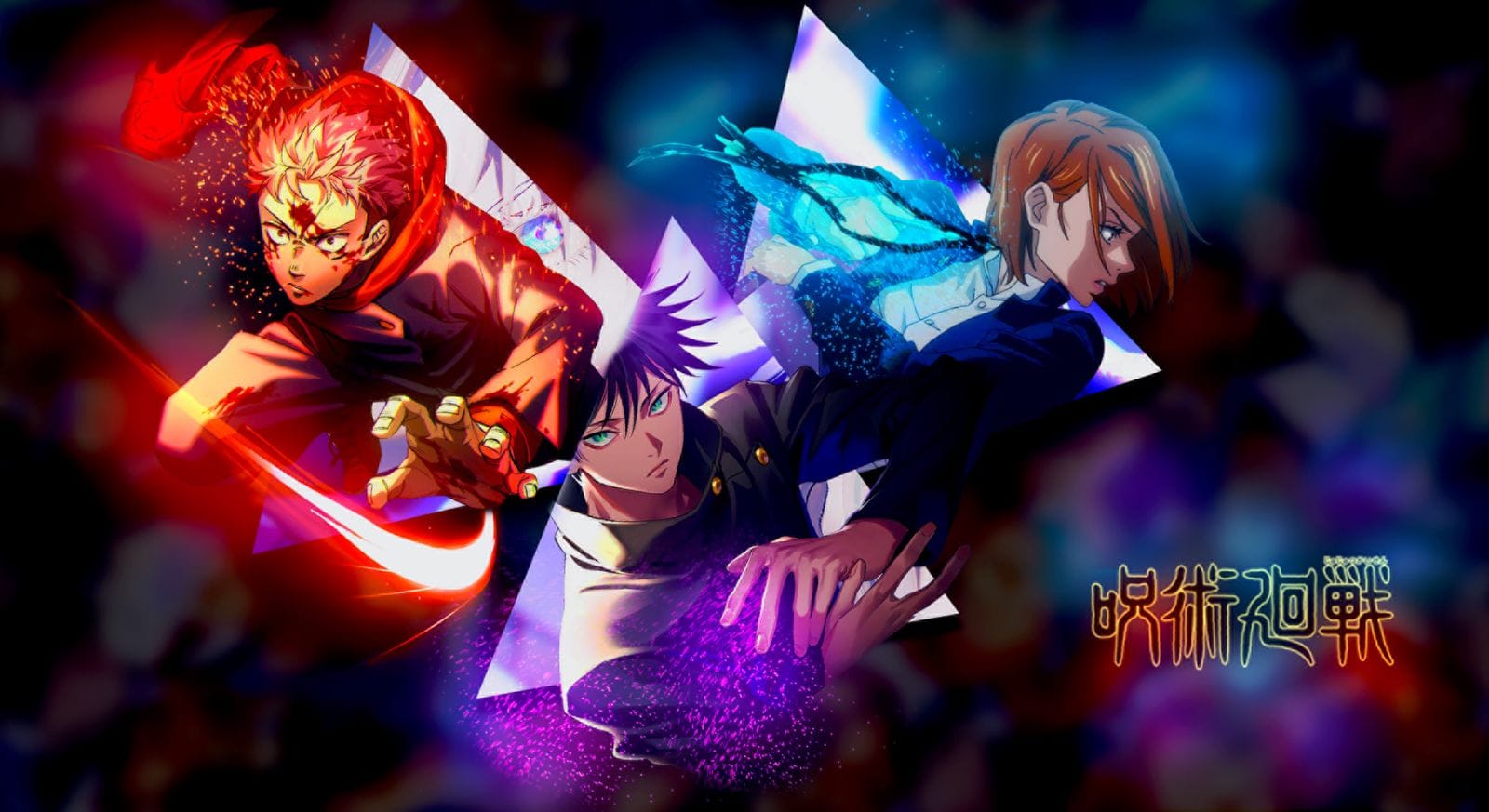
Two power systems. Two different philosophies about what makes a fight worth watching. Yoshihiro Togashi spent years constructing Nen as an almost academic framework — a martial art with rules so intricate that entire arcs hinge on readers misreading the fine print. Gege Akutami took a rawer approach with Cursed Energy, rooting it in human psychology and negative emotion, then piled layer after layer of creative technique design on top until the system felt genuinely dangerous.
Neither system is perfect. Both are extraordinary. And the differences between them reveal a lot about what each series is actually trying to do.
This isn’t a wiki comparison. This is a structural analysis: how each system is built, what creative and narrative work it does, where each one succeeds, and where each one shows cracks. If you’ve been following Jujutsu Kaisen and Hunter x Hunter for any length of time, you already have opinions. Here are mine.
The Foundations — What Each System Actually Is
Nen: Life Energy With Rules
Nen is, at its core, the ability to manipulate your own life force — called aura — and shape it into power. Everyone in the HxH world has aura. Most people never access it. When you do, you begin learning the four core principles: Ten (containing your aura), Zetsu (suppressing it entirely), Ren (amplifying it), and Hatsu (expressing it as your unique ability). These aren’t flashy power moves. They’re fundamentals. The equivalent of learning to stand correctly before you throw a punch.
What makes this elegant is the taxonomy beneath it. Every Nen user has a natural affinity for one of six categories: Enhancement, Transmutation, Emission, Manipulation, Conjuration, and Specialization. Your type isn’t a choice — it’s discovered through a water divination test. And here’s the structural genius: you’re most efficient within your natural type, and efficiency drops the further you stray from it on the type chart. A Transmuter trying to use Emission-based techniques is fighting against their own nature. The cost is built into the system.
Cursed Energy: Emotion Made Manifest
Cursed Energy flows from negative human emotions — fear, grief, hatred, shame. Every human being generates it passively, but only sorcerers can consciously control it. That’s already a darker premise than Nen’s neutral life-force framing. Nen is discipline. Cursed Energy is suffering weaponized.
The base mechanics are simpler than Nen’s on the surface: you circulate Cursed Energy through your body to reinforce it (the equivalent of Ren), you project it outward, and you eventually manifest a Cursed Technique — an innate ability unique to you, often inherited through bloodline or born from trauma. There’s no six-type chart. Cursed Techniques are far more varied and idiosyncratic. One sorcerer manipulates shadows. Another reverses causality. Another controls rubber bands. The system’s breadth is staggering.
But that breadth comes at a cost in coherence. More on that later.
Categories vs. Techniques — How Power Gets Organized
This is where the two systems diverge most sharply, and where Nen’s design philosophy shines brightest.
Nen’s six categories create an implicit power grid. You know that Gon is an Enhancer, which tells you something fundamental: he’s a brawler, strongest in direct combat, weakest at complex manipulation or summoning. His ceiling is high in a straight fight; his toolkit is narrow. Killua is a Transmuter, which explains why his electricity abilities feel so natural to him — Transmuters change the properties of their aura, and turning aura into lightning is exactly that. The category doesn’t just label the character; it shapes their narrative identity and their tactical limitations. When Hisoka fights, you understand exactly why his rubber-and-gum abilities are terrifying coming from a Transmuter. The type is the character.
Jujutsu Kaisen doesn’t organize its sorcerers this way. Cursed Techniques are individual and essentially arbitrary — you get what you get. This produces wildly creative ability design, but it also means the system has no internal logic about compatibility or weakness. There’s no chart telling you that a sorcerer who manipulates ink will naturally struggle against a sorcerer who controls space. The fights have to establish all of that context on the fly, through expository battle dialogue.
For creative freedom, JJK wins. For structural elegance, it’s not close — Nen is operating on another level.
That said, JJK compensates with a different organizational layer: the distinction between Cursed Techniques and their applications. Every sorcerer’s technique has an Extension (a derived use of the core ability), a Maximum Output (pushing the technique to its limit), and — in the modern era — a Binding Vow wrinkle through revealing techniques. The Reverse Cursed Technique, which converts negative energy into positive energy for healing, adds another axis of competency. A sorcerer who has mastered Reverse Cursed Technique is categorically different from one who hasn’t. That’s a secondary tier of specialization doing some of the structural work that Nen’s type chart handles from the start.
The Learning Curve — Earning Power vs. Inheriting It
One of the sharpest structural differences between these systems is how characters gain access to them.
In HxH, Nen has to be taught. You either receive formal instruction, or someone forces you into awakening through shock — called “baptism by fire,” a method explicitly shown as dangerous and ethically questionable. Gon and Killua spend most of the early series learning fundamentals before they’re considered remotely competent Nen users. The power fantasy is delayed on purpose. When you see Gon’s first real Hatsu ability, it feels earned because you watched him fail, drill basics, and struggle. The progression is legible.
Cursed Techniques in JJK are largely innate. You’re born with your technique or you’re not. The jujutsu schools teach application and refinement, but the core ability isn’t something you develop through training — it’s something you were issued. This produces a different narrative shape. In JJK, growth tends to be about mastering and expanding an existing technique rather than constructing one from scratch. Yuji Itadori is actually the clearest example of the alternative path: he has no innate Cursed Technique, so his entire arc involves building competency from physical fundamentals, which ends up rhyming with Gon’s journey more than most JJK characters do.
Neither approach is wrong. But Nen’s structure makes the learning process itself narratively interesting in a way JJK rarely replicates.
Hatsu vs. Domain Expansion — The Pinnacle Expressions
Both systems have a “ceiling” mechanic — the ultimate expression of a user’s power. In HxH, that’s Hatsu. In JJK, it’s Domain Expansion. These are not equivalent concepts, but comparing them reveals a lot about each series’ priorities.
Hatsu is personal. It’s the unique ability a Nen user constructs around their natural type, their personality, and their experiences. There’s no template. Hisoka’s Bungee Gum works because his Transmuter nature and his psychological character — the manipulative, elastic, deceptive fighter — are fused into one ability. Neferpitou’s En ability reflects a predator’s awareness made manifest. The best Hatsu abilities feel like character portraits. They’re not just powers; they’re expressions of who the character is at their core.
Domain Expansion in JJK is something different: a technique that manifests a sorcerer’s inner world as a bounded territory, where the user’s Cursed Technique is guaranteed to hit everything inside. It’s a nuclear option — high cost, enormous risk, fight-ending potential. The mechanics are layered: a simpler Domain can be countered by a Domain with more refined technique refinement (the “gap in craftsmanship” rule); a sorcerer can use a Binding Vow to deploy an open Domain that loses guaranteed hits but costs less to maintain. Reading about how Gojo Satoru’s Unlimited Void works shows just how deep this rabbit hole goes.
Domain Expansion creates better spectacle. Hatsu creates better character. Both statements feel correct to me, and I don’t think that’s a contradiction — it’s a reflection of what each series prioritizes. HxH wants you to understand characters. JJK wants you to feel the scale of a fight.
Restrictions and Vows — The Cost of Power
This is where both systems converge on a fascinating shared philosophy: the idea that accepting limitations can make you stronger.
Nen restrictions and vows work on a principle that feels almost transactional. The more you constrain yourself — through a sworn condition, a physical limitation, a rule you commit to — the more power your Nen grants in that area. Kurapika’s chains are the most iconic example. He limits his Specialist-class ability to use against only members of the Phantom Troupe. That single vow gives him power that would otherwise be impossible for a non-Enhancement user. The restriction isn’t arbitrary — it’s a pact with the system itself, and it comes with catastrophic consequences if broken.
Kurapika’s chains are brilliant design because the restriction is the character. His obsession with the Phantom Troupe, his refusal to expand his goals into anything more general, his emotional fixation — all of that is baked into the mechanical limitation. Break the vow and he dies. This makes Kurapika’s arc structurally dependent on his psychology in a way that feels genuinely clever.
JJK handles this differently with Binding Vows — deals made with the principle of “information shared = power gained.” Telling your opponent the exact rules of your technique creates a Binding Vow that amplifies the technique’s output. It’s a system that rewards transparency and tactical honesty, which creates some wonderfully paradoxical situations: a sorcerer explaining their own weakness in order to power up against someone they think can’t exploit it. The risk-reward calculation is fascinating and produces some of the series’ best tactical sequences.
Both systems use restrictions as narrative tools, not just power mechanics. That’s the deeper point. Rules exist so characters can find creative ways around them — or pay the price for trying.
Power Creep — The Great Test of Any Shonen System
Every long-running shonen series eventually faces the same problem: the protagonist has to keep getting stronger, but the system has to stay coherent. Most series fail this test badly. Nen and Cursed Energy handle it differently, with mixed results.
HxH manages power creep remarkably well, largely by keeping the base mechanics constant. Gon and Killua don’t keep unlocking new types of Nen — they master the ones they have. The Chimera Ant arc escalates threat levels without inflating the system itself; instead, it introduces enemies who are better at Nen fundamentals, not enemies with new categories of ability. When Gon reaches his adult form, it’s explicitly framed as a sacrifice — future potential burned for present power. That’s not power creep; that’s the system making a tragic point.
JJK has a harder time. The introduction of Cursed Technique Reversal, Hollow Purple, Tengen’s barriers, and the expanding lore around sorcerer grades creates a sense that the ceiling keeps rising without clear rules about where it stops. Some of this is intentional — Akutami’s series has a deliberately chaotic energy, and the manga’s later arcs lean into that chaos. But there’s a difference between controlled escalation and feeling like the author is making things up as the narrative demands.
Nen’s architecture is more resistant to this because the type system creates hard limits on what any character can plausibly do. JJK’s open-ended technique system is creatively flexible but structurally vulnerable. With every new major story arc in both franchises, this tension becomes more visible.
Which System Is Better Designed?
Straight answer: Nen is more elegantly designed. It’s not particularly close.
Nen has internal consistency. The six-type system creates a web of natural affinities and limitations that make every character feel grounded in something beyond the author’s imagination on any given day. The four basic techniques (Ten, Zetsu, Ren, Hatsu) are a genuine skill ladder. The restriction system ties character psychology to mechanical power in a way that doubles as character development. The whole structure holds together even when you examine it closely — especially when you examine it closely.
But here’s the honest counterargument: Nen’s elegance can become a straitjacket. Because the system is so rule-bound, it occasionally forces Togashi to write himself into corners, or to use conveniently ambiguous new rules to solve plot problems. The post-mortem Nen ability trope — a character leaving behind a Nen construct that activates after death — has been used so many times that it starts to feel like a loophole rather than a feature.
Cursed Energy, by contrast, is a more honest reflection of JJK’s actual strengths: wild creativity and relentless forward momentum. The technique designs in JJK are some of the most imaginative in the genre. Nanami’s 7:3 ratio ability, Mechamaru’s body-as-weapon engineering, Mahito’s soul-manipulation horror — none of these feel like they come from a structured system. They feel like the author had an idea and figured out the rules later. That’s not an insult. It produces better individual fights and more memorable ability designs.
The question is what you want from a power system. If you want the system itself to be part of the intellectual pleasure — if you want to read fight scenes like chess problems — Nen wins. If you want fights that hit like gut punches and leave you slack-jawed at the creativity on display, JJK’s approach serves that better.
I’d also argue that Nen ages better. Come back to HxH after years away and the system still makes perfect sense. JJK’s lore is accumulating complexity at a pace that may eventually make the early-series mechanics feel disconnected from whatever the finale requires.
What Both Systems Understand That Most Don’t
Here’s the thing both series get right that most shonen completely miss: a power system’s rules should create drama, not just describe power.
In most series, abilities exist to answer the question “how strong is this character?” In HxH and JJK, abilities exist to answer harder questions: “What does this character believe?” “What are they willing to sacrifice?” “What are they afraid of losing?”
Gon’s final transformation in the Chimera Ant arc isn’t just a power-up. It’s a psychological breakdown made into flesh — a Nen ability constructed entirely from grief, rage, and self-destruction. The system accommodated that because Nen was always about the relationship between inner life and outward power.
Mahito’s ability to reshape souls is terrifying not because it’s powerful in a stat-sheet sense, but because it literalizes JJK’s central thesis: the soul is real, it can be damaged, and most sorcerers are too arrogant to protect it. His fights don’t feel like ability showcases. They feel like arguments about what it means to be human.
That’s why these two systems dominate conversations about anime power design. It’s not the detail of the mechanics. It’s that both Togashi and Akutami understood that a power system is a philosophical statement, and they built accordingly.
The debate over which is better might be the wrong frame entirely. They’re doing different things. Nen is architecture. Cursed Energy is weather. Both can destroy you. Both are worth studying.
Want to go deeper on either series? Start with the Hunter x Hunter archive and the Jujutsu Kaisen archive here on AnimeTiger.