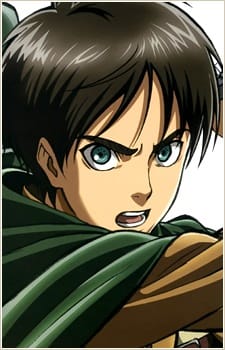
“I have always… hated you.” Willy Tybur’s speech. The reveal of the Marleyan perspective. Eren’s transformation. The Declaration of War episode isn’t just Attack on Titan’s best episode—it’s one of anime’s greatest episodes ever produced. Here’s why this pivotal moment works so brilliantly.
Context: Everything Changes
The World Flips
For three seasons, viewers understood Attack on Titan from Paradis Island’s perspective. Humanity survives behind walls; Titans are monsters; the Survey Corps fights for freedom. The Marley arc inverts everything.
Suddenly we’re on the other side. The “island devils” are enemies. Eldians are oppressed minorities in the broader world. The Titans are weapons. Every assumption gets challenged.
Reiner’s Perspective
Episodes preceding the Declaration show Reiner’s trauma—guilt from his mission to Paradis, PTSD from years of betrayal, suicidal ideation. We understand the “enemy” as human. When Eren appears in that basement, we feel Reiner’s horror rather than Eren’s triumph.
The Festival Setup
Willy Tybur, the Tybur family head, announces a public declaration to world ambassadors. The stage is literally set—both for Willy’s revelation and Eren’s response.
Willy Tybur’s Speech
The Historical Revelation
Willy reveals the “true” history: King Fritz didn’t lose the Great Titan War—he chose peace. Disgusted by Eldian cruelty, he isolated his people on Paradis and created the vow of pacifism. The hero wasn’t the Tybur family; it was the king himself.
This revelation reframes everything. Paradis wasn’t conquered—it was self-imposed exile. The threat of the Rumbling was always empty because the king would never use it.
The New Threat
But Eren Yeager has the Founding Titan now. Eren isn’t bound by the vow. Eren might actually use the Rumbling. Willy declares war on Paradis—not for conquest, but ostensibly for world survival.
Theatrical Brilliance
Willy knows he’ll die. His speech is calculated martyrdom—his death at Eren’s hands will unite the world against Paradis. He’s a willing sacrifice for the narrative he’s constructing.
The Basement Conversation
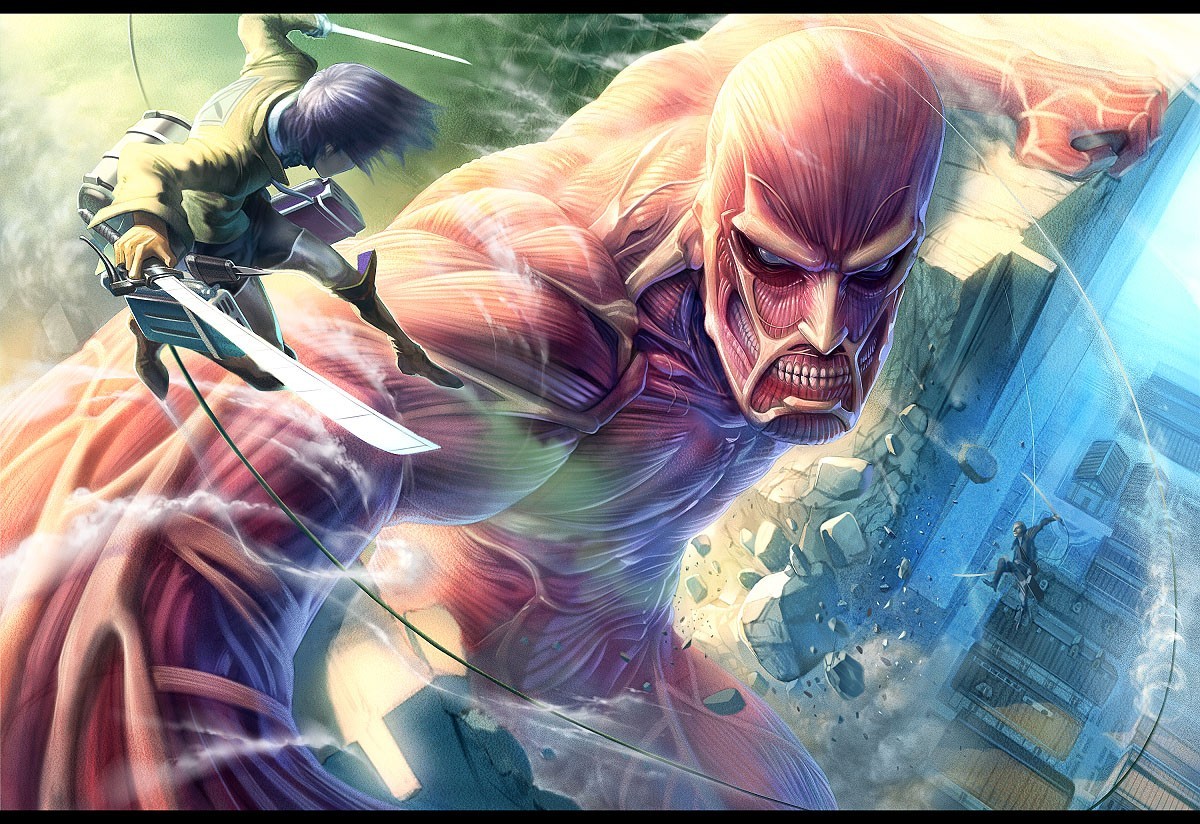
Eren and Reiner
Parallel to Willy’s speech, Eren confronts Reiner in the basement beneath the stage. This conversation is Attack on Titan’s soul laid bare.
“I’m the same as you.” Eren acknowledges that Reiner had reasons, that circumstances shaped choices, that neither of them is simply good or evil. The enemy becomes mirror.
The Question
Eren asks why Reiner continued the mission despite Marcel’s death giving him excuse to return. Reiner admits the truth: he wanted to be a hero. His selfish desire cost thousands of lives.
Eren doesn’t condemn him. Eren understands because Eren is about to commit worse for similar reasons.
Forgiveness and Damnation
This scene offers something like forgiveness—acknowledgment that being born into impossible circumstances doesn’t make someone purely villain. But it also confirms that understanding doesn’t prevent atrocity. Eren understands Reiner completely and will kill thousands anyway.
The Transformation
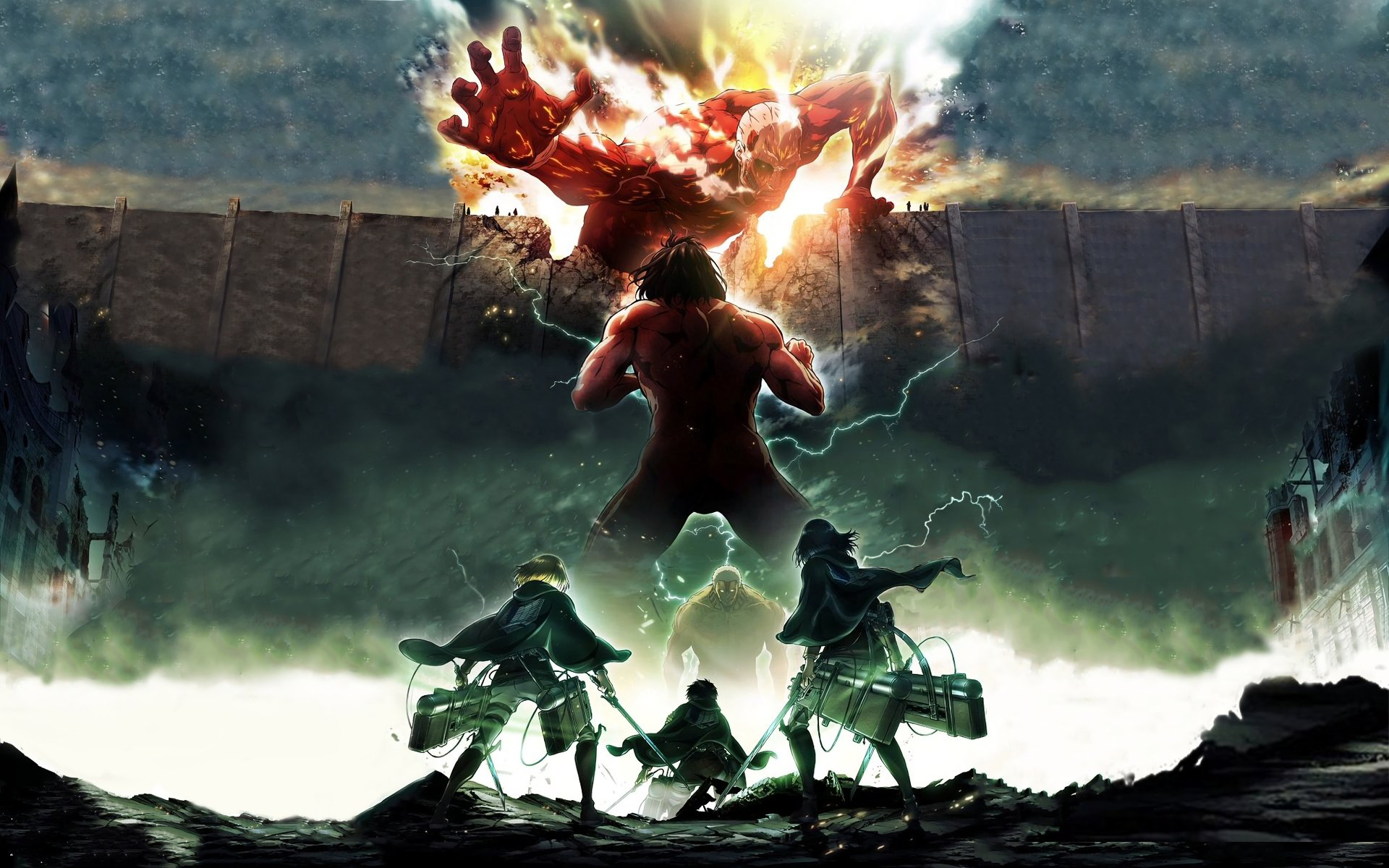
Timing as Art
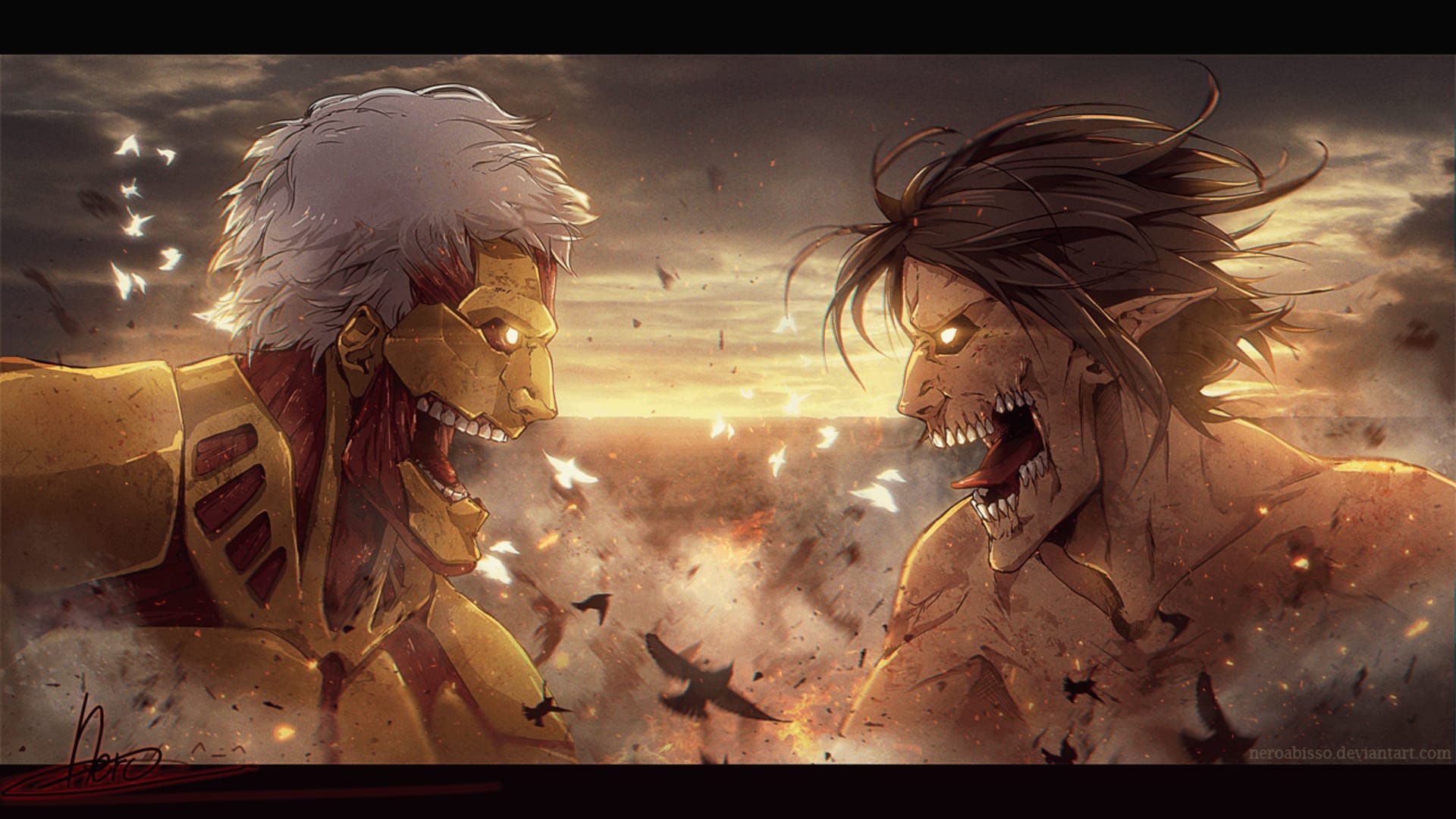
Willy declares war. Eren transforms. The synchronization is perfect—Willy’s theatrical climax meets Eren’s real climax. The declaration of war is immediately answered.
Eren emerges from the building, killing Willy mid-sentence. The crowd that just cheered for war confronts its reality instantly. There’s no transition, no preparation—just consequences.
Visual Spectacle
MAPPA’s animation makes the transformation iconic. Eren rising from ruins, the Attack Titan’s appearance, the immediate violence—it’s technically stunning while remaining narratively meaningful.
The Shift
For the first time, Eren is unambiguously attacking civilians. The crowd includes ambassadors, nobles, and ordinary festival-goers. This isn’t defense—it’s terrorism. The protagonist becomes perpetrator.
Why It Works
Perspective Complexity
The episode forces viewers into impossible position. We’ve followed Eren for years—we want him to succeed. But we’ve also seen Reiner’s pain, Gabi’s innocence, the Marleyan Eldians’ oppression. There’s no one to root for anymore.
This moral complexity distinguishes Attack on Titan from simpler narratives. The “hero” commits atrocity. The “villains” have legitimate grievances. Everyone is wrong. Everyone is right.
Information Revelation
The episode delivers massive lore while remaining emotionally engaging. Historical reveals that could feel like exposition instead feel like discovery because they change our understanding of everything preceding them.
Structural Parallelism
Two conversations—Willy’s public speech, Eren’s private confrontation—mirror each other. Both reveal truth. Both build to violence. The cutting between them creates tension that explodes in transformation.
Character Culmination
Eren’s journey reaches turning point. Everything he’s experienced—his mother’s death, his friends’ sacrifices, the basement revelation, Marleyan history—leads to this moment. The transformation isn’t just physical; it’s the death of the Eren we knew.
The Aftermath Question
What Comes Next
The Declaration of War episode opens Attack on Titan’s final act. The questions it raises—whether Eren is right, whether violence solves anything, whether understanding enemies makes killing them better or worse—drive everything that follows.
Viewer Discomfort
The episode is designed to be uncomfortable. You might cheer Eren’s transformation, then realize you’re cheering mass murder. That discomfort is intentional. Attack on Titan wants you to question your reactions.
Legacy
The Declaration of War represents Attack on Titan at its peak—morally complex, visually stunning, narratively bold. It’s an episode that rewards rewatching because context changes interpretation. Knowing what follows makes the basement conversation more tragic, Eren’s choice more inevitable, Willy’s sacrifice more meaningful.
Whether you agree with Eren’s eventual path or not, this episode forces engagement with questions most anime avoids. That’s why it’s not just good—it’s important.
You Might Also Like
- Mikasa Ackerman: Attack on Titan’s Deadliest Soldier
- Attack on Titan Marley Arc: The Perspective Shift
- Levi Ackerman: Attack on Titan’s Humanity’s Strongest