Vegeta’s Character Arc: From Villain to Hero

Few characters in anime history have undergone a transformation as complete and compelling as Vegeta, the Prince of All Saiyans. When he first appeared in Dragon Ball Z, Vegeta was a genocidal warrior who would destroy entire civilizations without remorse. Decades later, he stands as one of anime’s greatest heroes—a devoted husband, loving father, and defender of Earth who will sacrifice everything for those he once sought to destroy.
Vegeta’s journey from villain to hero isn’t a simple redemption arc. It’s a masterclass in character development that spans hundreds of episodes, multiple series, and over thirty years of storytelling. He doesn’t simply become “good”—he fundamentally reconstructs his entire identity while maintaining the pride that defines him. Understanding this transformation requires examining each stage carefully.
This comprehensive analysis tracks Vegeta’s complete journey from mass-murdering prince to heroic defender, exploring the moments that changed him and the relationships that saved him.
⚠️ Spoiler Warning: This analysis covers Vegeta’s entire journey through Dragon Ball Super and the manga. Major spoilers ahead.
Background & Origins
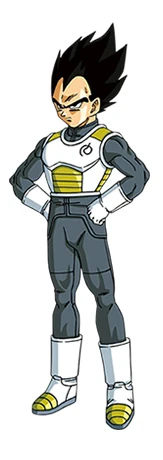
Vegeta was born into royalty as the son of King Vegeta, ruler of the Saiyan race. From birth, he was exceptional—possessing power levels that exceeded most adult Saiyans while still a child. He was trained as a warrior-prince, destined to lead his people to glory through conquest. Everything in his early life reinforced one belief: he was superior, and Saiyans were the universe’s greatest warriors.
Then Frieza destroyed everything.
The tyrant annihilated Planet Vegeta, slaughtering the entire Saiyan race except for a handful of survivors. Vegeta, still a child, was forced to serve his people’s murderer. He spent decades as Frieza’s elite soldier, conquering planets and exterminating populations—all while secretly plotting revenge.
This origin explains everything about early Vegeta. His pride isn’t arrogance; it’s the only thing he has left. His race, his planet, his father, his birthright—Frieza took it all. Pride in being Saiyan became Vegeta’s entire identity because the alternative was acknowledging he was a slave to his people’s killer.
His cruelty isn’t inherent; it’s learned survival under a tyrant. Show weakness and Frieza kills you. Fail a mission and Frieza kills you. The only way to survive was to become indispensable through ruthlessness.
His obsession with being the strongest? That’s a traumatized prince who couldn’t save his people vowing to never be powerless again. If he’d been strong enough, maybe Planet Vegeta would still exist.
The Saiyan Saga: Ultimate Villain
Vegeta’s introduction remains one of anime’s most menacing arrivals. He came to Earth seeking the Dragon Balls for immortality, casually killing his own partner Nappa when he proved useless. No hesitation, no remorse—just efficiency.
His fight against Goku showcased both his overwhelming power and ruthless efficiency. But more importantly, it introduced his fundamental conflict: Vegeta, the elite prince, was being matched by Kakarot—a low-class Saiyan sent away as an infant.
“I am the prince of all Saiyans! I will not be defeated by a low-class warrior!”
This Vegeta was evil—genuinely, irredeemably evil. He mocked Goku’s emotions, planned to destroy Earth after getting his wish, and showed zero remorse for his countless murders. Yet even here, seeds of complexity existed.
His rage against “low-class” Goku stemmed from identity crisis: if a lower-born Saiyan could surpass the prince, what did Vegeta’s entire existence mean? His pride demanded that power correlate with birthright. Goku’s existence challenged everything Vegeta believed about himself.
The Frieza Saga: Alliance of Necessity
On Namek, Vegeta worked alongside the Z Fighters against Frieza’s forces—not from heroism, but self-interest. He murdered allies, manipulated everyone, and sought power for himself. This was peak antihero Vegeta: dangerous to enemies and friends alike.
Yet something shifted.
Dying at Frieza’s hands, Vegeta wept. Not from physical pain, but from the realization that he’d spent his life serving his people’s murderer. Everything he’d done—every atrocity, every killed innocent—had been for Frieza’s empire. He’d been a tool, not a prince.
His final plea to Goku wasn’t about pride—it was about justice.
“He made me what I am… Don’t let him do that to anyone else.”
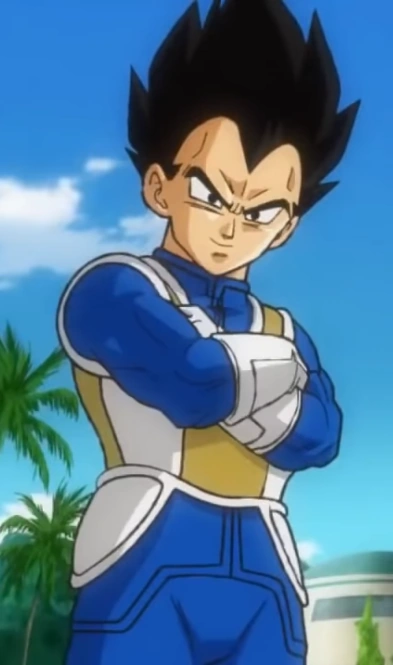
This moment humanized Vegeta. Beneath the cruelty was a broken child, still mourning his lost world, still furious at his own weakness. The tears weren’t weakness—they were everything he’d suppressed for decades finally breaking free.
Goku buried him with respect, and when the Dragon Balls resurrected Namek’s victims, Vegeta returned—now technically a resident of Earth with nowhere else to go.
The Android Saga: Reluctant Ally
Vegeta’s transition from villain to antihero began here. He trained obsessively on Earth, achieved Super Saiyan, and fathered Trunks with Bulma. Yet he refused to admit any attachment. Caring was weakness; connection was vulnerability.
When Future Trunks arrived, Vegeta rejected him. Learning this stranger was his son changed nothing—Vegeta couldn’t process familial emotion after a lifetime without it.
When Cell emerged, Vegeta let him achieve Perfect Form out of pride. He wanted to fight Cell at full power to prove his own superiority. People died for his arrogance—a mistake that haunted him.
This saga showcases Vegeta at his most frustrating—a man whose pride constantly undermines his own goals. He had every advantage and threw it away for ego satisfaction.
Yet he also showed growth. When Cell nearly killed Trunks, Vegeta attacked in blind rage—the first time he’d risked himself for another person. He didn’t save the day, but he tried. That mattered.
The Buu Saga: The Breaking Point
Vegeta’s development crystallized against Majin Buu. Desperate to surpass Goku, tormented by years of being second-best, he accepted Babidi’s mind control to unlock hidden power. He became Majin Vegeta—a return to his evil roots, or so he claimed.
“You’re the one who gave me purpose again. I wanted to kill you more than anything.”
Fighting Goku as Majin Vegeta, all his frustrations exploded. Why couldn’t he catch up? Why did Goku always stay ahead? He’d sacrificed everything—family, honor, his soul—and still remained second place.
But when forced to choose between fighting Goku and saving his family, Vegeta hesitated. The Majin power couldn’t erase what he’d built on Earth. When Buu threatened Bulma and Trunks, Vegeta made the ultimate choice.
“Trunks… Bulma… I do this for you. And yes, even for you, Kakarot.”
Final Atonement
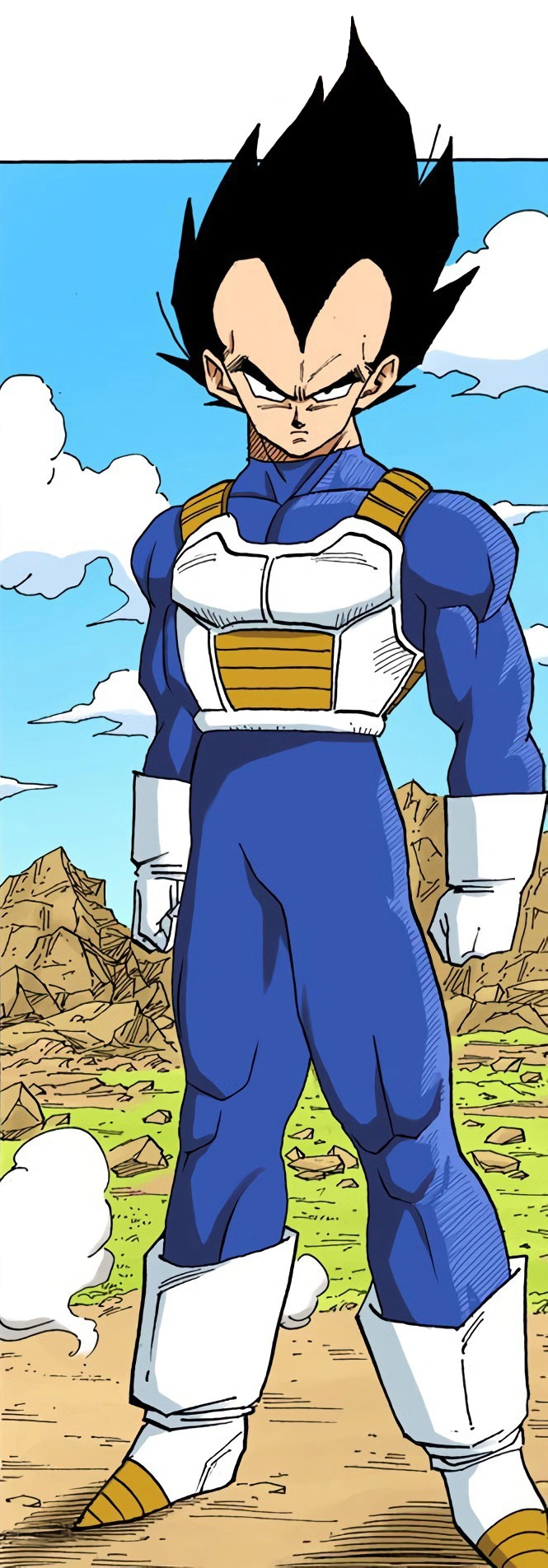
Vegeta’s self-destruction against Buu remains one of Dragon Ball’s most powerful moments. He embraced Trunks—the first time he’d ever hugged his son—knocked him unconscious to protect him, and asked Piccolo if he would see Goku in the afterlife.
“He’s a proud Saiyan prince who was raised to be a warrior. And yet… he’s chosen to sacrifice himself for the sake of others. This is not the Vegeta I know.”
Piccolo’s answer was devastating: Vegeta had killed too many innocent people. He would simply cease to exist—no afterlife, no redemption, just nothing.
Vegeta accepted this, then detonated himself in a blast meant to end Buu. It failed. But the intent was pure. For the first time, Vegeta fought not for pride or power, but love.
Dragon Ball Super: Completing the Arc
Super brought Vegeta’s development to fruition. He’s still prideful, still competitive with Goku, but fundamentally different. The change isn’t surface—it’s structural.
Family Man
The Vegeta who once ignored his pregnant wife now takes Bulma on dates. He threatens to skip the Tournament of Power—a tournament where losing means universal erasure—for his daughter’s birth. He trains Trunks while actually praising his progress.
This is a man who discovered that strength means nothing without people to protect. His family isn’t a distraction from training—they’re the reason training matters.
Defender of Others
When Cabba, a young Saiyan from Universe 6, needed guidance, Vegeta became his mentor. He didn’t have to—Cabba was a stranger from another universe—but Vegeta saw himself in the young warrior and chose to help.
When Universe 6 faced erasure, Vegeta gave Cabba the same speech that once defined him: “A Saiyan’s pride never gives out.” He’s passing on his identity—but the healthy version, stripped of cruelty and self-destruction.
Ultra Ego
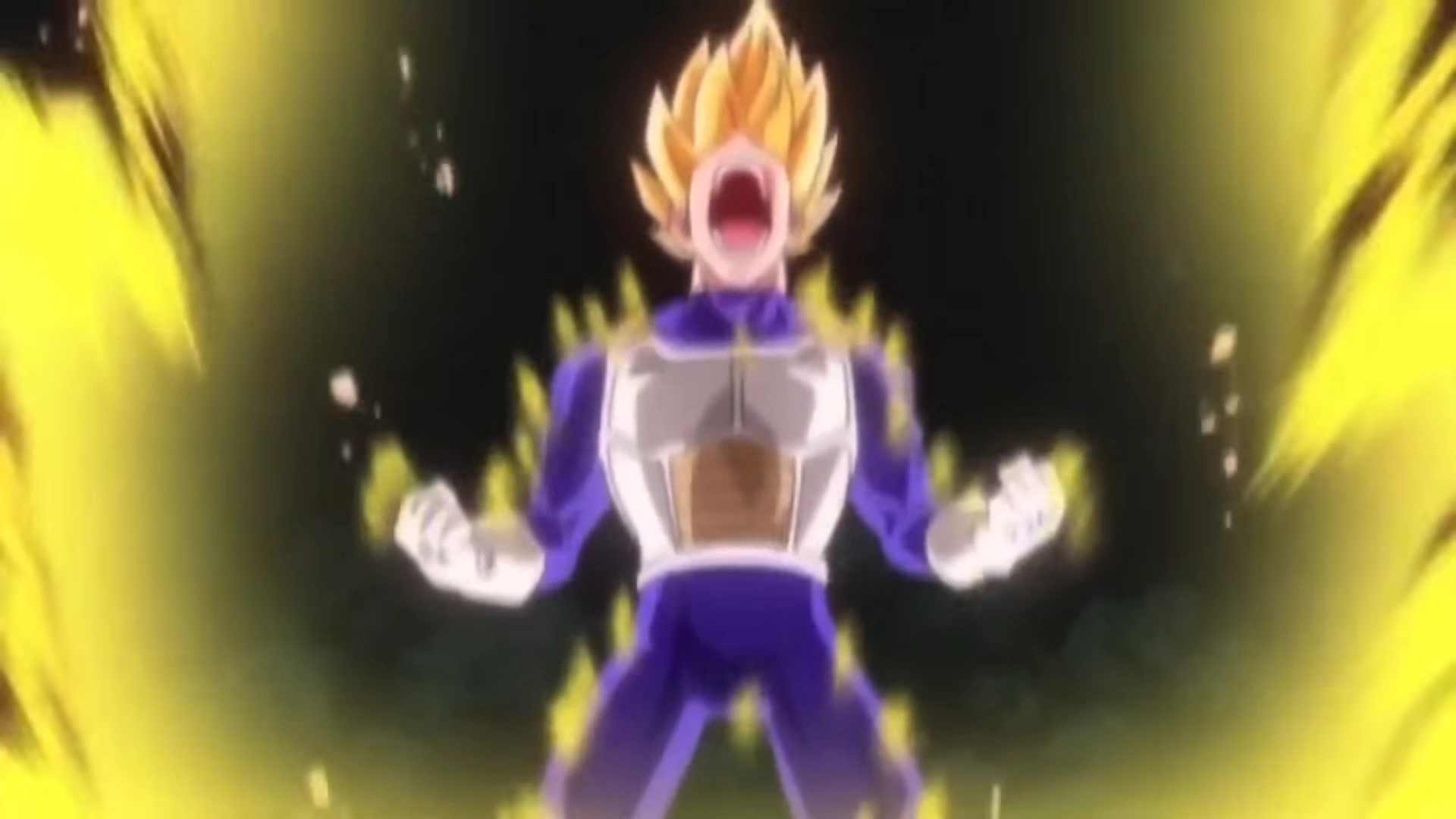
Vegeta’s latest transformation embodies his growth. While Goku achieved Ultra Instinct through emptying his mind, Vegeta developed Ultra Ego through embracing his sense of self. The form suits him perfectly: he doesn’t need to become someone else to grow stronger. He needs to fully accept who he is.
“I am the strongest Saiyan! And I carry the pride of every Saiyan who fell before me!”
This isn’t the old arrogance—it’s earned confidence. Vegeta knows exactly who he is, what he’s done, and what he’s become. Ultra Ego represents that complete self-acceptance.
Key Relationships
Goku: The Eternal Rival
Vegeta’s obsession with surpassing Goku drove much of his development—but the relationship itself evolved. Early resentment gave way to grudging respect, then genuine friendship (though Vegeta would never admit it).
Their rivalry pushes both to grow. Goku needs Vegeta’s seriousness; Vegeta needs Goku’s joy. They make each other better fighters and, surprisingly, better people.
Vegeta has accepted that rivalry doesn’t require hatred. They’re friends who compete relentlessly. Both things can be true.
Bulma: The Anchor
How did the genocidal prince fall for a loud, temperamental scientist? Through mutual respect. Bulma never feared Vegeta, never treated him as a monster. She saw his potential for growth before he did.
She yelled at him. She demanded he contribute to household tasks. She treated him like a person rather than a threat. This normalcy gave Vegeta something he’d never had: a home.
Their relationship grounds Vegeta, giving him something worth protecting. When he sacrificed himself against Buu, his last thoughts were of them.
Trunks: The Future
Vegeta’s evolution as a father mirrors his overall development. From ignoring his son to dying for him to actively training him, Trunks became Vegeta’s proof that the Saiyan race could continue—and be better than before.
The pride he takes in Trunks isn’t about power levels. It’s about seeing his son grow into someone good—something Vegeta himself never had the chance to be as a child.
Character Development Analysis
Vegeta’s arc succeeds because it takes time. He doesn’t switch from villain to hero overnight. He backslides (Majin Vegeta), he struggles, he maintains his core identity while changing his values. The pride remains; the cruelty doesn’t.
More importantly, Vegeta earns his redemption through action. He doesn’t simply apologize for his past—he actively fights for good, risks himself for others, and builds a family he would die to protect. His heroism isn’t despite his nature but because of growth within it.
The character who once destroyed planets for fun now protects universes. The prince who mocked emotion now fights for love. The man who killed his own partner now mentors young warriors.
This is how redemption works: not through erasure but through transformation.
Legacy & Impact
Prince Vegeta stands as anime’s definitive rival character and one of fiction’s greatest redemption arcs. His influence extends to every “villain turned ally” character who followed, though few match his depth.
For fans wanting to experience Vegeta’s complete journey, our Dragon Ball Watch Order Guide covers every series chronologically. Manga readers can explore his latest developments in the Dragon Ball Super manga on Amazon.
The prince who lost everything found something better. The warrior who served a tyrant became a protector. The man who couldn’t show emotion learned to embrace his family.
Vegeta’s story isn’t about becoming someone new. It’s about finally becoming who he was always meant to be—without Frieza’s shadow, without trauma’s weight, just the Prince of All Saiyans, protecting his new home.
Related: Dragon Ball Watch Order Guide | Goku vs Vegeta: Who’s Really Stronger? | Best Dragon Ball Fights Ranked | Dragon Ball Super: What’s Next
You Might Also Like
- Dragon Ball Watch Order 2026: The Ultimate Guide to Goku’s Journey
- Dragon Ball Watch Order 2026: The Ultimate Guide to Goku’s Journey
- Best Anime of Winter 2026: Complete Guide and Rankings