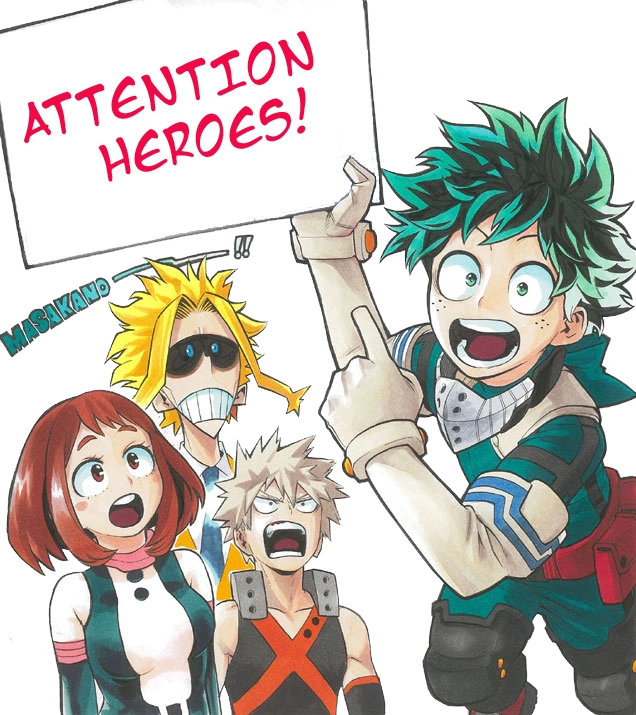
Quirks define the world of My Hero Academia. These superpowers, appearing in roughly 80% of the population, have completely restructured society—from hero rankings to career options to everyday convenience. But not all Quirks are created equal, and understanding their classification helps explain why some people become top heroes while others live ordinary lives.
This guide covers the complete Quirk classification system, the theories behind Quirk evolution, and rankings of the most powerful abilities in the MHA universe.
What Are Quirks?
Quirks are superhuman abilities that manifested in humanity starting with a luminescent baby in Qing Qing City, China. Within a few generations, Quirks became the norm rather than the exception. Key facts:
- Manifestation Age: Typically appears by age 4
- Inheritance: Usually derived from one or both parents’ Quirks
- Registration: All Quirks must be registered with the government
- Quirkless Percentage: Approximately 20% of the population
The cause of Quirk emergence remains unknown in-universe, though it correlates with a virus-like spread across generations.
The Three Quirk Categories
Every Quirk falls into one of three categories based on how it functions:
Emitter Type
Definition: Quirks that produce or control something external to the user’s body.
Characteristics:
- Most common Quirk type
- Often requires conscious activation
- May have usage limits (time, energy, stamina)
- Can affect environment or other people
Examples:
| Quirk | User | Description |
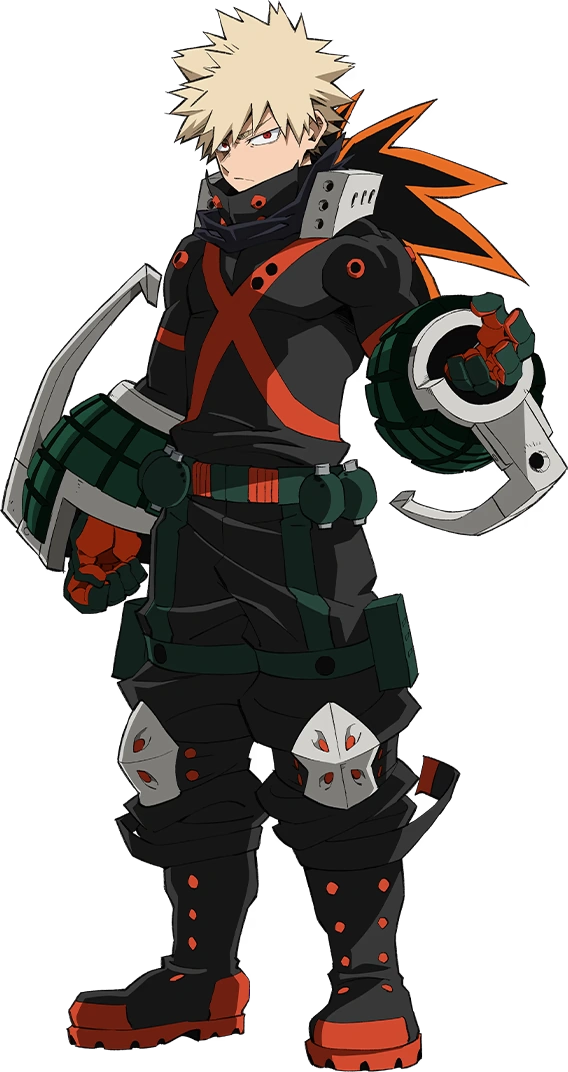
| Explosion | Katsuki Bakugo | Produces nitroglycerin-like sweat that ignites |
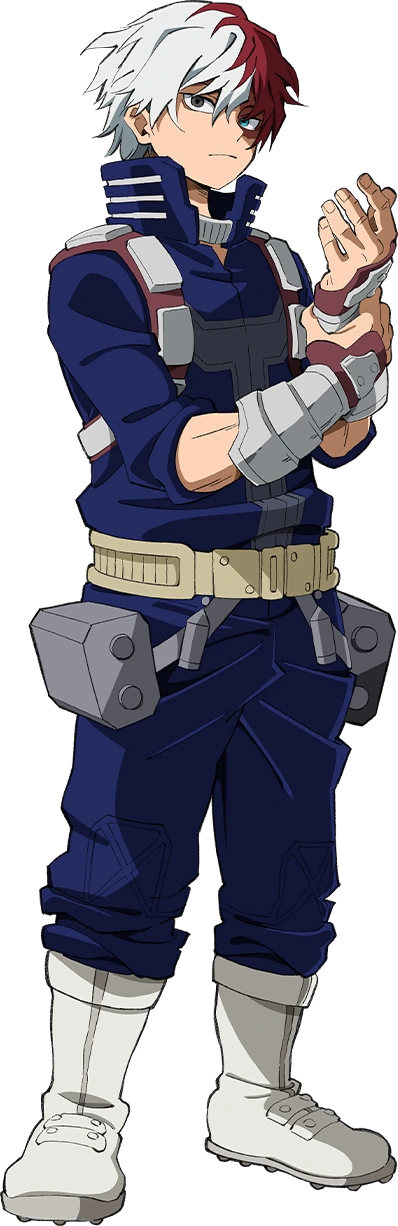
| Half-Cold Half-Hot | Shoto Todoroki | Creates ice and fire from different body sides |
| Zero Gravity | Ochaco Uraraka | Removes gravity from touched objects |
| Electrification | Denki Kaminari | Generates and discharges electricity |
| One For All | Izuku Midoriya | Stockpiles and transfers power |
| Erasure | Shota Aizawa | Nullifies other emitter-type Quirks by sight |
Transformation Type
Definition: Quirks that temporarily alter the user’s body.
Characteristics:
- Changes are not permanent
- Usually requires activation
- Often drains stamina based on transformation duration
- User returns to normal when Quirk is deactivated
Examples:
| Quirk | User | Description |
| Hardening | Eijiro Kirishima | Hardens skin to rock-like defense |
| Gigantification | Mt. Lady | Grows to giant size |
| Transform | Himiko Toga | Becomes physical copy of others (requires blood) |
| Permeation | Mirio Togata | Phases through solid matter |
| Dark Shadow | Fumikage Tokoyami | Manifests sentient shadow entity |
Mutant Type
Definition: Quirks that permanently alter the user’s body structure.
Characteristics:
- Always active; cannot be turned off
- Visible physical changes are common
- May come with physical advantages/disadvantages
- Generally immune to Erasure-type Quirks
Examples:
| Quirk | User | Description |
| Tail | Mashirao Ojiro | Possesses powerful, prehensile tail |
| Engine | Tenya Iida | Has engines in calves for super speed |
| Invisibility | Toru Hagakure | Body is permanently invisible |
| Frog | Tsuyu Asui | Possesses all frog abilities |
| Dupli-Arms | Mezo Shoji | Multiple tentacle-like arms that replicate body parts |
Quirk Awakening: The Next Level
Quirk Awakening represents evolution beyond a Quirk’s standard limits, typically triggered by extreme stress or near-death situations.
Known Awakening Cases
Shigaraki Tomura: His Decay Quirk evolved from requiring all five fingers touching to spreading across connected surfaces indefinitely—eventually threatening to destroy entire cities.
Toga Himiko: Originally could only copy appearance; awakened to copy Quirks of those she transforms into when experiencing strong emotions toward them.
Twice Jin: Overcame his trauma-induced limitation to create unlimited copies, making him one of the most dangerous villains alive.
Awakening Theory
Awakening seems to require:
Not all Quirks can awaken, and the process isn’t fully understood even by in-universe scientists.
Quirk Singularity Theory
One of the most important concepts in MHA’s worldbuilding:
The Theory
Dr. Kyudai Garaki theorized that Quirks become more complex and powerful with each generation as they combine. Eventually, Quirks will become too powerful for human bodies to contain, leading to a “Quirk Singularity” where humanity cannot control its own powers.
Evidence
- Eri’s Rewind: Can revert anything to previous states, including erasing existence
- Shigaraki’s Evolved Decay: Threatens to destroy everything he touches
- Deku’s One For All: Growing too powerful for subsequent inheritors
- Current generation children showing increasingly complex combination Quirks
Implications
The theory suggests heroic society is on borrowed time. Without intervention, future generations may be born with apocalyptic abilities they cannot control. This drives some of the series’ larger conflicts.
Strongest Quirks Ranked
Based on demonstrated power, versatility, and potential:
S-Tier (Reality-Altering)
1. All For One
- User: All For One (villain)
- Ability: Steals and combines multiple Quirks
- Why #1: Potentially unlimited power through Quirk theft
2. Rewind
- User: Eri
- Ability: Reverts anything to previous state
- Why Here: Can undo any damage, erase existence, potentially reverse death
3. One For All (Full Power)
- User: Izuku Midoriya
- Ability: Stockpiled power of multiple users + their Quirks
- Why Here: Combines super strength with multiple bonus abilities
4. New Order
- User: Star and Stripe
- Ability: Sets rules on anything she touches/names
- Why Here: Reality manipulation limited only by creativity
A-Tier (National Threats)
5. Decay (Awakened)
- User: Shigaraki Tomura
- Ability: Disintegrates anything, spreads through connections
- Assessment: Could destroy a country if not stopped
6. Overhaul
- User: Kai Chisaki
- Ability: Disassemble and reassemble matter at will
- Assessment: Essentially matter manipulation through touch
7. Half-Cold Half-Hot
- User: Shoto Todoroki
- Ability: Ice and fire generation
- Assessment: Extreme versatility and raw power
8. Explosion
- User: Katsuki Bakugo
- Ability: Nitroglycerin sweat explosions
- Assessment: Ridiculous offense with tactical applications
B-Tier (Top Pro Level)
9. Permeation
- User: Mirio Togata
- Ability: Pass through solid matter
- Assessment: Practically invincible with training
10. Erasure
- User: Shota Aizawa
- Ability: Nullifies Emitter Quirks by sight
- Assessment: Perfect counter for most Quirks
11. Warp Gate
- User: Kurogiri
- Ability: Creates portals anywhere
- Assessment: Ultimate utility and tactical advantage
Quirk Marriages and Combinations
How Quirk Inheritance Works
Children typically inherit:
- One parent’s Quirk (most common)
- Combination Quirk (mix of both parents)
- Mutation (entirely new Quirk)
- Quirkless status (increasingly rare)
The Todoroki Case Study
Endeavor specifically chose a wife with an Ice Quirk to create a child who could use both fire (Endeavor’s Hellflame) and ice. After multiple children, Shoto was born with the exact combination he wanted—Half-Cold Half-Hot.
This practice, called “Quirk Marriage,” is legal but ethically questionable. The Todoroki family’s dysfunction demonstrates the human cost of treating Quirks as breeding programs.
Notable Combination Quirks
- Half-Cold Half-Hot: Fire + Ice → Dual elemental control
- Explosion: Glycerin (mother) + Acid Sweat (father) → Nitroglycerin explosions
- Froppy’s Frog: Presumably frog-like parents → Complete frog abilities
Support Items and Quirk Enhancement
Not all Quirks are combat-ready. Support items bridge the gap:
Enhancement Examples
- Bakugo’s Grenade Gauntlets: Store excess sweat for massive explosions
- Iida’s Ingenium Armor: Reinforces legs for Engine Quirk use
- Aoyama’s Belt: Prevents Naval Laser from destroying his stomach
- Deku’s Iron Soles: Protects legs from One For All’s kickback
The Hero Industry
Support companies are a major industry in MHA’s world. Top engineers earn as much as pro heroes by creating equipment that makes Quirks more effective or compensates for their weaknesses.
FAQ
Q: Can Quirks be transferred?
A: Normally no—except All For One (steals Quirks), One For All (designed to transfer), and specific copy Quirks like Monoma’s Copy.
Q: Do Quirks affect personality?
A: Possibly. There’s correlation between Quirk type and personality traits, though causation isn’t confirmed. Bakugo’s aggressive personality matches his explosive Quirk.
Q: Why can’t Eraserhead erase Mutant Quirks?
A: Mutant Quirks are permanent physical traits, not active abilities. Erasure works on the “activation” of Quirks—Mutants are always “on.”
Q: What determines Quirk strength?
A: Combination of genetic potential, training, understanding of the Quirk, and physical condition. All Might’s One For All was stronger than Deku’s at first because of muscle mass and experience.
Q: Can Quirkless people gain Quirks?
A: Only through One For All (designed for transfer) or All For One (forced transfer). No natural method exists.
Conclusion
The Quirk system makes MHA’s world feel lived-in and logical. Power isn’t arbitrary—it’s genetic, trainable, and comes with real limitations. The three-category system provides clear framework while allowing endless creativity. And concepts like Quirk Singularity and Awakening add depth that rewards close attention.
Understanding Quirk classification helps you appreciate character matchups, hero strategies, and why certain characters are considered top-tier despite seemingly simple abilities. It’s not just about raw power—it’s about how creatively and strategically Quirks are applied.
Related: Deku Character Analysis
| Best MHA Fights Ranked |
You Might Also Like
- Best Anime of Winter 2026: Complete Guide and Rankings
- Top 15 Strongest Anime Characters in 2026 (Updated Rankings)
- Best Anime of Winter 2026: Complete Guide and Rankings